

Antique Settee Frame
An antique settee frame carries the skeleton of historic seating, waiting for textile and timber to align again.
Antique Settee Frame
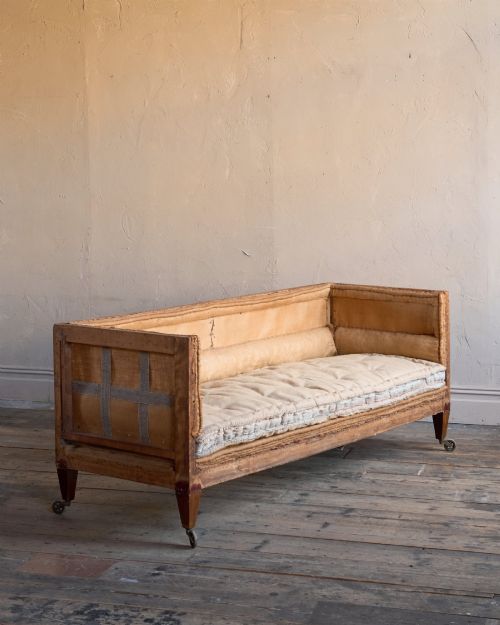
An antique settee frame represents the structural timber and carving of historic upholstered seating, often stripped down or preserved across periods from the Georgian era to the early twentieth century. Buyers seeking this phrase look for exposed wood skeletons, from mahogany and walnut to rosewood, which display the architectural lines of period seating before final upholstery.
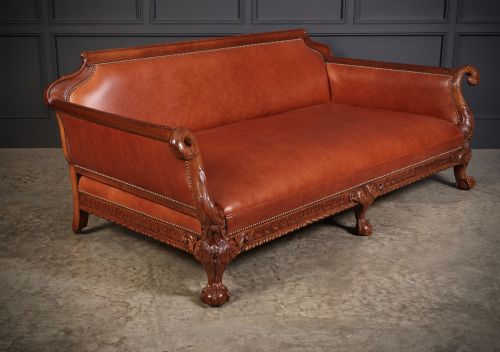
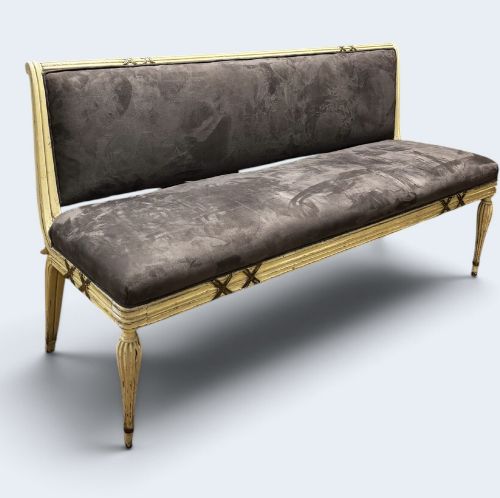
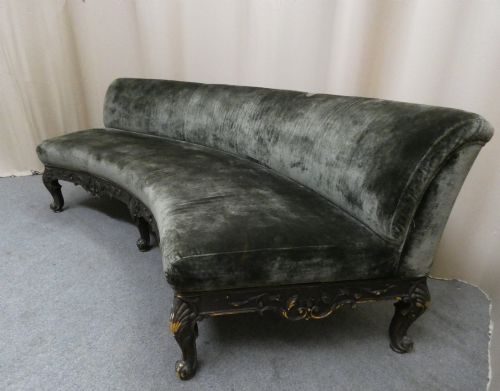
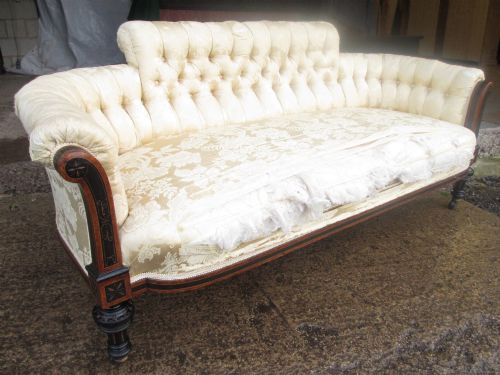
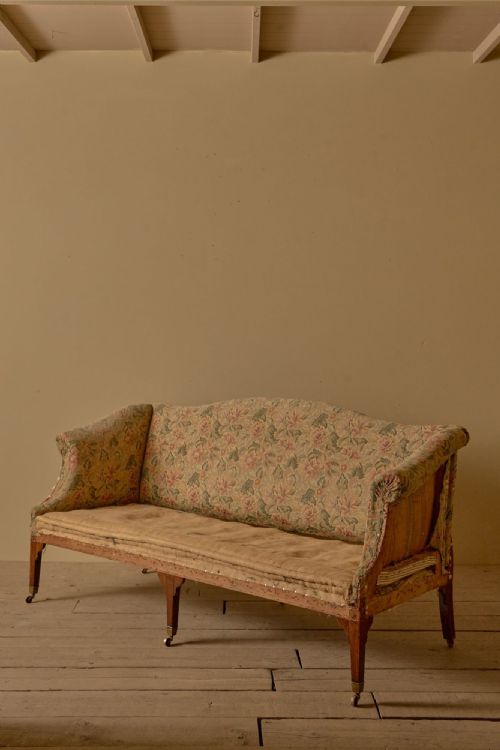
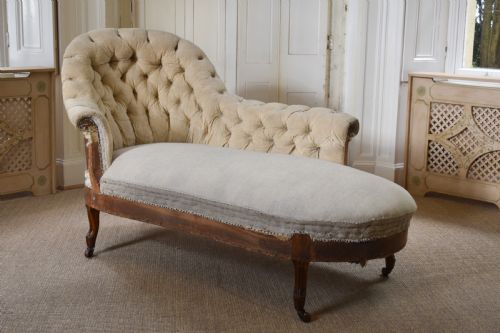
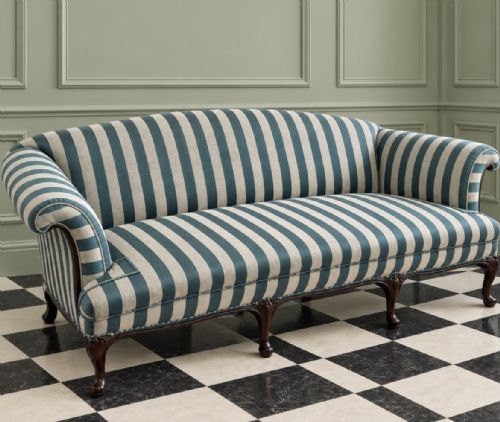
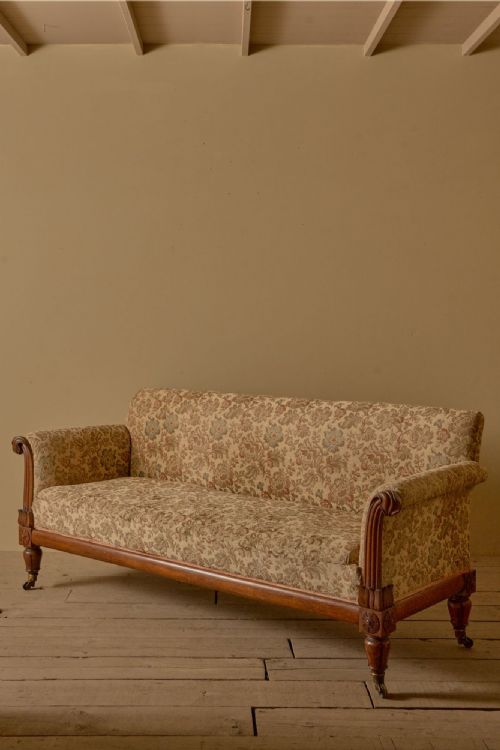
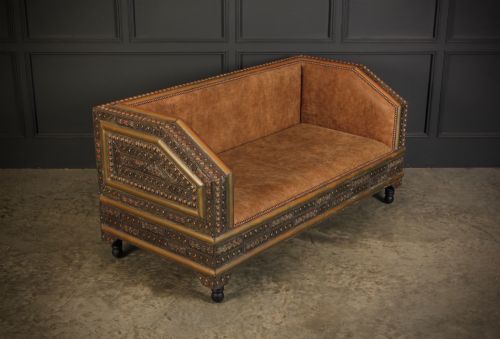
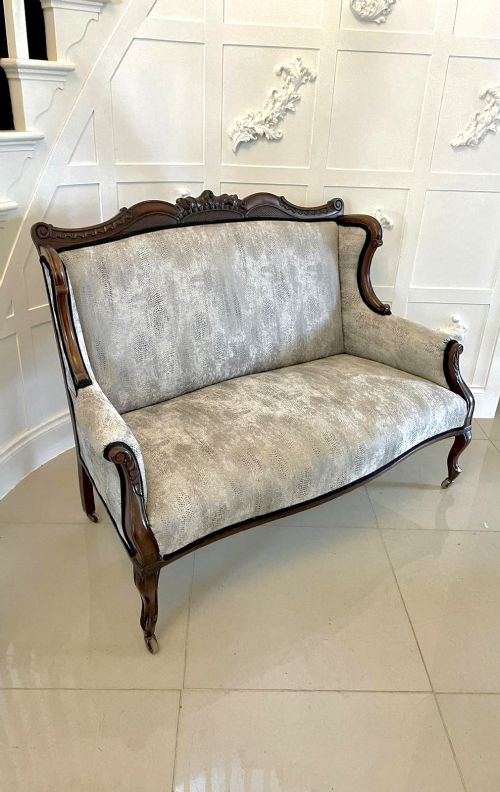
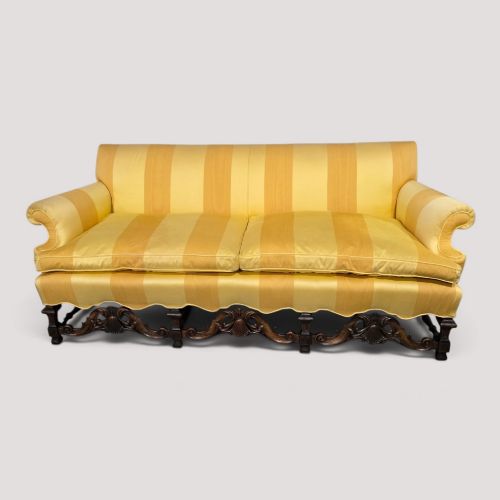
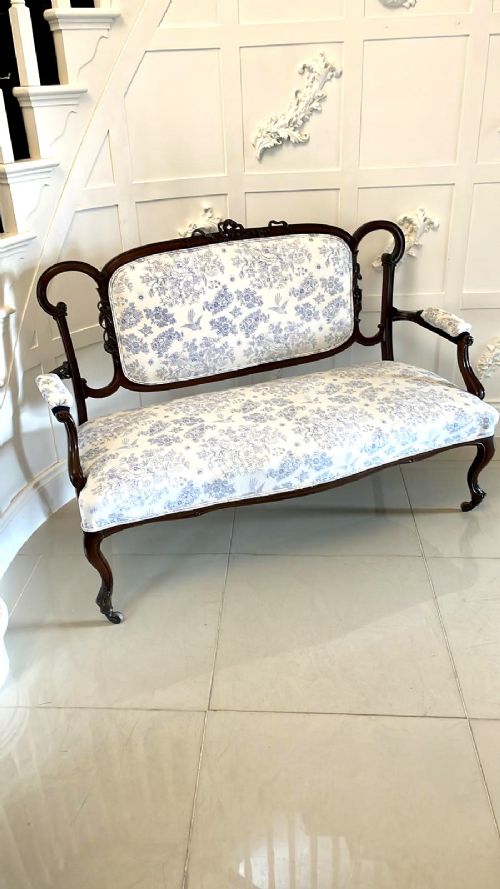
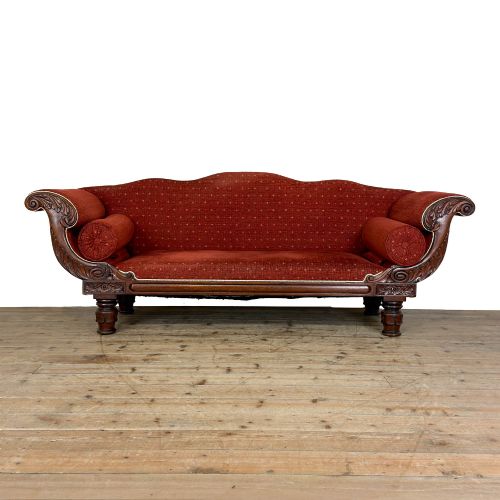
The pieces appearing on this page span diverse forms such as window seats, salon suites, and deep-seated country house sofas, crossing styles from Victorian and Edwardian to Regency and Queen Anne. Walnut and mahogany frames dominate the selection, frequently presenting carved details or inlaid decoration along the crest and arms.
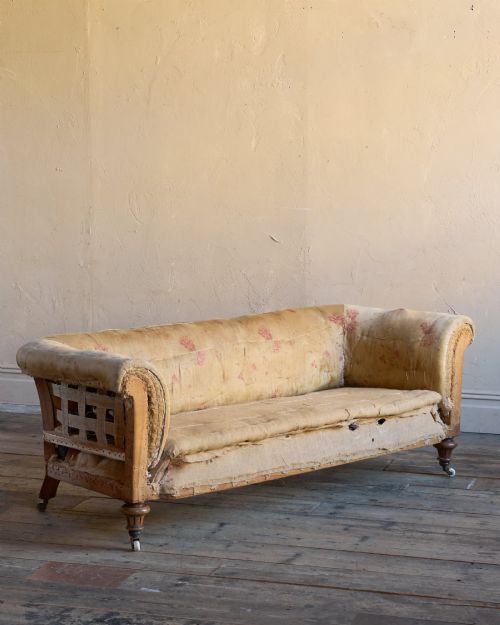
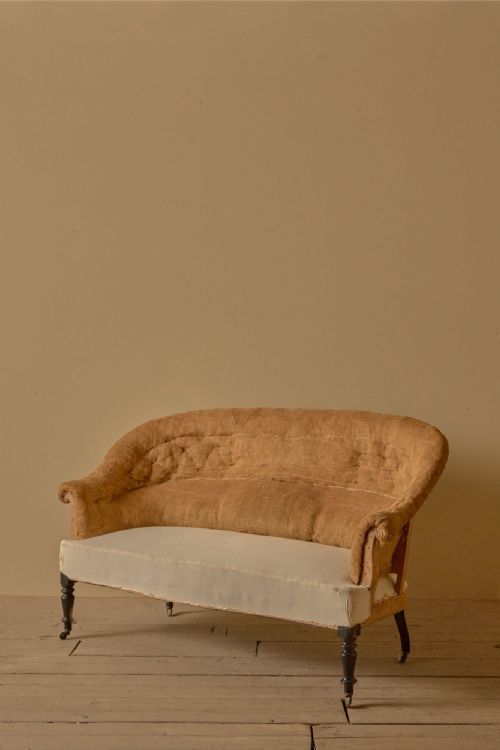
Many examples arrive ready for new textile work, whilst others retain older hessian and upholstery fabric layers that indicate their previous service. Whether structured as a compact two-seater or a larger serpentine camelback shape, each frame provides a foundational layout built by cabinetmakers of past centuries.
Materials and construction methods
Craftsmen shaped these frames using solid hardwoods like mahogany, walnut, oak, and rosewood, frequently incorporating satinwood inlay or ebonised finishes to achieve surface richness. Structural integrity relied on traditional joinery, allowing timber frames to support heavy internal webbing, springs, and stuffing over generations of use.
Carved ornament appears directly on the exposed wooden rails, arms, and cabriole or turned legs, reflecting styles from Louis XV and Chippendale to plain Regency lines. Secondary woods and internal frames often utilised softer timbers to anchor the complex upholstery foundations required for deep-seated comfort.
Antique Settee Frame Retail Price Guide 2026
Typical asking prices for settee frame among the pieces listed under this phrase on Sellingantiques today, from the lower quarter to the upper quarter. They describe what is for sale here now, not the wider market.
Listings feature mahogany, walnut, and rosewood timbers across Victorian, Edwardian, and Regency periods.
Assessing quality in timber and form
Quality rests upon the crispness of the timber carving and the architectural proportion of the wooden chassis, where fluid serpentine lines or balanced camelback curves distinguish finer pieces from plainer utilitarian work. The selection of figured mahogany or rich burl walnut veneer dictates the visual weight of the exposed frame.
Structural soundness determines longevity, marked by tight joinery in the arms and legs that withstands the tension of traditional webbing and upholstery layers. Original surface patination and minimal timber replacement preserve the integrity of the maker's initial design.
Jackson and Graham·Hampton and Sons·Howard and Sons
The Antique Settee Frame Glossary
- Settee frame
- The exposed wooden skeleton of a small sofa or settee, stripped of fabric or retaining historic upholstery layers.
- Camelback
- A curving top rail on a sofa or settee that mimics the gentle humps of a camel, popular in Georgian designs.
- Scroll-end
- An arm design curling outward and downward in a continuous scroll, frequent in Regency and William IV seating.
- Hessian
- A coarse woven fabric utilised as a foundational layer for springs and stuffing inside traditional upholstery.
Antique Settee Frame: Frequently Asked Questions
What is an antique settee frame?
An antique settee frame is the exposed wooden skeleton of a historic sofa, retaining the structural woodwork created by cabinetmakers.
These pieces showcase period carving, joinery, and timber selection without necessarily carrying modern cushions or final textile covers.
Can I reupholster an antique frame?
Most antique frames are suitable for new upholstery, provided the underlying timber and joinery remain structurally sound.
Traditional webbing, springs, and fabric layers can be rebuilt inside the wooden skeleton to match historical or contemporary interiors.
How do I identify the period?
Period identification relies on the combination of timber choice, leg style, and carving motifs present on the exposed wood.
Mahogany frames with scrolling arms often point to Regency or William IV eras, whereas walnut frames frequently reflect Queen Anne or Victorian revivals.
Where were these frames used?
These pieces served formal reception rooms, drawing rooms, and country house parlours as primary seating furniture.
Larger versions filled extensive drawing spaces, whilst smaller salon suites and window seats occupied lighter conversational corners.