


Antique Serving Fork Spoon
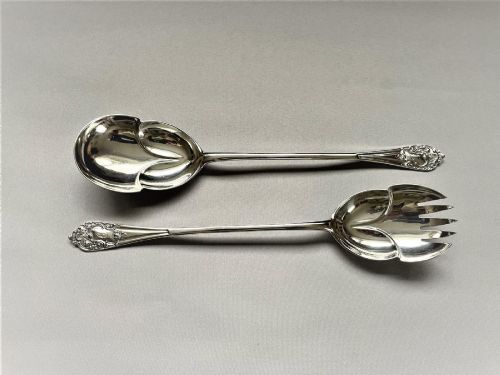
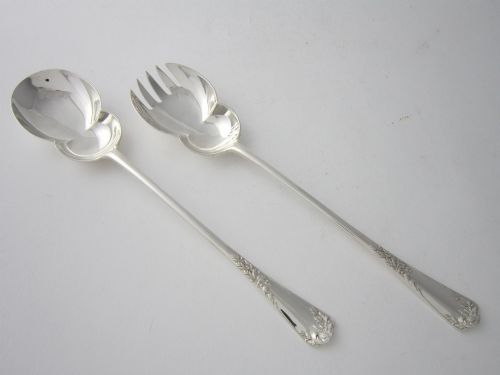
These antique serving fork spoon sets are table silver made for dishing up salads, preserves, and grand meals with proper style.
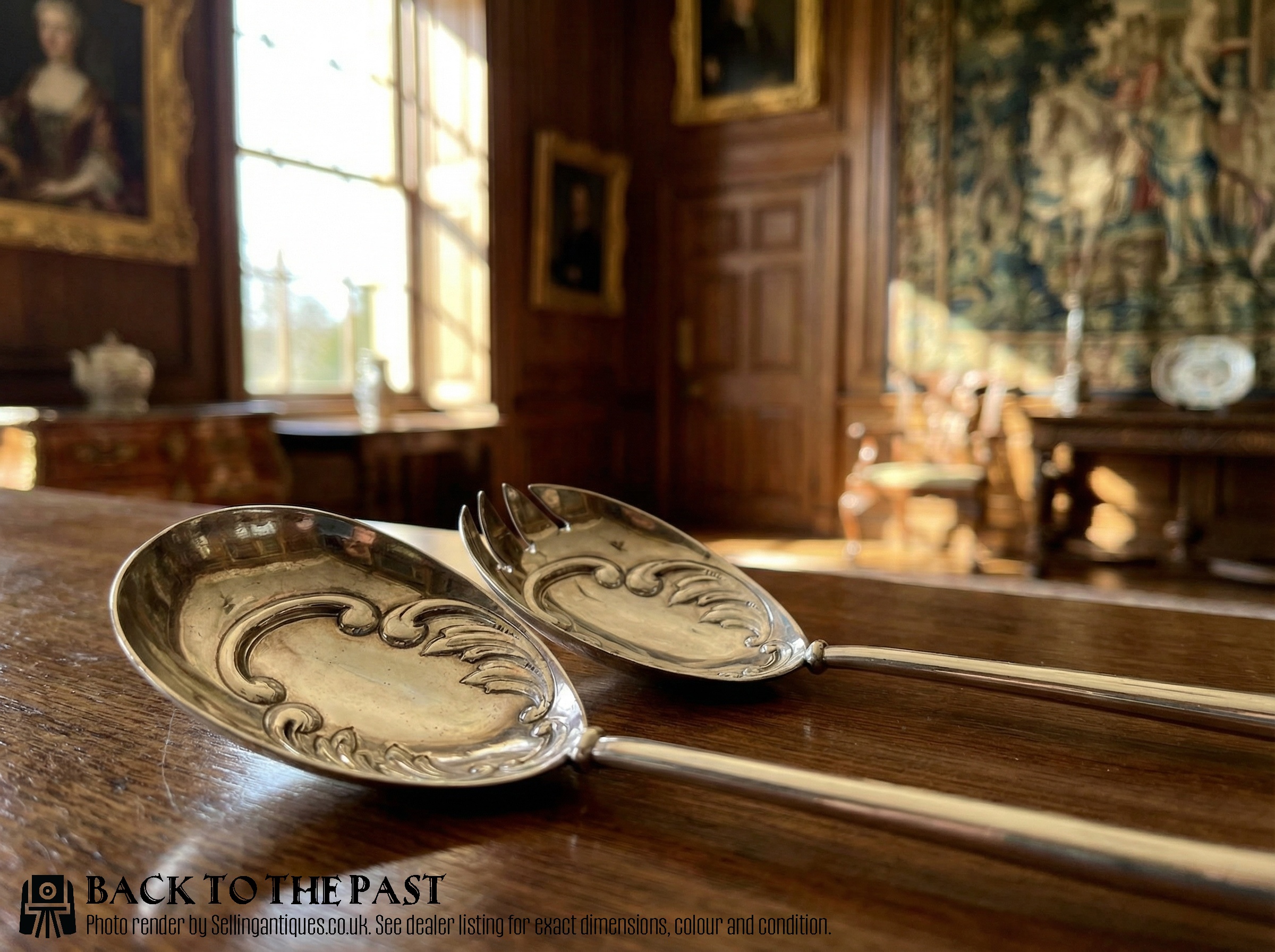
Antique Serving Fork Spoon
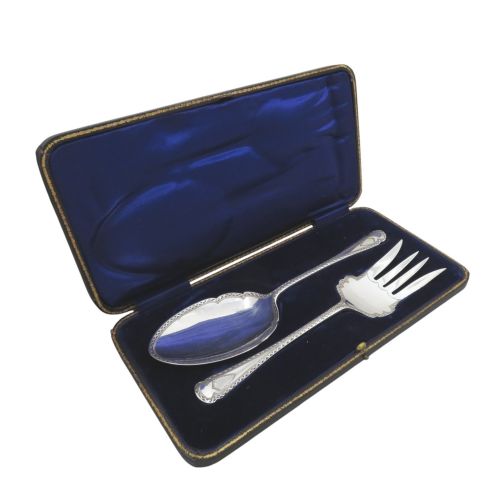
When you search for an antique serving fork spoon, you are looking at matched or paired utensils designed for the dining table, most frequently appearing here as Edwardian and Victorian salad servers. These pieces combine a large spoon and a matching fork, often found together in fitted presentation cases lined with velvet or silk.
The selection ranges from George III sterling silver to Russian revival cloisonne enamel sets and late nineteenth century French horn combinations with silver mounts. Alongside dedicated salad sets, you encounter smaller condiment groupings such as pickle forks, jam spoons, and butter knives.
Most examples hail from the nineteenth and early twentieth centuries, reflecting the formal dining habits of the Victorian and Edwardian eras. Buyers select these utensils both for functional use at the dinner table and for their decorative appeal within a collection of period silverware.
What varies in quality
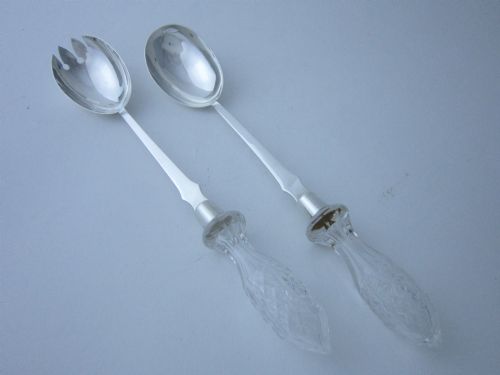
Quality in these serving sets rests upon the crispness of the original chasing and engraving on the silver bowls and handles. Pieces featuring detailed cloisonne enamel work or integrated cut glass require higher levels of specialist craftsmanship than plain silver forms.
The survival of the original fitted case adds considerable distinction to a set, particularly when the interior silk and velvet remain clean and intact. Weight and balance in the hand also separate standard utilitarian sets from exhibition pieces produced by renowned workshops.
Walter and John Barnard
The Antique Serving Fork Spoon Glossary
- Sterling silver
- A silver alloy containing 92.5 percent pure silver by mass and 7.5 percent other metals, usually copper. This standard alloy provides the durability needed for functional tableware while maintaining a bright lustre.
- Rat tail
- A traditional strengthening ridge running down the back of a spoon bowl where it joins the stem. This feature appears on early silver and traditional revival pieces.
- Cloisonne
- An ancient technique for decorating metalwork objects with colourful enamel compartments created by soldering flat metal wires to the base.
- Pickle fork
- A small fork with two or three long tines specifically designed for piercing and lifting pickles or olives from jars.
- Runcible spoon
- A historical term for a type of fork-spoon hybrid featuring curved tines and a broad bowl, often used for serving preserves or fish.
Antique Serving Fork Spoon: Frequently Asked Questions
What were antique serving fork spoon sets used for?
These matched utensil sets were designed for serving food at the dining table, particularly for tossing and dishing up leafy salads, vegetables, or cold meats.
Larger pairs handled main courses, while smaller boxed sets served specific table duties like transferring pickles, butter, or jam onto individual plates.
How do I clean antique silver serving pieces?
Clean sterling silver items gently using warm water, mild soap, and a soft cloth to remove everyday tarnish and oils without scratching the metal.
Avoid abrasive dips or harsh scrubbing brushes, especially on pieces that combine silver with delicate organic materials like horn or enamel.
Can I use these utensils for everyday dining?
Sterling silver serving utensils are robust enough for regular use at modern dinner parties, provided they receive careful hand washing after each meal.
Stored properly in protective cases or anti-tarnish rolls, these pieces easily transition from display collections to active service on the table.
How do I identify an Edwardian serving set?
Edwardian serving pieces typically date from the reign of Edward VII and often display lighter, more ornate neoclassical or revival decorative motifs.
Look for hallmarks stamped on the silver components indicating assay offices such as Sheffield or Chester alongside specific production dates.
Why do some serving sets include fitted cases?
Fitted presentation cases lined with velvet, silk, or satin protected delicate silver and glass tableware from dust and damage when not in use.
These boxes indicate that the cutlery was intended as a gift or a high-status household possession meant to be preserved carefully.