






Antique Sculpture of Diana
An antique sculpture of Diana captures the Roman goddess of the hunt in bronze, marble, and terracotta, bringing classical mythology directly into your interior.
Antique Sculpture of Diana
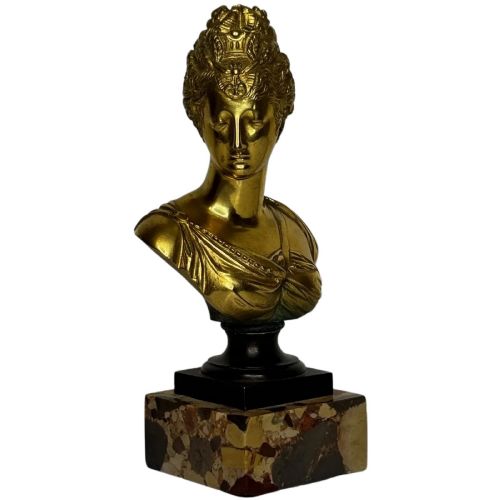
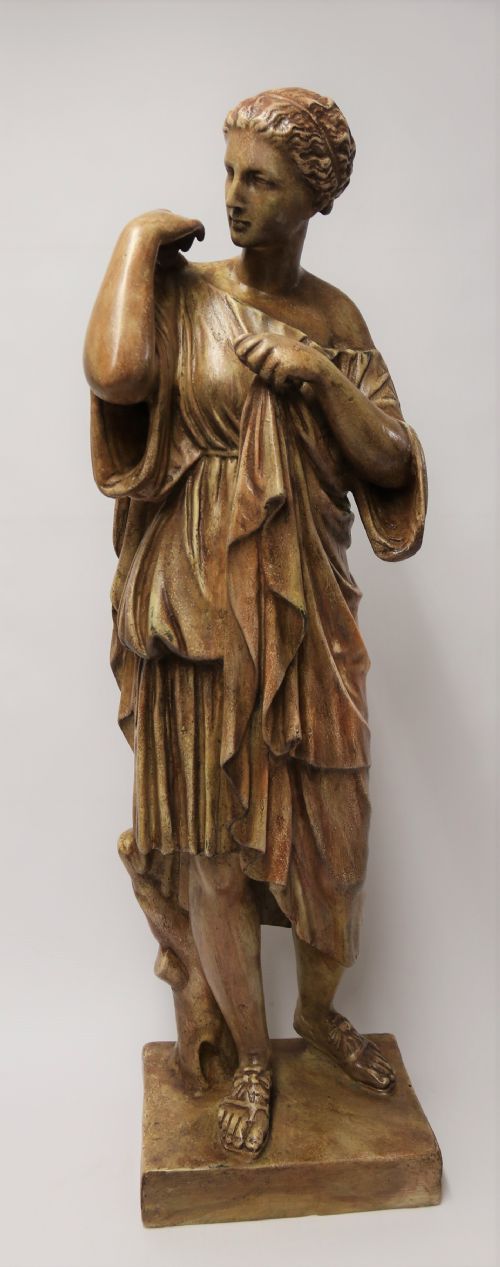
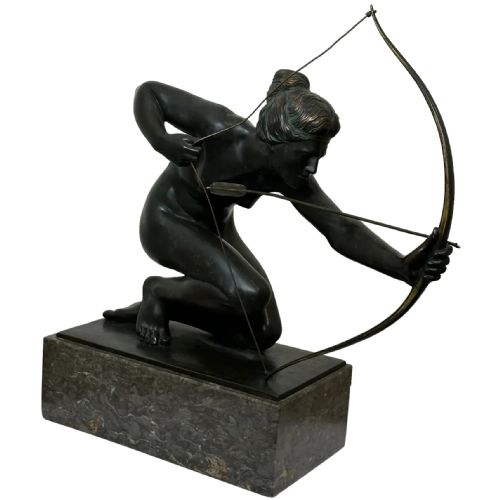
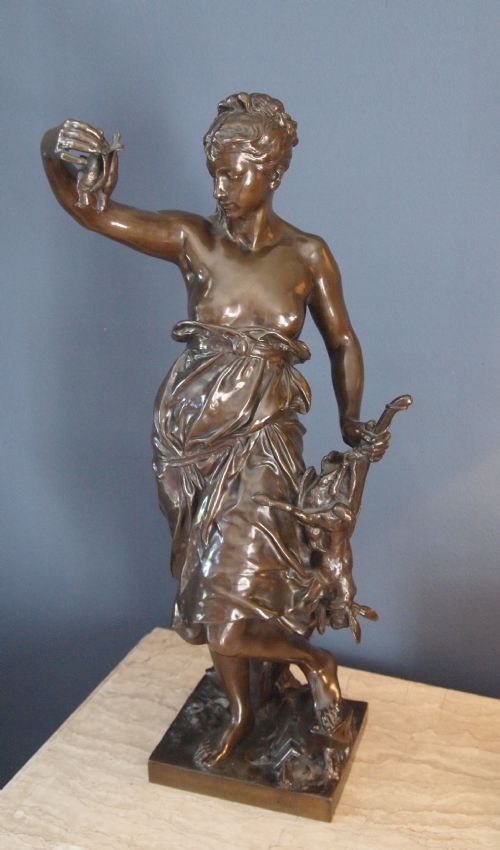
When you search for an antique sculpture of Diana, you encounter representations of the classical goddess of the hunt, captured with her bow, arrow, or hounds. These works span the nineteenth century and the early twentieth century, drawing heavily on neoclassical traditions and Grand Tour souvenirs. You will frequently find subjects such as Diana the Huntress and Diane de Gabii modelled in varied scales.
The objects take several distinct forms on this page, ranging from freestanding cabinet bronzes and marble busts to wall reliefs and figural mantel clocks. Many pieces reference classical antiquity directly, either as reductions of famous museum statues or as original academic compositions by named European sculptors. Others incorporate marble bases or function as decorative architectural elements within a room.
The material vocabulary of these pieces is broad, encompassing patinated bronze, white marble, gilt bronze, terracotta, plaster, copper, and wood. Nineteenth-century examples often lean towards French academic or Neoclassical interpretations, whilst later twentieth-century works adopt Art Deco styling. Each object reflects the enduring appeal of mythological subjects across different European decorative arts movements.
How they were made
Metals such as bronze and copper were shaped using traditional foundry casting techniques, often finished with detailed hand-chasing and varied chemical patination. Gilt bronze elements provide contrasting surface lustre against darker patinated sections.
Many mixed-media compositions mount cast bronze figures onto shaped marble plinths or incorporate them into functional objects like clock cases.
Antique Sculpture of Diana Retail Price Guide 2026
Typical asking prices for sculpture of diana among the pieces listed under this phrase on Sellingantiques today, from the lower quarter to the upper quarter. They describe what is for sale here now, not the wider market.
Art Deco interpretations appear alongside nineteenth-century Neoclassical and Grand Tour academic studies.
What varies in quality
The refinement of the cast or the precision of the marble carving dictates the visual strength of the piece, particularly in the rendering of facial expression, hair, and drapery folds. Finer examples display crisp detail in the hands, bow, and hunting attributes without loss of definition.
The quality of the patination on bronzes ranges from flat, uniform surfaces to subtle, layered tones that enhance the musculature and textures of the figure. Similarly, the selection of supporting materials, such as veined marble plinths, contributes to the overall presence of the sculpture.
R Mattei·Antonio Frilli·Pierre Le Faguays·Mercié·R Henn·Deniere and Cailleaux·Bulio·Louis Ernest Barrias
The Antique Sculpture of Diana Glossary
- Grand Tour
- A traditional trip through Europe undertaken by upper-class young men to study classical art and culture. Souvenirs from these travels included small bronze and marble sculptures of mythological figures.
- Neoclassical
- A style of art and architecture inspired by the classical arts of ancient Greece and Rome. This aesthetic prioritises proportion, restraint, and mythological subject matter.
- Patina
- A thin layer that naturally or artificially forms on the surface of bronze and copper through age and chemical treatment. It alters the colour and protects the metal underneath.
- Bust
- A sculpted or cast representation of a person from the chest up. In this context, it isolates the head and shoulders of the goddess.
- Wall relief
- A sculptural technique where the figures project from a flat background rather than standing freely in the round. These pieces are designed to be mounted directly onto walls.
Antique Sculpture of Diana: Frequently Asked Questions
What materials are these sculptures made from?
The pieces on this page are fashioned from a variety of traditional media, predominantly bronze, white marble, and terracotta. You will also find works utilising gilt bronze, copper, plaster, and wood.
Many compositions combine these materials, mounting cast bronze figures onto shaped marble bases or integrating them into clock housings.
How do I identify a Grand Tour Diana?
Grand Tour sculptures were produced as souvenirs for travellers visiting European cultural sites during the nineteenth century. They typically take the form of reduced-scale bronze or marble copies of famous antique statues.
Examining the patination and the quality of the reduction helps distinguish these travel pieces from later decorative castings.
Where should I place a sculpture of Diana at home?
These sculptures suit diverse interior settings, from traditional libraries to contemporary drawing rooms. Freestanding bronzes and marble busts sit well on pedestals, mantelpieces, or sturdy side tables where the details can be observed closely.
Wall reliefs require appropriate vertical hanging space, whilst figural clock variations function practically on mantel shelves.
How do nineteenth-century and Art Deco pieces differ?
Nineteenth-century interpretations of Diana generally adhere to French academic, Neoclassical, or Grand Tour styles, emphasising classical drapery and naturalistic anatomy. Art Deco examples from the twentieth century simplify these forms into more geometric, stylized silhouettes.
The choice of base materials and the character of the metal patina also shift between these distinct periods.