







Antique Scoring Board
An antique scoring board brings the rich atmosphere of the nineteenth-century billiard room and the parlour game directly to your wall or table.
Antique Scoring Board
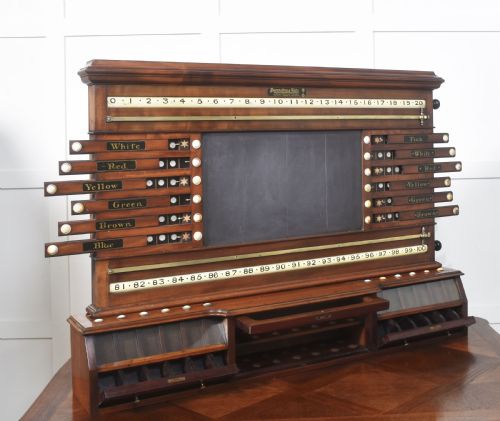
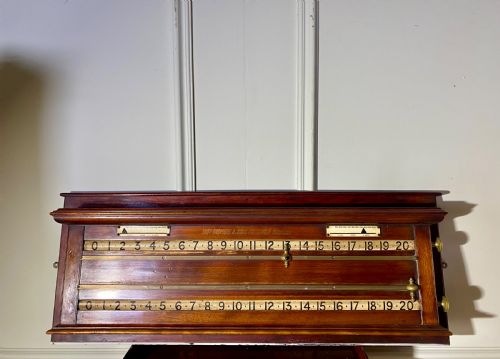
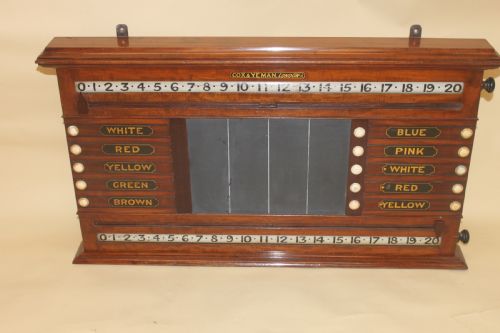
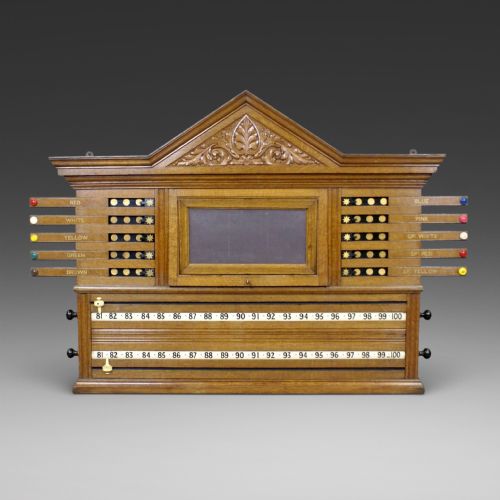
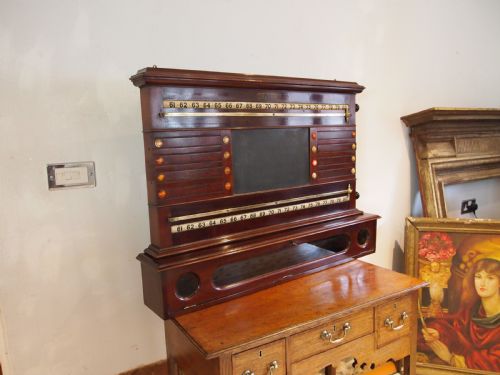
When you search for an antique scoring board, you are looking at functional wooden markers used in traditional British pastimes like billiards, snooker, pool, and cribbage. The selection on this page spans the Victorian and Edwardian eras, showcasing both grand wall-mounted markers and smaller tabletop boxes. These pieces range from simple wooden panels to comprehensive mahogany and oak cabinets designed to track complex scores for multiple players.
Originating predominantly from the nineteenth century, these objects reflect the golden age of domestic and social gaming in Britain. Makers utilised timber to match the heavy furniture of the period, creating functional items that doubled as decorative wall pieces. Whether you need a centrepiece for a games room or a tactile piece of social history, these boards offer a direct link to nineteenth-century leisure.
How they were made
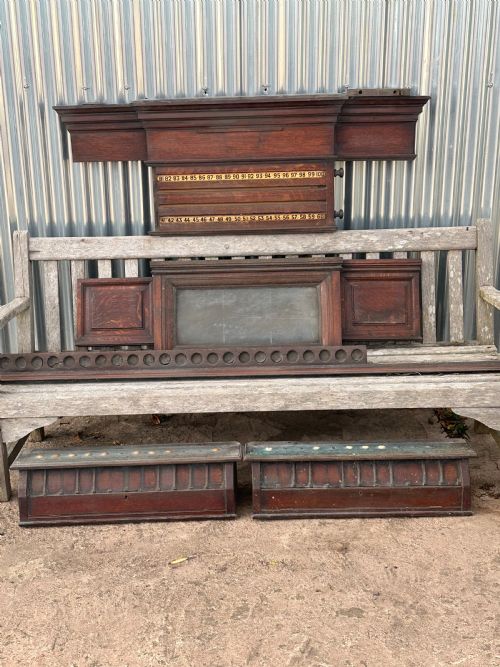
Cabinet makers constructed these boards using dense timbers such as mahogany, oak, walnut, and pale oak, often finished with polished surfaces to highlight the natural grain. Larger wall cabinets frequently employed sturdy mahogany or oak to house complex mechanisms and sliding markers without warping over time. Smaller pieces utilised exotic woods like kingwood alongside bone, glass, paper, and stag horn for detail and contrast.
The functional elements relied on traditional metalworking and carpentry, featuring brass rods, numerals, and pins that allowed smooth movement for tracking points. Numbers and markers were sometimes inlaid, painted, or carved directly into the timber, while bone and ivory components provided durable indicators for cribbage tracks. Cabinet doors on larger scoreboards featured glazed panels and brass hardware, demonstrating high levels of joinery.
Periods represented span the nineteenth century, including specific years from the 1860s through to Edwardian pieces.
What varies in quality
The distinction between standard examples and the finest pieces lies in the choice of timber and the complexity of the scoring system. Superior boards feature figured English walnut or substantial mahogany, accompanied by complete brass sliding mechanisms and original pointers rather than modern replacements. Maker attribution also elevates a piece, with workshops known for high-end billiard accessories producing superior cabinetry.
Proportion and decorative detail separate utilitarian items from grand games room accessories. Better quality scoreboards include carved mouldings, incorporated print displays, and large cabinets designed to hold related accessories, whereas simpler versions consist of plain wooden boards. The survival of delicate materials such as bone pegs, original glass, and horn inlay also distinguishes exceptional pieces from the more common survivors.
Orme & Sons Manchester·Thurston & Co of London·Cox & Yeman London·Burroughes and Watts·ASHCROFT LIVERPOOL·Palmer & Sons
The Antique Scoring Board Glossary
- Cribbage board
- A traditional games board featuring tracks of small holes used with pegs to score points in the card game cribbage. These are often found as standalone wooden or horn boxes.
- Life pool
- A variation of cue sports requiring specialised scoring markers on the board to track the lives or points remaining for multiple competing players.
- Sliding pointer
- A small brass or wooden indicator fitted to a rod or groove on the board, moved manually by players to tally scores during a game.
- Score cabinet
- A larger wall-mounted wooden enclosure that protects the scoring dials behind glazed doors while providing storage space for related billiard accessories.
- Marker
- Any mechanical component on the board, such as a dial, pointer, or peg, used to register numerical progress during play.
Antique Scoring Board: Frequently Asked Questions
How do you use a billiard scoring board?
Players slide brass pointers along horizontal rods or turn numbered rollers to register points as shots are made during a game of snooker, billiards, or pool.
Larger boards feature multiple rows and dials to accommodate several players simultaneously, allowing the marker to track complex game rules and cumulative scores.
What is the difference between a pool and snooker board?
Pool and snooker boards are often built into the same large wooden cabinets, but they utilise different scales of numbers and dials to suit the specific scoring requirements of each game.
Life pool boards typically include extra rows for tracking individual player lives, whereas standard snooker boards focus on higher numerical increments for breaks and frame totals.
How do I hang a heavy wooden scoreboard?
Because these cabinets are constructed from dense Victorian timbers like oak and mahogany, they require secure wall fixings directly into structural studs or masonry.
Most wall-mounted units feature sturdy internal brackets or hanging loops designed to support the significant weight of the timber and internal brass mechanisms safely.
Can these boards still be used for games?
Most antique scoring boards remain fully functional and can be mounted and used for modern games of pool, snooker, or cribbage.
While some collectors simply display them as wall art or cabinet furniture, the sliding brass pointers and wooden dials are generally robust enough for continued practical use.
How do I identify the age of a scoreboard?
Age is determined by examining the timber species, construction techniques, hardware style, and any maker's plates or stamps attached to the cabinet.
Nineteenth-century examples often display hand-cut joinery, specific maker signatures from London or Manchester firms, and distinct Victorian design motifs in the carved woodwork.