






Antique Scientific Curiosities
Antique scientific curiosities bring the pursuit of empirical discovery home, offering brass instruments, anatomical models, and natural history prints that chart centuries of human inquiry.
Antique Scientific Curiosities
When you search for antique scientific curiosities, you encounter a diverse gathering of apparatus, models, and illustrations spanning the eighteenth, nineteenth, and mid-twentieth centuries. These items range from Georgian travelling compasses and wind gauges to Victorian slide cabinets and educational botanical models.
The objects on this page bridge the gap between rigorous laboratory utility and domestic display. You will find items originating from British and French workshops, encompassing medical and scientific curiosities, framed anatomical engravings, and physical demonstration machines.
The selection reflects both Enlightenment curiosity and later educational expansion, capturing how scientific principles were measured, demonstrated, and recorded over successive generations. Each piece preserves a tangible slice of historical investigation, whether through precision metalwork or hand-coloured biological illustration.
Materials and construction
Brass and mahogany form the primary structural backbone for many of the physical instruments, often paired with glass, steel, and turned boxwood for delicate internal components. Makers utilised these durable materials to ensure both precision and longevity in laboratory and field settings.
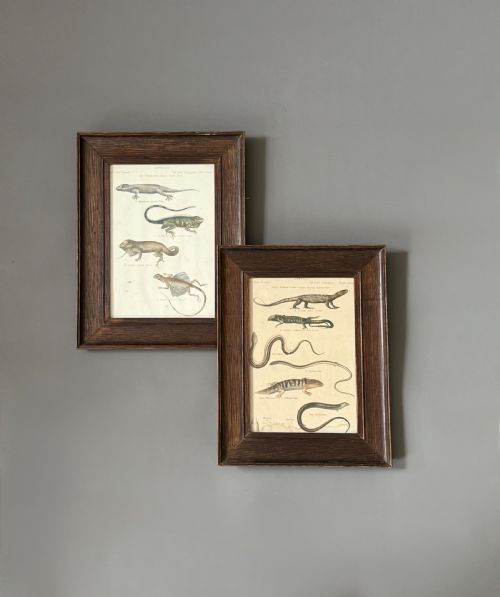
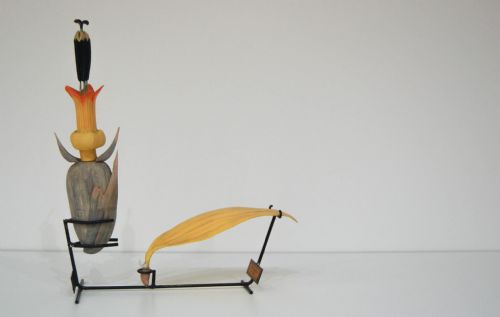
Paper and plaster dominate the visual and illustrative items, seen in hand-coloured engravings, framed anatomical illustrations, and moulded botanical teaching aids. These graphic and sculptural pieces rely on skilled draftsmanship and detailed casting techniques to accurately communicate complex biological forms.
Antique Scientific Curiosities Retail Price Guide 2026
Typical asking prices for scientific curiosities among the pieces listed under this phrase on Sellingantiques today, from the lower quarter to the upper quarter. They describe what is for sale here now, not the wider market.
Materials documented across these listings include glass, brass, wood, paper, mahogany, steel, turned wood, and boxwood.
Assessing quality and execution
Quality in these pieces rests upon the precision of the maker's hand and the integrity of the materials employed, distinguishing utilitarian classroom aids from bespoke laboratory instruments. Finer examples display crisp engraving, superior optical glass, and robust cabinetmaking in secondary woods like mahogany.
The degree of original completeness also determines distinction, particularly in instruments with delicate glass components, mounted specimens, or complex mechanical linkages. Pieces retaining their signed makers' signatures or original fitted boxes command greater attention from collectors.
William Bird MD FLS·Negretti and Zambra·Watkins and Hill·William Ladd London·Educational and Scientific Plastics Ltd
The Antique Scientific Curiosities Glossary
- Thermoscope
- An early instrument used to indicate changes in temperature without providing a calibrated numerical scale. These devices typically rely on the expansion or contraction of air within a glass bulb.
- Geissler tube
- A sealed glass cylinder used to demonstrate electrical discharge through rarefied gases. These tubes produce striking luminescent glows when subjected to high voltage.
- Wimshurst machine
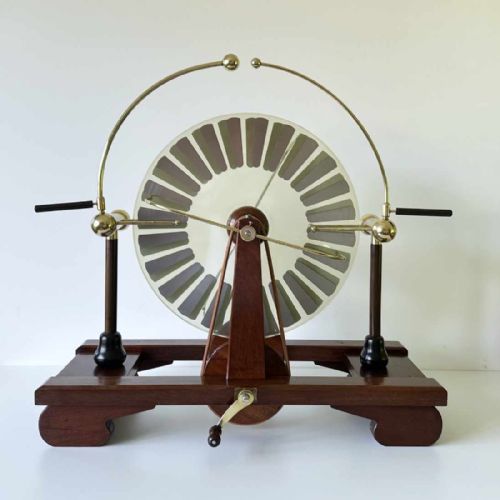
- An electrostatic generator featuring counter-rotating discs that produce high-voltage sparks. This apparatus became a staple of nineteenth-century physics demonstrations.
- Anemometer
- A meteorological instrument designed to measure wind speed and pressure. Lind's pattern versions utilise a U-tube containing liquid to register velocity.
- Boxwood
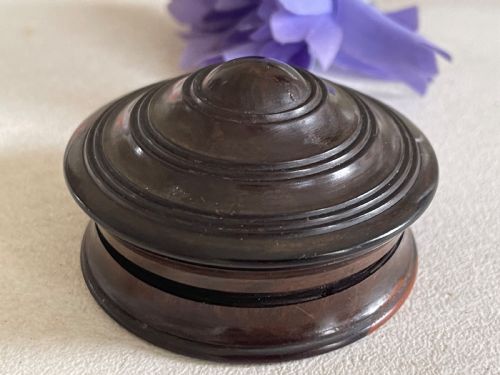
- A dense, pale hardwood prized by instrument makers for its stability and fine grain. It allows for precise calibration markings and intricate turned details.
Antique Scientific Curiosities: Frequently Asked Questions
How do I date an antique scientific instrument?
Dating relies heavily on engraved signatures, patent dates, and the specific evolution of materials like brass alloys and mahogany framing. Stylistic cues from the Georgian and Victorian periods also provide reliable chronological markers.
Makers often inscribed their addresses on instruments, which allows researchers to cross-reference active working years in trade directories. Comparing the complexity of the mechanism against known technological milestones helps narrow the decade of manufacture.
Were these items used for teaching or research?
They served both purposes, moving from professional laboratories and observatories into university lecture halls and middle-class Victorian drawing rooms. Demonstrational apparatus was specifically built to make invisible physical forces visible to students.
Instruments such as anemometers and compasses saw active service in the field, while items like botanical plaster models and anatomical engravings were strictly pedagogical. Their dual role as tools and visual art dictated how robustly they were constructed.
How should I display scientific instruments at home?
These pieces benefit from stable environments away from direct sunlight and excessive humidity, particularly items incorporating delicate paper, glass, or polished wood. Allowing adequate space around each object highlights their sculptural and mechanical qualities.
Enclosed mahogany cabinets or wooden shelves protect fragile glass elements, such as Geissler tubes or slide collections, from accidental damage. Grouping complementary items, such as pairing an anatomical print with a physiological model, creates a coherent historical narrative.
Are these scientific curiosities still in working order?
Functional status varies considerably depending on the fragility of internal components, such as delicate glass vacuum scales or electrostatic generator belts. Many pieces are preserved primarily as static display objects or historical artefacts rather than operational laboratory equipment.
Collectors should consult individual descriptions to determine whether mechanical parts move freely or if electrical apparatus remain intact. Professional conservation may be required if activation is desired, though most owners prefer preserving original patina and internal state.