





Antique Sampler Art
Antique sampler art brings centuries of hand-stitched needlework and textile pictures into modern interiors.
Antique Sampler Art
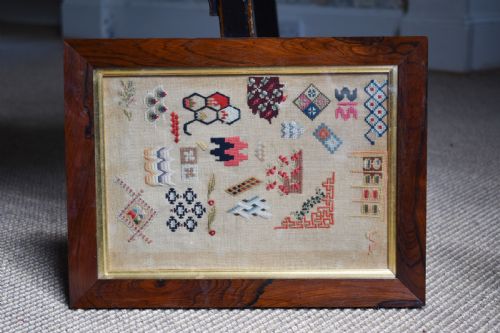
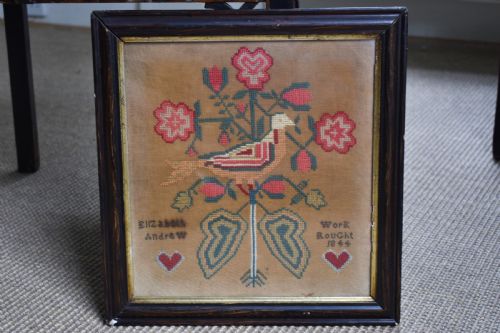
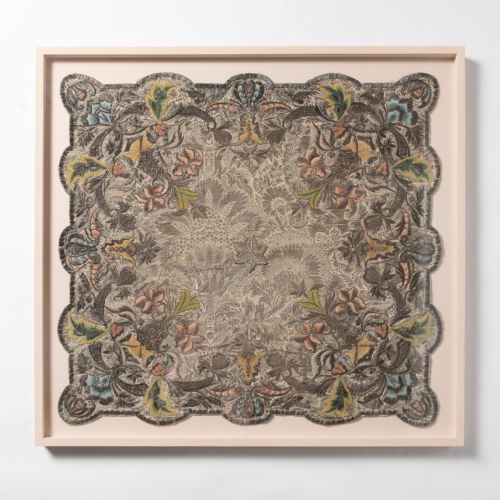
When you search for antique sampler art, you encounter historical needlework pieces created primarily on linen and canvas grounds. These textile works range from traditional alphabet and map exercises to pictorial scenes and religious panels.
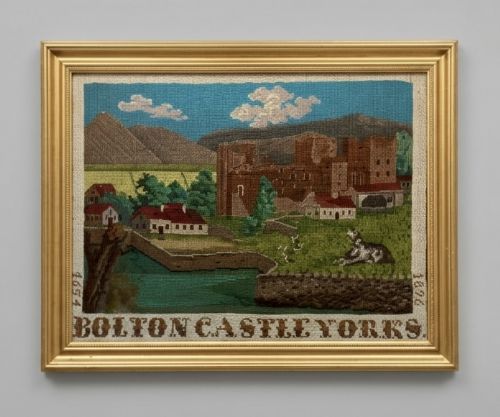
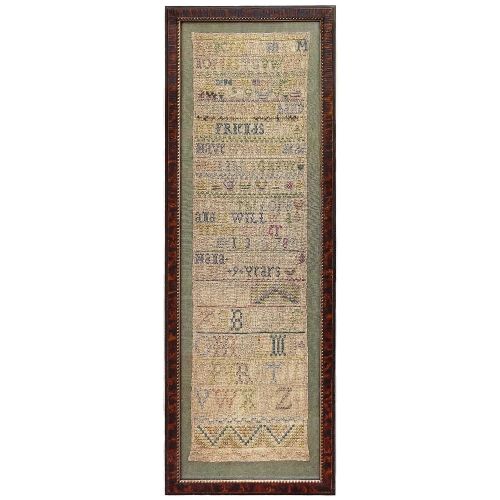
The selections span the eighteenth and nineteenth centuries, encompassing Georgian and Victorian periods alongside regional examples from England, Scotland, and Europe. Common formats include framed wall art, needlework pictures, and detailed band samplers worked by young makers.
Materials and construction
Maker execution relies on natural textile grounds like linen and canvas stitched with wool, silk, silk thread, and standard thread. Wood and glass typically comprise the protective framing materials enclosing these historical embroideries.
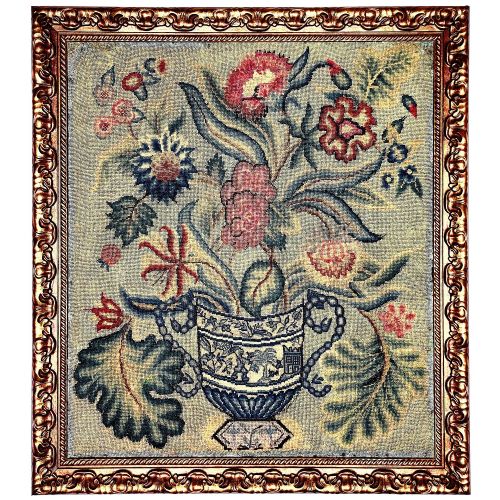
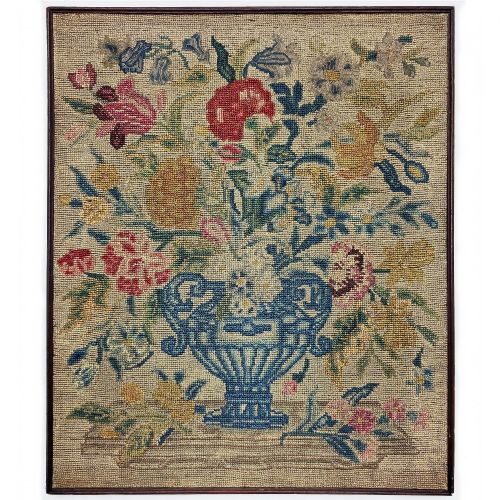
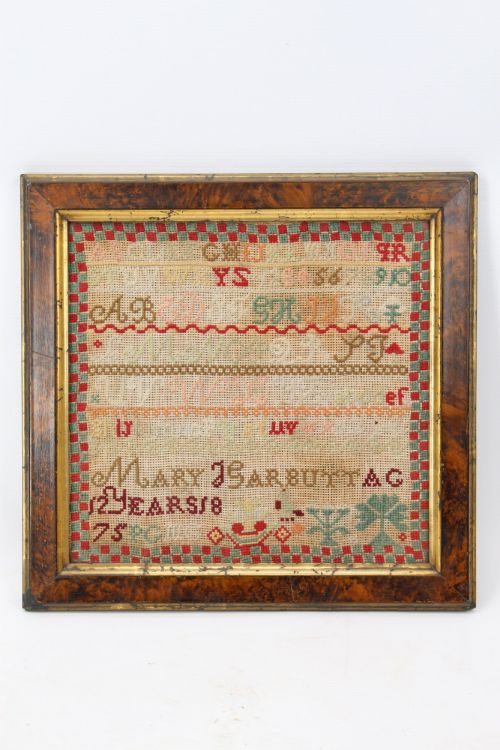
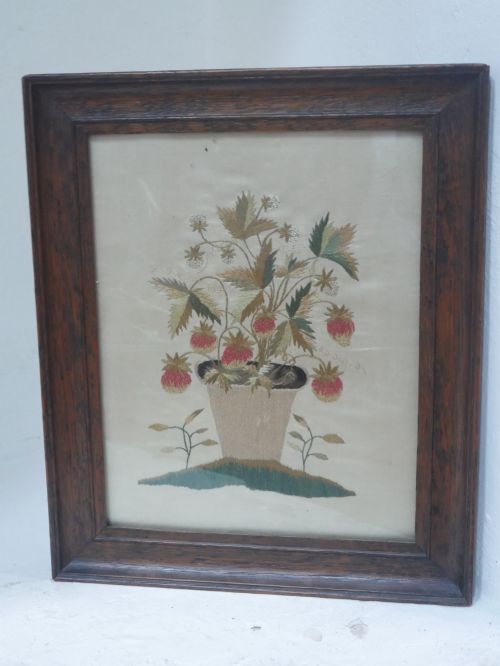
Techniques involve precise needlepoint, gros point, and varied embroidery stitches executed by hand. Makers often incorporated alphabets, numerals, maps, floral motifs, and figurative narratives directly into the woven fabric structure.
Antique Sampler Art Retail Price Guide 2026
Typical asking prices for sampler art among the pieces listed under this phrase on Sellingantiques today, from the lower quarter to the upper quarter. They describe what is for sale here now, not the wider market.
Listings feature eighteenth and nineteenth-century periods, including Georgian and Victorian styles worked on linen, wool, and silk.
Quality variations in historical needlework
Quality rests upon the intricacy of the stitchwork, the complexity of the design, and the legibility of alphabets or cartographic details. Pieces featuring uncommon subjects like topographical maps or narrative scenes often display higher execution skill.
Condition and survival of the delicate silk and wool threads affect the overall visual strength of the textile. Original framing and clear maker signatures with dates or ages add documented context to the physical embroidery.
Mary J Garbutt·Mary Banion·Mary Greening·Jane Wettmore·Louiss Elkins·Margaret Ann Blackow·Maggie Muir·Ann Hodson·Sarah Baker·Mary Mason·Ann B Gilies·Sarah Anne Hudson·Martha Hall·Mary Street Didsbury·Elizabeth Horn
The Antique Sampler Art Glossary
- Sampler
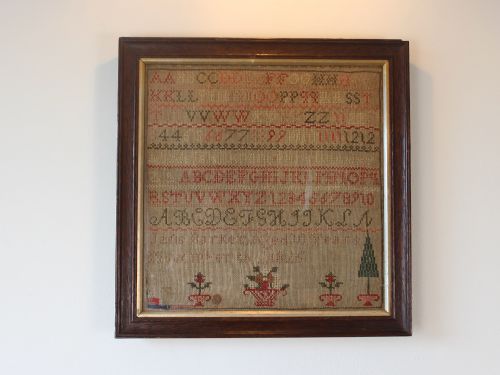
- A piece of needlework produced by a maker to demonstrate proficiency in various stitches, alphabets, and motifs. These exercises frequently record the name, age, and date of the maker.
- Band sampler
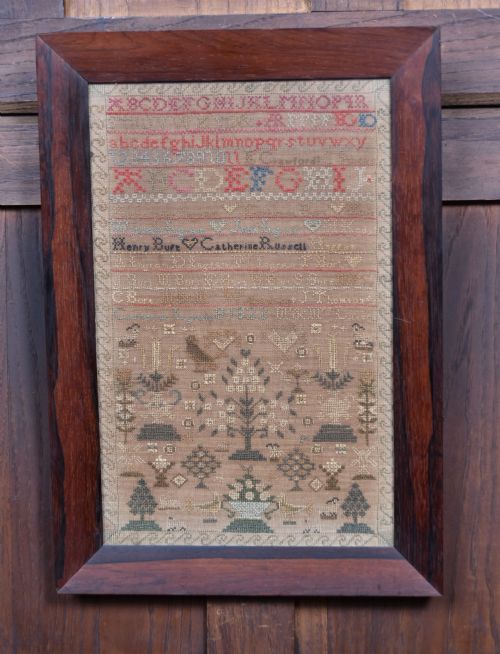
- An early format of needlework featuring horizontal rows of distinct pattern bands stitched across a long linen ground. This style predominates in seventeenth and eighteenth-century examples.
- Map sampler
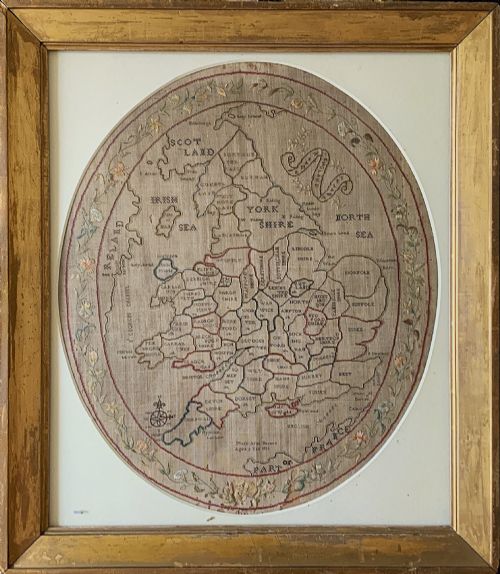
- A specialised needlework panel depicting geographical regions such as England and Wales, combining cartography with embroidery skills. Young makers stitched these to demonstrate both domestic and academic education.
- Gros point
- A type of needlepoint embroidery worked on canvas using a coarse count stitch. This technique creates durable pictorial scenes with substantial texture.
- Needlework picture
- A framed textile artwork designed for display rather than as a stitch practice piece. These often illustrate religious stories, pastoral landscapes, or literary scenes.
Antique Sampler Art: Frequently Asked Questions
How old are these pieces?
The textile works span from the late seventeenth century through the nineteenth century, covering the Georgian and Victorian eras.
Many examples include stitched dates and the age of the maker, providing precise documentation of their origin.
What materials were used?
Makers stitched with wool, silk thread, and standard thread onto linen or canvas grounds.
Protective surrounds commonly incorporate wood frames and glass coverings to shield the delicate textiles.
How do I hang them?
Keep framed textile art away from direct sunlight to prevent the silk and wool threads from fading over time.
Ensure stable indoor humidity levels to protect both the natural fabric grounds and the antique wooden frames.
What subjects appear on them?
Common subjects include alphabets, numerals, religious scenes, floral motifs like strawberries, and detailed maps of England and Wales.
Some panels depict narrative stories, figures feeding swans, or portraits of religious figures.