


Antique Sample Chest
An antique sample chest delivers compact scale and cabinetmaker precision, offering small-scale case pieces made to demonstrate skill or display details.
Antique Sample Chest
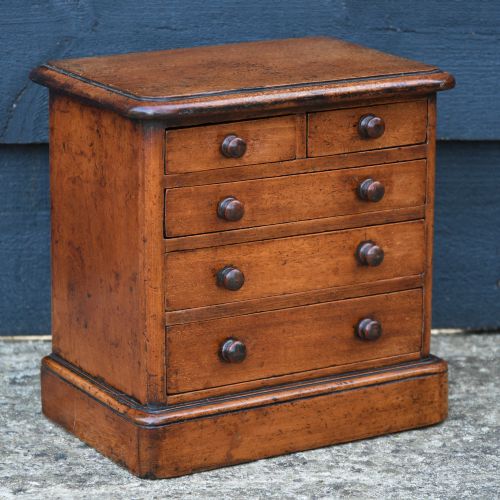
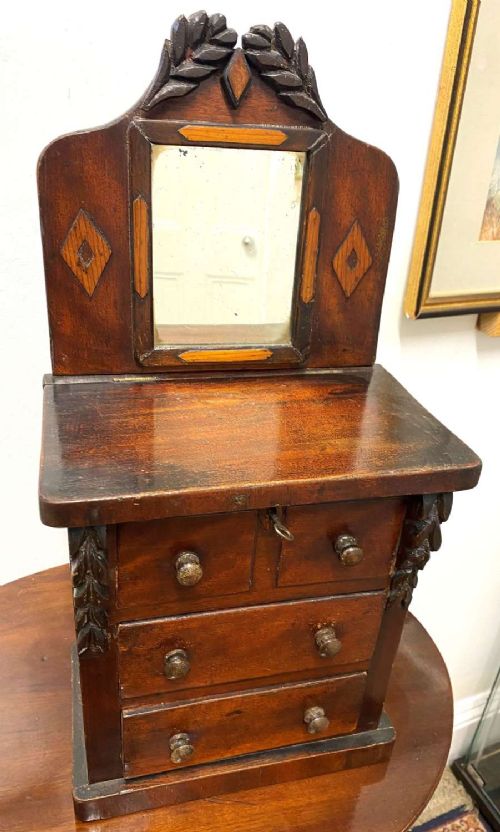
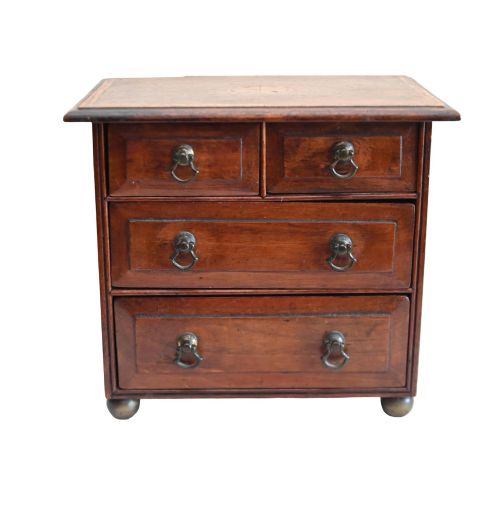
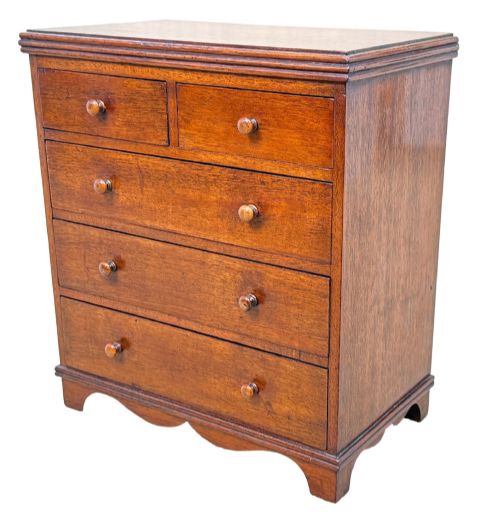
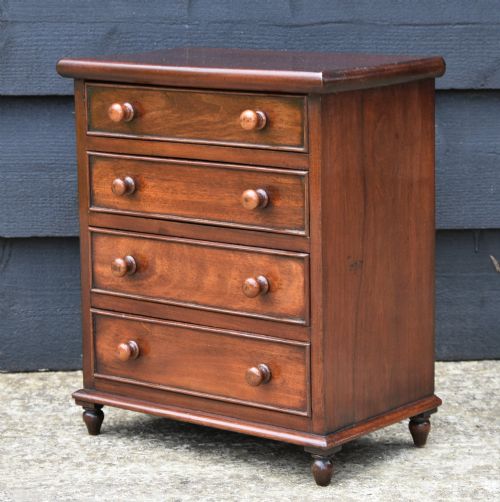
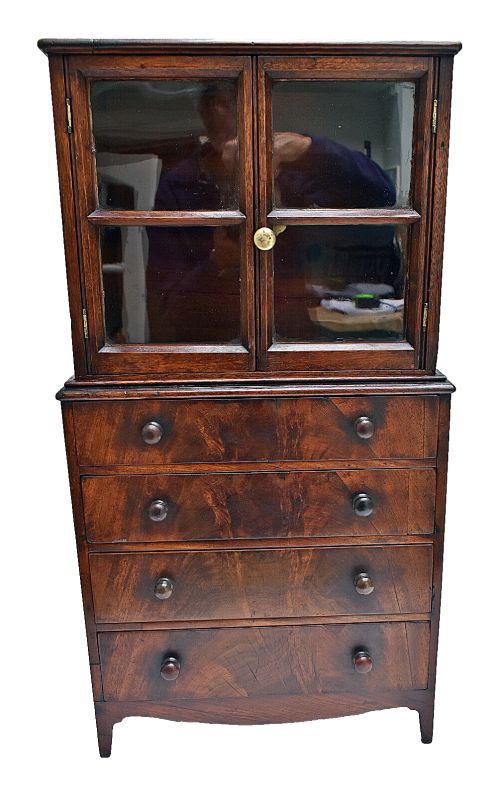
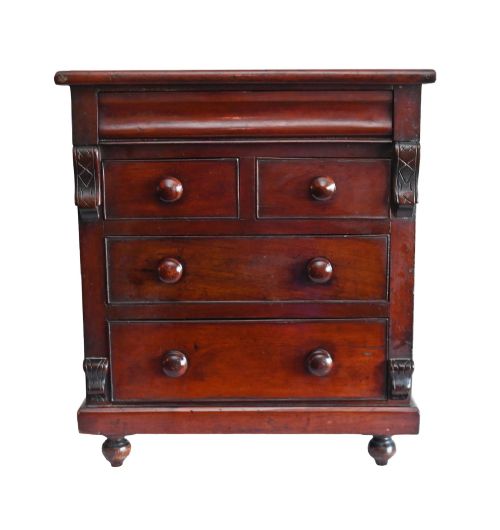
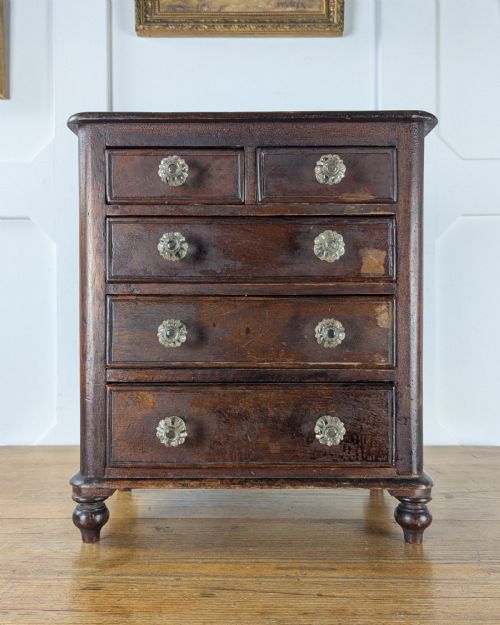
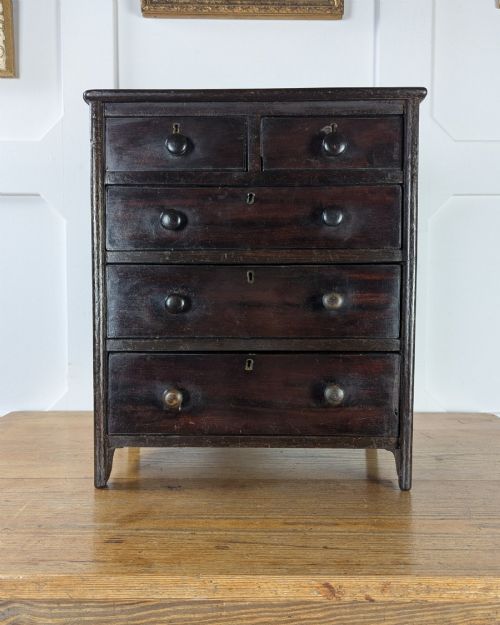
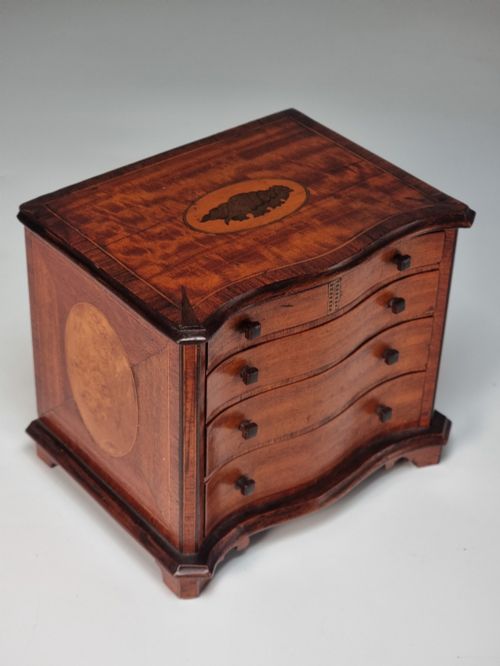
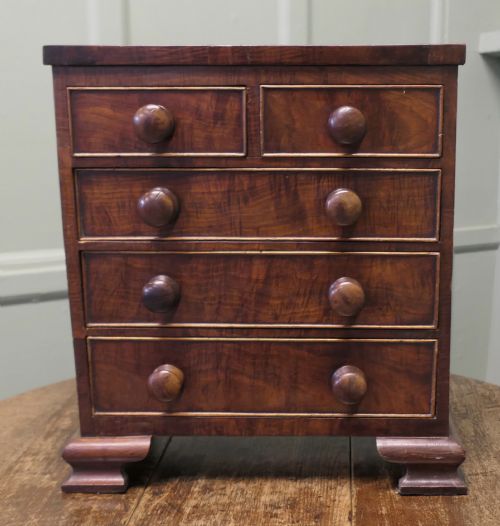
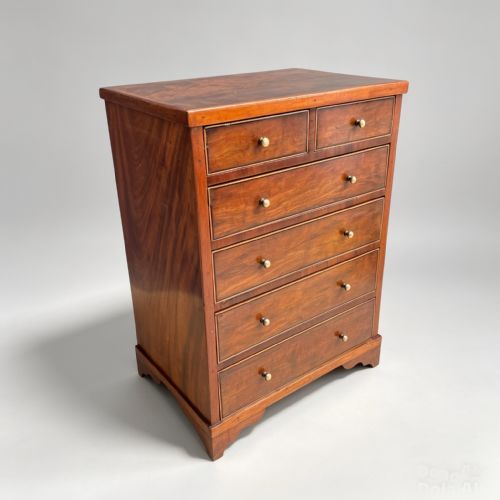
An antique sample chest represents small furniture forms produced by makers to prove their proficiency, display designs to clients, or furnish miniature room settings. The pieces found here span the eighteenth, nineteenth, and early twentieth centuries, encompassing miniature chests of drawers, apprentice cabinets, and diminutive commodes.
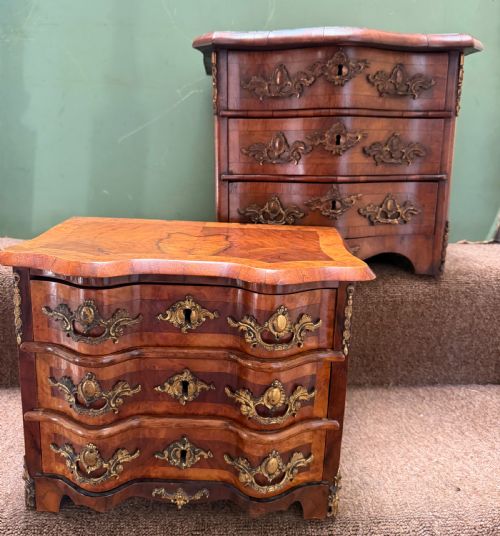
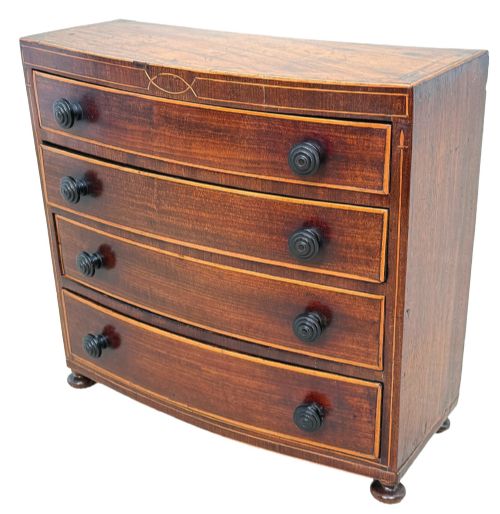
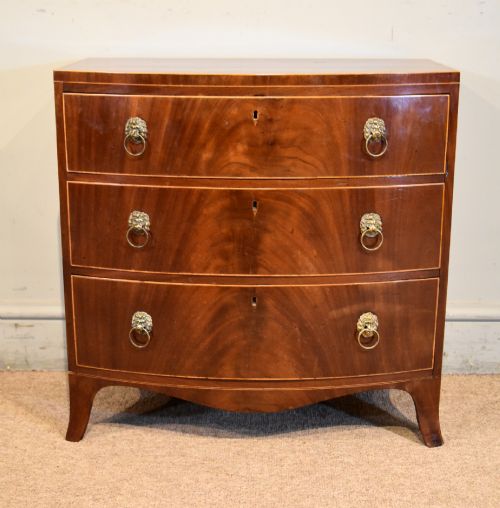
Mahogany forms the primary body of these small items, often paired with bow fronts, serpentine shapes, or turned feet. Examples range from simple utilitarian boxes in pine or pitch pine to elaborate satinwood, burr oak, and burr walnut creations carrying secret drawers or brass thistle engravings.
What varies in quality
Execution of dovetail joints and drawer linings separates workshop exercises from standard utility boxes. Finer pieces demonstrate precise timber selection, symmetrical grain matching on curved bow fronts, and proportioned turned feet.
Complexity of form distinguishes basic chests from high-status creations. Incorporating serpentine profiles, hidden compartments, or unusual secondary timbers like burr walnut elevates the standing of an individual piece.
Antique Sample Chest Retail Price Guide 2026
Typical asking prices for sample chest among the pieces listed under this phrase on Sellingantiques today, from the lower quarter to the upper quarter. They describe what is for sale here now, not the wider market.
Listings feature woods including mahogany, oak, pine, satinwood, burr walnut, burr yew, and bone across nineteenth and eighteenth-century periods.
A. F. Lloyd
The Antique Sample Chest Glossary
- Apprentice piece
- A small furniture item created by a trainee woodworker to demonstrate mastery of joinery before entering a guild. These pieces mirror full-scale designs in every structural detail.
- Bow front
- A convex curved cabinet front that swells outward at the centre. This shape requires advanced woodworking skill to shape drawer fronts and matching frames.
- Serpentine
- A furniture front featuring a concave curve flanked by two convex curves, or the reverse. The undulating contour demands exact hand-sawing and plane work.
- Escutcheon
- A flat plate surrounding a keyhole to protect the surrounding wood from wear. In miniature pieces, these are frequently cast in brass or carved from bone.
Antique Sample Chest: Frequently Asked Questions
What is an apprentice chest?
An apprentice chest is a small-scale piece of furniture built by a trainee to prove technical skill to master craftsmen.
These items duplicate full-sized drawers, sideboards, and presses in miniature proportions while retaining proper joinery.
How were sample chests used?
Cabinetmakers carried portable miniature chests to demonstrate their craftsmanship and display furniture styles to prospective clients.
Some examples also served as jewellery cabinets or specialised storage boxes within larger domestic interiors.
What woods are used most?
Mahogany appears most frequently across these pieces, supplemented by oak, walnut, pitch pine, and satinwood.
Cabinetmakers utilised figured veneers like burr yew and burr walnut to add visual depth to the small surfaces.
How do I date a miniature chest?
Dating relies on identifying period characteristics such as Regency bow fronts, Georgian proportions, or Victorian ebonised mouldings.
Construction methods, secondary timbers, and hardware types further help place a piece within the eighteenth or nineteenth century.