

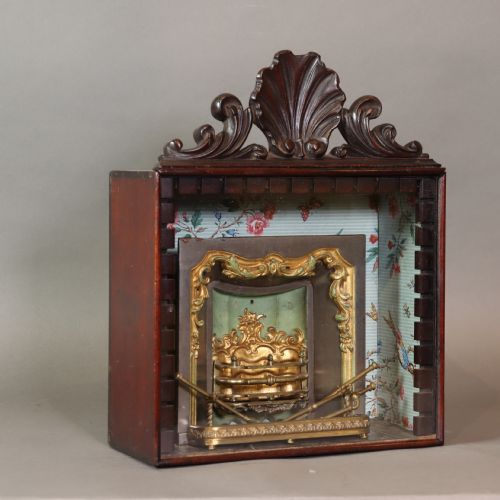


Antique Sample Box
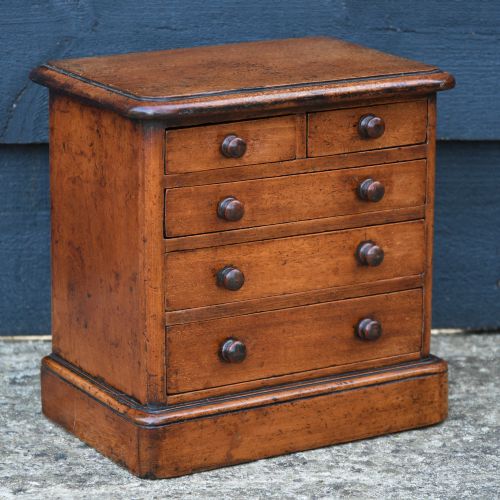
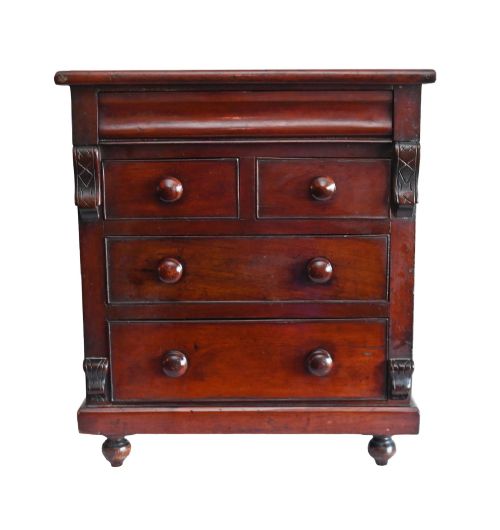
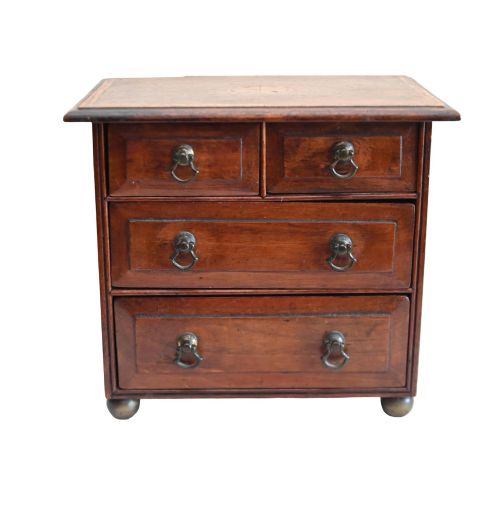
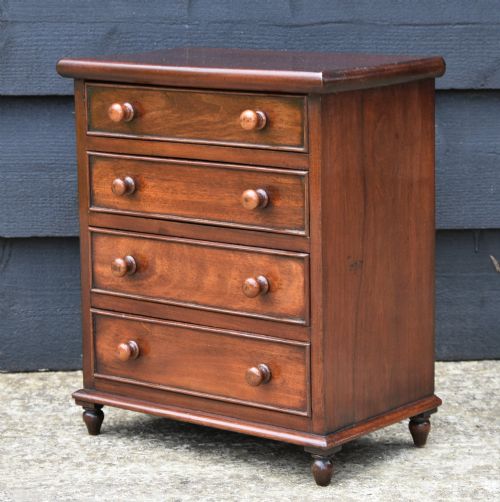
These antique sample box pieces offer compact craftsmanship, presenting scaled-down cabinetwork and miniature chests that capture full-sized design in miniature form.
Antique Sample Box
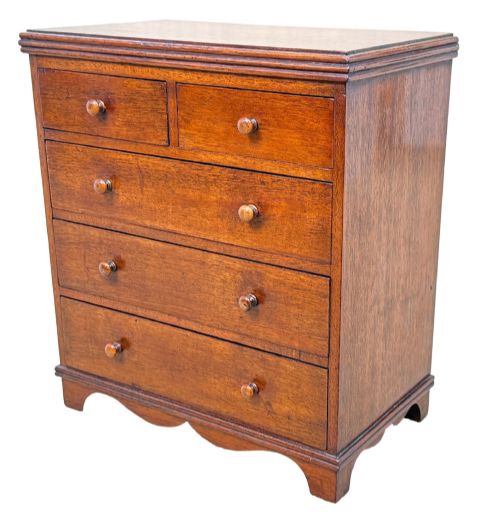
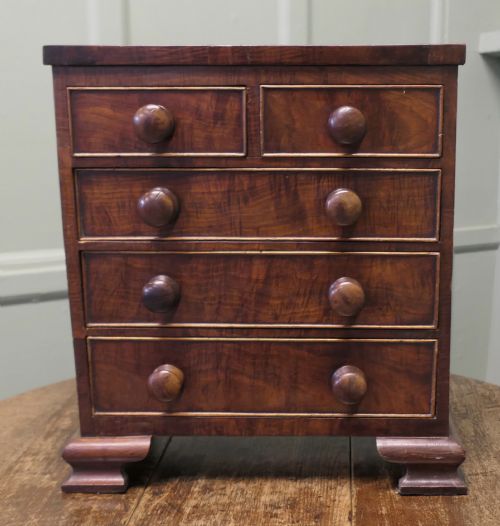
An antique sample box typically takes the form of a miniature chest of drawers, apprentice piece, or small cabinet, reflecting domestic furniture scales from the Georgian, Victorian, and Edwardian eras. Buyers search for these pieces to acquire portable examples of period cabinet-making that display traditional joinery in a compact format.
The versions most frequently met on this page are mahogany miniature chests of drawers dating from the nineteenth century, alongside specialised items like medical samples and salesman's pieces. These smaller items served practical purposes for travelling makers or as demonstrations of skill, yet they function today as desktop display objects.
How they were made
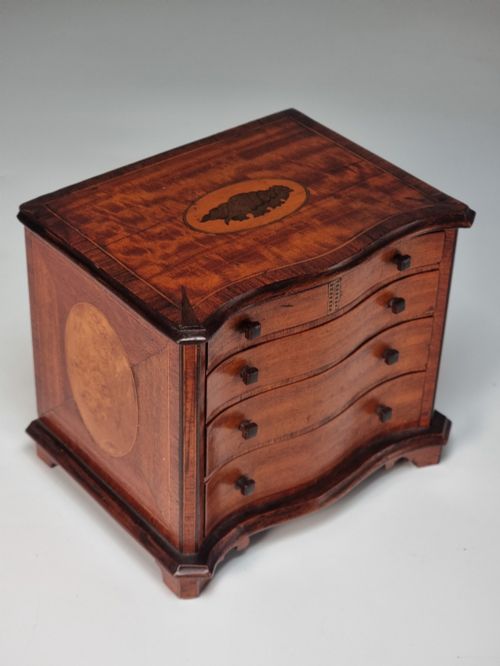
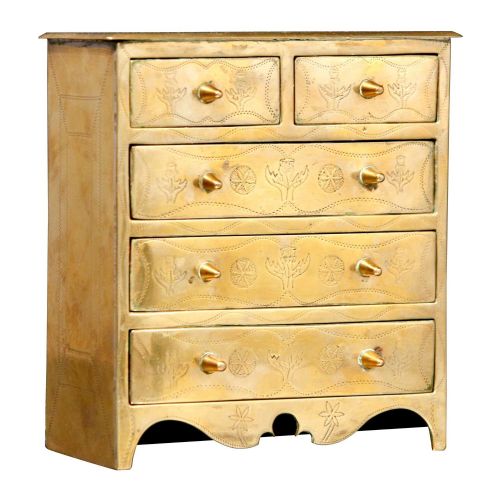
Makers constructed these miniature pieces using solid timbers like mahogany, oak, and satinwood, frequently applying finer veneers such as burr oak, kingwood, and tulipwood to primary surfaces. Brass hardware, including small drawer pulls and engraved plaques, appears alongside boxwood and ebony stringing to accent the timber frames.
Cabinet-makers utilised traditional joinery techniques scaled down to fit small dimensions, creating functional drawers, secret compartments, and miniature paneling. Glass elements and iron details also appear in specific utilitarian or display items like medical samples and miniature fireplaces.
Antique Sample Box Retail Price Guide 2026
Typical asking prices for sample box among the pieces listed under this phrase on Sellingantiques today, from the lower quarter to the upper quarter. They describe what is for sale here now, not the wider market.
Object forms on display range from miniature chests of drawers and parquetry desks to specialised medical samples and miniature fireplaces.
What varies in quality
The refinement of the timber selection and veneer matching establishes the primary visual distinction between standard pieces and finer examples. Pieces utilising figured mahogany, burr oak, or contrasting stringing display a higher degree of maker ambition than plain constructions.
A. F. Lloyd Bideford
The Antique Sample Box Glossary
- Apprentice piece
- A small-scale item of furniture created by a trainee cabinet-maker to demonstrate proficiency to a guild or master. These objects often mirror full-sized furniture designs with exact proportions.
- Miniature chest of drawers
- A scaled-down version of a standard domestic chest, built with functional drawers and miniature timber framing. They served various display or personal storage uses.
- Veneer
- A thin layer of figured wood applied over a secondary timber base to create decorative surfaces. Common types in these pieces include kingwood, tulipwood, and satinwood.
- Serpentine chest
- A storage piece featuring an undulating, curved front profile. This sophisticated shape requires precise woodworking skill, especially when scaled down to miniature proportions.
- Secret drawer
- A concealed compartment built into the interior framework of a cabinet or chest. These hidden spaces accessed via removable panels or clever mechanical releases demonstrate advanced joinery.
Antique Sample Box: Frequently Asked Questions
What is an apprentice piece?
An apprentice piece is a small-scale item made by a craftsman in training to prove their mastery of woodworking techniques. These objects replicate full-sized furniture to demonstrate precise scaling and joinery skills.
They were often kept by the maker as a portfolio of their abilities or used within workshops to show clients what designs could be executed on a larger domestic scale.
How were miniature chests used?
Miniature chests served multiple functions, ranging from salesman samples used by travelling merchants to personal tabletop storage for precious items like jewellery. Some acted as master craftsmanship displays rather than utilitarian objects.
In domestic settings, they provided tidy desktop compartments for small documents, sewing accessories, or curiosities without occupying significant floor space.
Are all miniature chests from the Victorian era?
While many examples date from the Victorian period, the form spans several eras including Georgian, Regency, and Edwardian periods. Construction styles and timber choices help distinguish between these chronological eras.
Earlier pieces often showcase solid mahogany or walnut with restrained proportions, while later nineteenth-century items might incorporate elaborate veneers and specialised hardware.
What woods were commonly used?
Makers relied heavily on timbers like mahogany, oak, and satinwood for the main structural carcase and drawer framing. These durable woods allowed for crisp detailing at a small scale.
Finer decorative surfaces frequently featured exotic veneers such as kingwood and tulipwood, complemented by contrasting stringing lines in boxwood or ebony.