





Antique Russian Enamel
Antique russian enamel works bring together vibrant coloured vitreous decoration and precious metals, offering collectors striking miniature art objects from past centuries.
Antique Russian Enamel
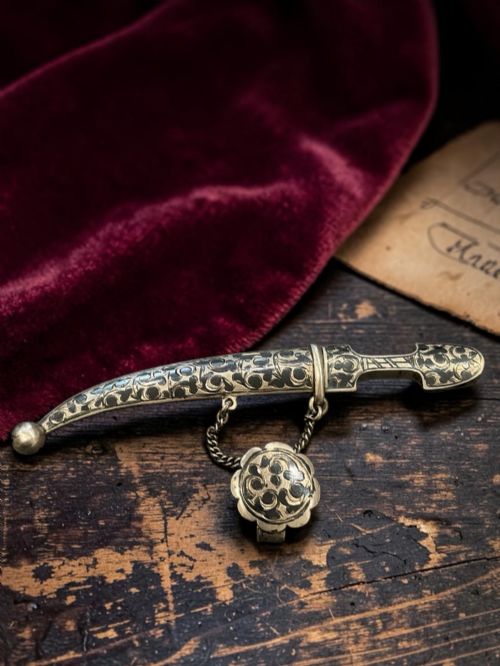
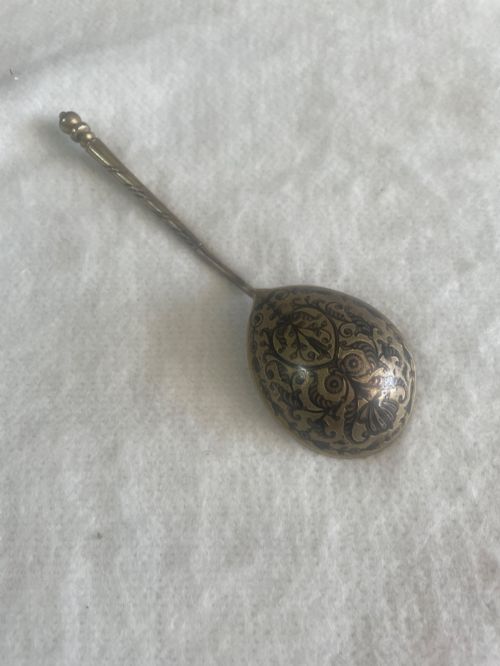
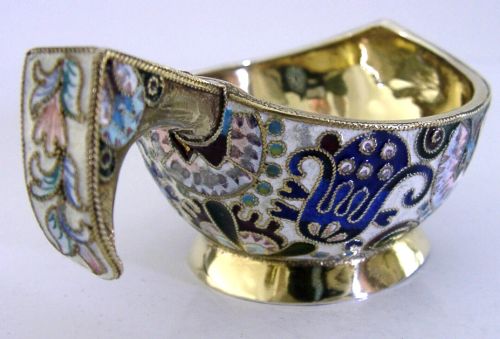
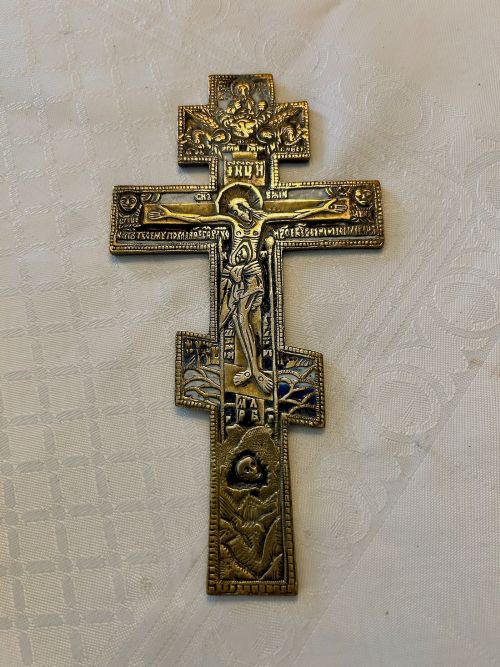
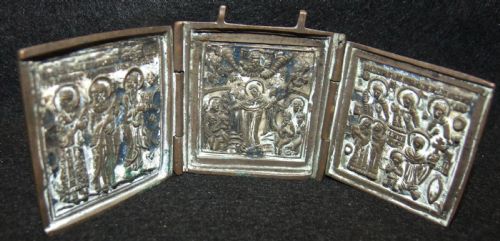
When you search for antique russian enamel, you encounter a specialised group of decorative metalwork and small personal items originating from eastern europe. These objects include kovsh cups, decorative boxes, spoons, egg pendants, and religious items such as crosses and folding triptychs.
The pieces on this page span the nineteenth century and the early decades of the twentieth century. They reflect periods such as the nineteenth century, nineteen hundred, nineteen ten, and nineteen fifty, incorporating styles like imperial russian, russian orthodox, russian revival, art nouveau, and caucasian traditional.
You are most likely to meet small tableware items like cloisonne enamel spoons and silver-gilt boxes alongside devotional crosses and charms. These items capture the intricate metalworking traditions of their respective eras.
How they were made
The creation of these items relies on solid silver, silver-gilt, and bronze as foundational metal structures. Artisans shape these metals into boxes, spoons, frames, and pendants before applying decorative treatments.
Enamel work appears prominently, often utilising cloisonne techniques where thin wire compartments hold coloured glass paste prior to firing. Materials such as karelian birch, turquoise enamel, and diamonds also supplement the metal and glass compositions.
Antique Russian Enamel Retail Price Guide 2026
Typical asking prices for russian enamel among the pieces listed under this phrase on Sellingantiques today, from the lower quarter to the upper quarter. They describe what is for sale here now, not the wider market.
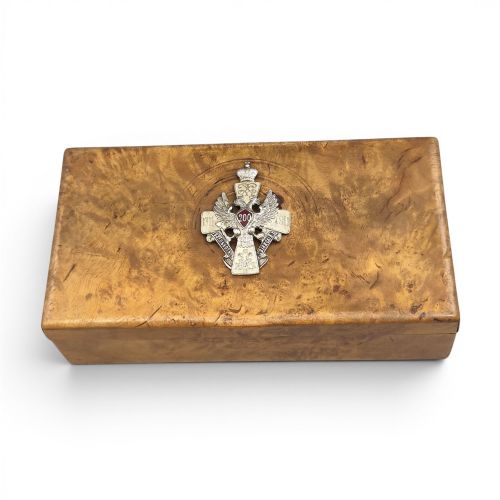
Some officers carried wooden boxes fitted with enameled badges, keeping private loyalties close at hand.
What varies in quality
The standard of execution in metalwork and vitreous application dictates the distinction between ordinary pieces and superior examples. Precision in the wirework of cloisonne patterns and the uniformity of the fired enamel surfaces create noticeable differences in visual depth.
The choice of base materials, such as solid silver-gilt versus standard bronze, and the inclusion of precious stones like diamonds influence the overall character of an object. Maker attributions and well-preserved hallmarks further separate notable workshop production from standard items.
Dmitrii Nikolaevich Nikolaev·Vasily Agafonov·Khlebnikov
The Antique Russian Enamel Glossary
- Kovsh
- A traditional russian drinking vessel featuring a boat-like hull and a single flat handle. These objects often display detailed enamel work across their exterior surfaces.
- Cloisonne Enamel
- A technique where thin metal strips are soldered to a metal base to form cells, which are then filled with coloured glass paste and fired. This method creates distinct patterned designs.
- Silver-Gilt
- Silver that has been coated with a thin layer of gold on its surface. This treatment provides a warm golden sheen alongside the durability of a silver base.
- Triptych
- A three-panelled artwork or religious icon where the two outer wings fold over the central panel. These folding items frequently serve as travel icons in russian orthodox traditions.
- Karelian Birch
- A distinctive wood variety known for its mottled grain patterns, utilised in crafting decorative boxes and functional objects. It frequently pairs with silver mounts and enamelled insignia.
Antique Russian Enamel: Frequently Asked Questions
What is a russian kovsh used for?
A kovsh serves as a traditional drinking vessel or a decorative presentation piece in russian culture. Its distinct boat shape derives from ancient wooden utensils.
Over time, these vessels transitioned into ornamental silver and enamel objects displayed in homes or given as honours.
How do I identify russian silver hallmarks?
Russian silver items commonly feature standard touchmarks indicating the silver purity, such as the eighty-four zolotnik standard. Maker marks and city marks often appear alongside these purity numbers.
Examining these stamps helps determine the approximate period and the workshop responsible for the metalwork.
What is a travel icon?
A travel icon is a portable devotional object, often cast in bronze or designed as a folding triptych. These items allowed individuals to carry religious imagery during journeys.
Enamel details are frequently added to highlight the holy figures and decorative borders across the panels.
How should I care for antique enamel?
Antique enamel requires gentle handling to protect both the vitreous glass surface and the underlying precious metal. Avoid harsh chemical cleaners and ultrasonic baths that can damage fragile wirework.
Dusting with a soft, dry cloth is usually sufficient for routine maintenance.