


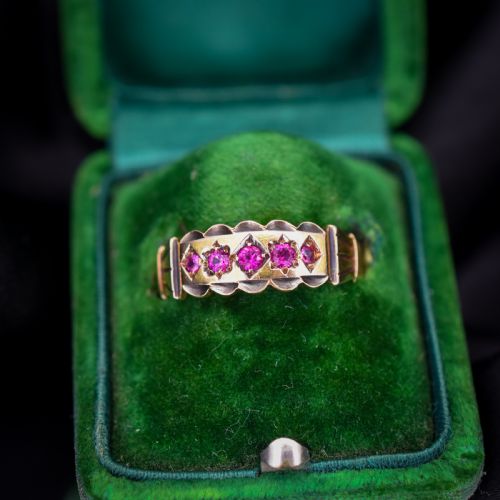
Antique Ruby Band Ring
An antique ruby band ring brings together rich red gems and gold or platinum in enduring circular forms designed to sit close to the hand.
Antique Ruby Band Ring
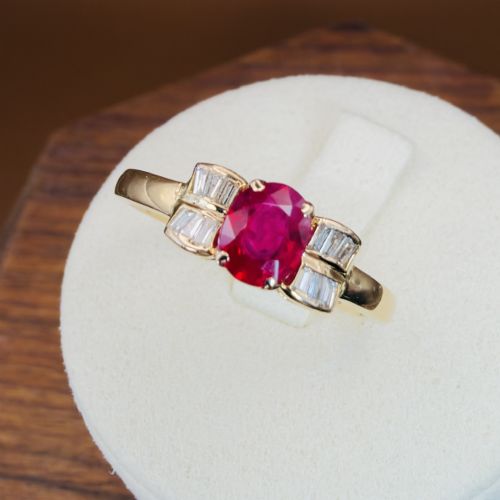
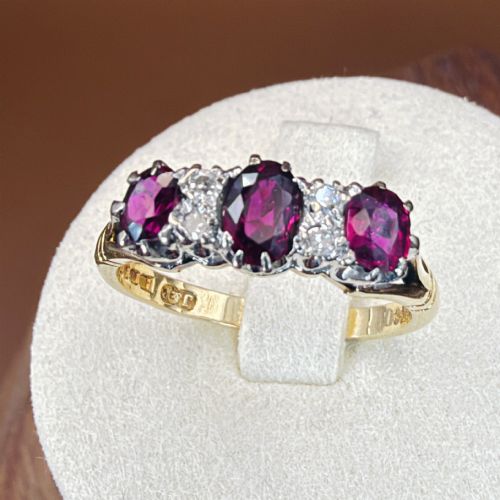
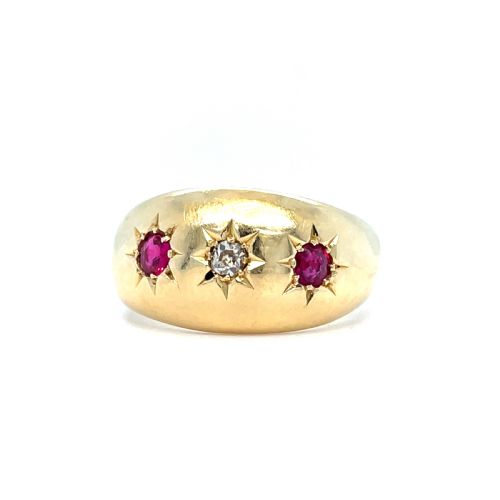
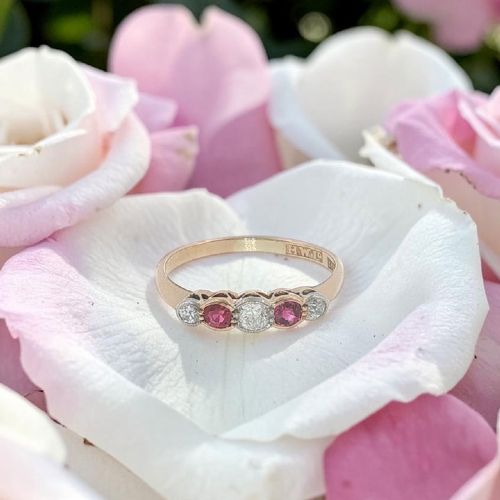
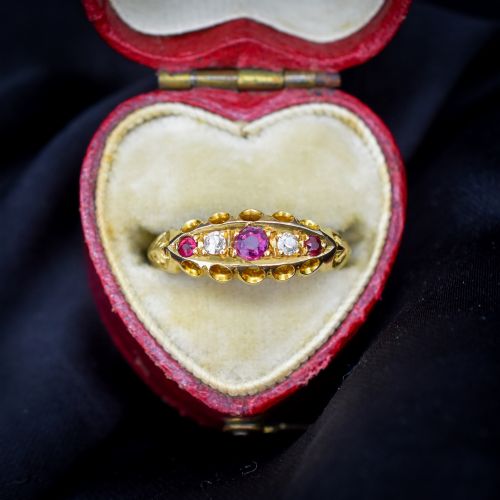
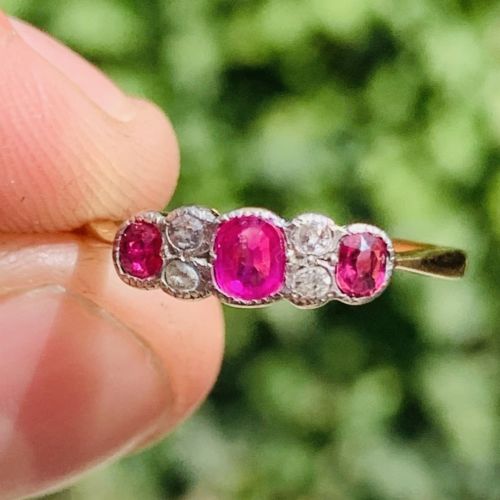
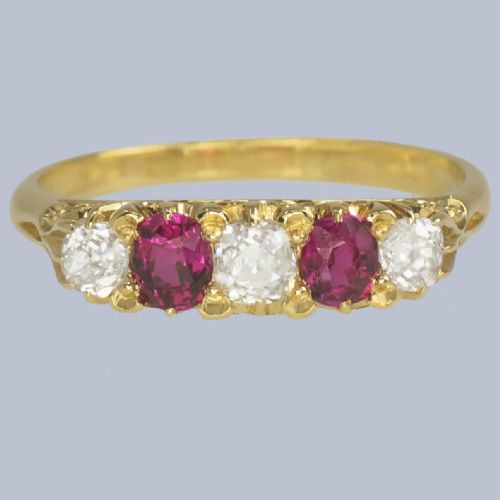
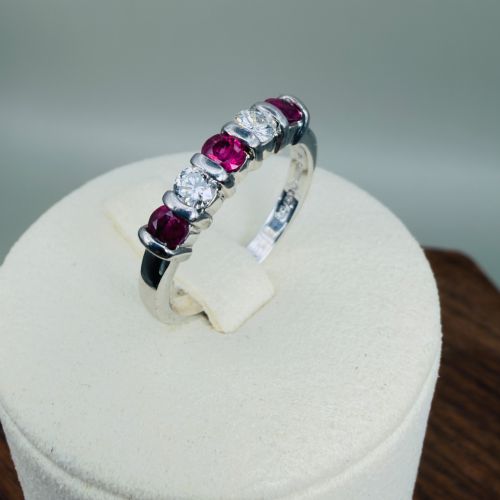
When you search for an antique ruby band ring, you encounter circular bands shaped by Victorian, Edwardian, and Art Deco hands. The designs range from simple low-profile five-stone settings and starburst clusters to traditional gypsy mounts designed to sit flush against the finger.
The pieces appearing most frequently span the late nineteenth century through to the interwar decades. Makers during these eras combined deep red rubies with old-cut diamonds, pearls, or plain gold hoops, often bearing hallmarks from assay offices in locations such as Chester and Birmingham.
These items served as tokens of affection, anniversary markers, or everyday adornments for past wearers. Their enduring appeal lies in how comfortably a flat band or low cluster fits into daily modern wear.
Materials and construction
Goldsmiths worked primarily in eighteen-carat yellow gold and platinum, occasionally utilising fifteen-carat or nine-carat variations for bands and mountings. Stones were secured using starburst hand-engraving, flush gypsy settings, or delicate claw mounts that held old-cut diamonds alongside rubies.
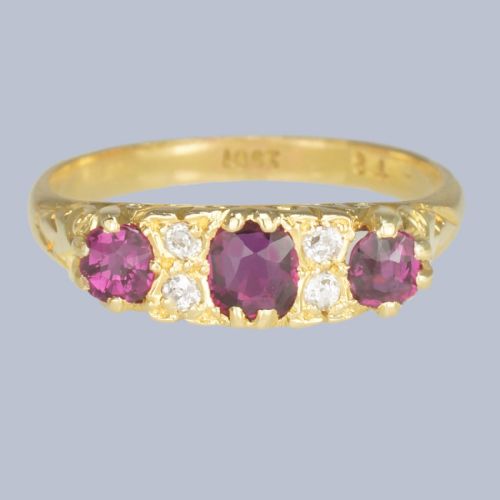
Assay office hallmarks stamped inside the hoops provide official records of city origins and assay years. Metal was shaped, chased, and polished by hand, yielding sturdy structural integrity without mass-production uniformity.
Listings feature 18ct gold, platinum, and yellow gold combined with rubies, diamonds, and pearls across Victorian, Edwardian, and Art Deco styles.
Grading structural and visual merit
Quality rests in the crispness of the hand-engraving around starburst settings and the secure thickness of the gold shank. Thinner bands that have worn down through decades of friction contrast with robust, heavy hoops preserving their original hallmarking.
The natural variation in ruby saturation, alongside the clarity and cut symmetry of accompanying old-mine or old-cut diamonds, dictates the visual impact of each piece. Superior examples maintain undisturbed claw integrity and stones matched carefully for size and colour depth.
The Antique Ruby Band Ring Glossary
- Gypsy ring
- A style where stones are set flush into the tapering metal band so the surface remains smooth. This technique protects the girdle of the stone and prevents snagging on fabrics.
- Starburst setting
- A design featuring delicate rays hand-engraved into the metal radiating outwards from a central gemstone. It creates the optical illusion of a larger face.
- Trilogy ring
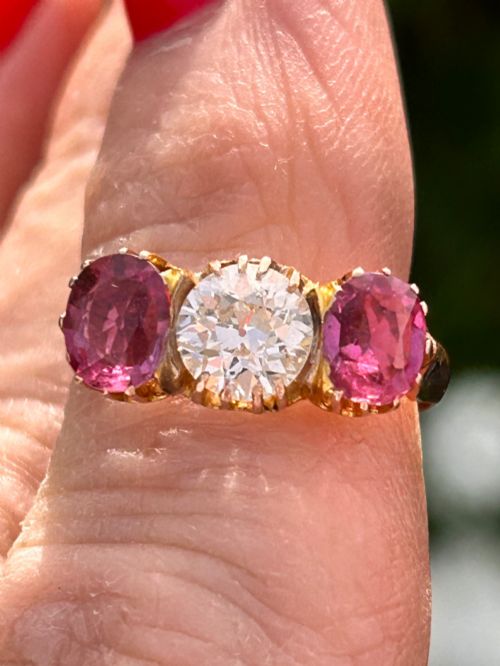
- A mounting holding three principal stones side by side, traditionally representing past, present, and future. They frequently pair a central ruby with flanking diamonds.
- Navette style
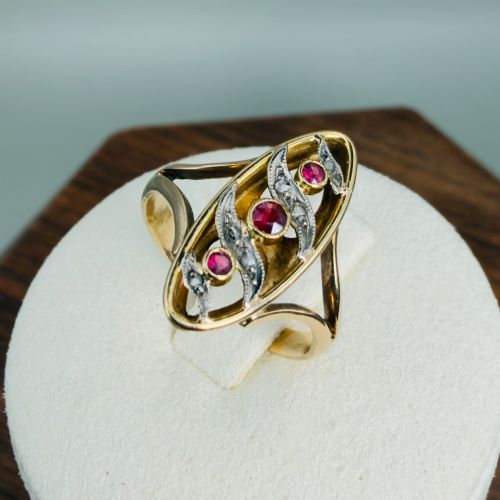
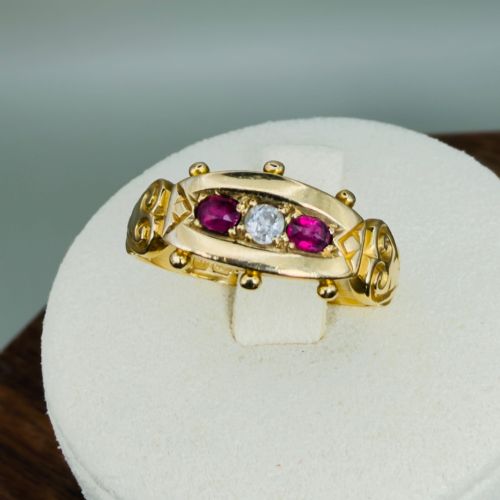
- A boat-shaped mounting that tapers to sharp points at either end of the finger. This elongated silhouette gained particular favour during late Victorian and Edwardian periods.
- Old-cut diamond
- A hand-faceted diamond cut before modern machine standards were established, characterised by a small table, high crown, and open culet. These stones catch candle or gas light with a softer, broader flash.
Antique Ruby Band Ring: Frequently Asked Questions
How do I clean an antique ruby ring?
Use warm soapy water and a soft-bristled brush to gently remove oils from beneath the stones. Avoid harsh chemical dips or ultrasonic cleaners, particularly if the piece incorporates pearls.
Pat the ring completely dry with a lint-free cloth before storing it separately from harder jewellery items.
Are rubies treated in these pieces?
Historical stones from nineteenth and early twentieth-century sources often present natural characteristics without modern heat enhancement or clarity treatments. Many high-value pieces from Burma feature unheated origin reports issued by gemmological laboratories.
Examining the internal inclusions under magnification helps reveal the untreated geological origin of the ruby.
How do I identify the date of my ring?
British pieces carry hallmark stamps indicating the assay office, such as Chester or Birmingham, alongside a specific date letter. Comparing these punches against official assay registers reveals the exact year the metal was tested and marked.
Stylistic cues like navette shapes or starburst engravings also help narrow down the manufacturing decade when hallmarks are worn.