



Antique Rooster Figurines
Antique rooster figurines bring sharp character to a desk or mantelpiece, spanning carved jade, cast bronze and solid silver.
Antique Rooster Figurines
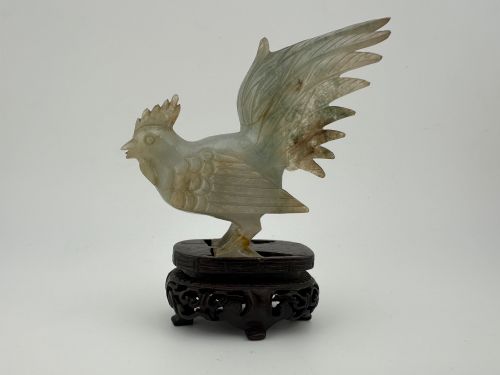
These antique rooster figurines span several decorative traditions, rendered as table ornaments, desk accessories and sculptural figures. Buyers searching for antique rooster figurines encounter diverse forms ranging from Chinese carved jade cockerels on hardwood stands to European silver models.
The material record on this page leans heavily toward metals and ceramics, with solid silver, sterling silver and cold-painted bronze appearing alongside porcelain and terracotta. Continental workshops and Chinese dynasties both contribute significantly to the available variety.
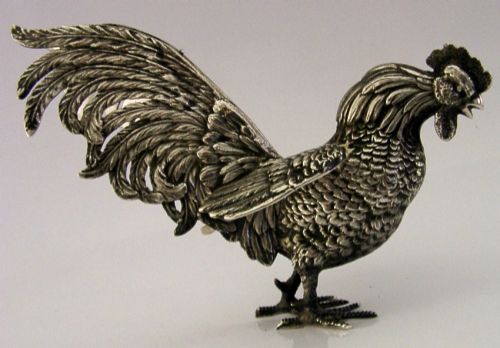
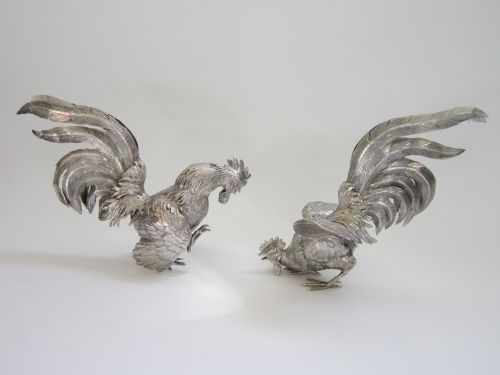
The most common versions on this page are metal sculptures, particularly silver and bronze table ornaments depicting standing or fighting cockerels. These pieces capture plumage and stance with varied levels of naturalism and stylistic interpretation.
How they were made
Metal figurines rely on casting techniques, particularly bronze work finished with cold-painted pigments or silver smithing involving solid and plated construction. Silver models often show detailed surface chasing to define the texture of individual feathers.
Carved pieces utilise hardstone such as pale green jade or hardwood for stands, requiring precision handwork to shape the stone and fit it securely to its base. Ceramic examples employ glazing and firing techniques seen in porcelain and terracotta production.
Antique Rooster Figurines Retail Price Guide 2026
Typical asking prices for rooster figurines among the pieces listed under this phrase on Sellingantiques today, from the lower quarter to the upper quarter. They describe what is for sale here now, not the wider market.
Listings feature items from the Victorian period through the mid-twentieth century, with materials spanning jade, bronze, sterling silver, and porcelain.
What varies in quality
Quality rests upon the crispness of the casting or carving and the fidelity of the anatomical detail in the bird's posture and plumage. Superior examples display careful hand-finishing that brings life to the metalwork or stone.
The preservation of original surface finishes, such as cold-painted polychrome details on bronze or intact glazes on porcelain, elevates a piece. Maker attribution and the quality of associated mounts or stands also influence the standing of an item.
Franz Bergman·Rene Lalique
The Antique Rooster Figurines Glossary
- Cold-painted bronze
- Bronze sculpture finished with oil-based paint that is applied without heat after the casting process. This technique allows for vibrant polychrome detailing on small animal figures.
- Sterling silver
- An alloy consisting of silver and other metals, usually copper, standardised for strength while maintaining high purity. It forms the primary metal for many British and Continental animal models.
- Hardstone
- A semi-precious stone category including jade, agate and quartz that requires specialist carving techniques. Craftsmen carve these dense minerals into detailed animal figures and desk ornaments.
- Qing Dynasty
- The final imperial dynasty of China, spanning over two centuries of notable ceramic and jade production. Pieces from this era often feature distinctive turquoise or polychrome glazes.
- Car mascot
- An ornamental sculpture mounted on the radiator cap of a motor car during the early twentieth century. Famous glassmakers created stylised cockerel figures for this specific automotive purpose.
Antique Rooster Figurines: Frequently Asked Questions
What metals are used in these figurines?
The metal figurines utilise solid silver, sterling silver, silver plate, and bronze. Many bronze examples feature cold-painted surfaces.
Silver pieces often display hallmarks indicating their origin and silver standard, such as Hanau or British assay marks.
How do I identify Chinese jade pieces?
Chinese jade figurines typically feature pale green hardstone carved with attention to naturalistic posture. They are frequently mounted on fitted hardwood stands.
These carvings often date to the Qing Dynasty or the early twentieth century.
Where were these silver cockerels made?
The silver and bronze cockerels originate from various European centres, including British, Italian, and Continental workshops. Hanau in Germany produced notable silver novelty animal figures.
Stylistic details and maker marks help distinguish the regional origins of these metal table ornaments.
How were ceramic cockerels decorated?
Ceramic figurines employ traditional glazing techniques, including turquoise and polychrome finishes on porcelain bodies. Terracotta versions rely on fired clay finishes.
These pieces reflect both European folk art traditions and Chinese dynastic ceramic styles.