



Antique Rooster Figures
Antique rooster figures bring the bold silhouette of the farmyard into the house as sculptures, table ornaments and weather vanes.
Antique Rooster Figures
Antique rooster figures encompass a wide range of sculptural forms created to serve as decorative ornaments, table centrepieces, shop displays and architectural weather vanes. These pieces draw on various cultural traditions, from Chinese export porcelain and jade carvings to European metalwork and folk art carvings.
Buyers browsing this selection most frequently encounter mid-century silver models, continental bronzes, and nineteenth-century ceramic or wooden representations. The range spans small desktop figurines to large trade signs and architectural metalwork designed to sit atop buildings.
Periods represented stretch from the nineteenth century through the Edwardian era and into the mid-twentieth century, capturing diverse regional styles such as Qing Dynasty ceramics, Vienna bronzes and English folk art. Each piece reflects the distinct aesthetic priorities of its maker and period.
How they were made
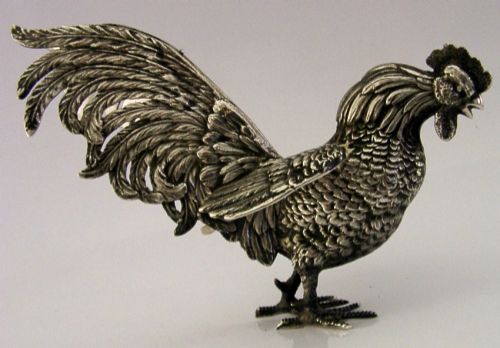
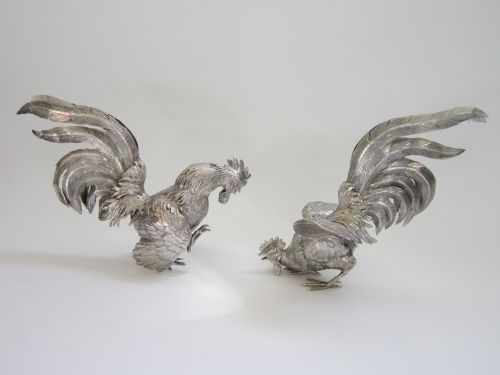
Metal pieces rely on traditional casting methods, often utilising sterling silver, solid silver or cold-painted bronze to achieve detailed plumage and anatomical structure. Artisans working in silver and bronze frequently applied hand-chased details or applied cold-painted polychrome finishes to enhance realism.
Carved pieces utilise organic materials such as jade, hardstone and solid wood, shaped by hand to follow the natural grain or stone variations. Ceramic and terracotta versions employ moulded earthenware or porcelain, finished with hand-painted glazes or naturalistic pigments before firing.
Antique Rooster Figures Retail Price Guide 2026
Typical asking prices for rooster figures among the pieces listed under this phrase on Sellingantiques today, from the lower quarter to the upper quarter. They describe what is for sale here now, not the wider market.
Listings feature items from the Victorian and Edwardian eras alongside mid-century British and European metalwork.
What varies in quality
Quality rests upon the fidelity of the anatomical carving and the sharpness of surface detail across the feathers, comb and wattles. Superior examples demonstrate precise hand-tooling or careful brushwork that captures the alert posture and texture of the bird.
The integrity of the materials and the preservation of original finishes dictate the standing of a piece. Original cold-painted surfaces, unblemished jade carvings and well-preserved silver hallmarks separate standard decorative items from finer collector pieces.
Franz Bergman
The Antique Rooster Figures Glossary
- Cold-painted bronze
- A technique where bronze sculptures are painted with cold enamel colours rather than fired in a kiln. This finish is delicate and prone to rubbing over time.
- Qing Dynasty
- The last imperial dynasty of China, spanning from the seventeenth to the early twentieth century. Ceramics and hardstone carvings from this period display refined traditional craftsmanship.
- Vienna bronze
- Small, highly detailed bronze sculptures produced in Austrian workshops during the late nineteenth and early twentieth centuries. These pieces are typically cold-painted.
- Hallmark
- An official stamp applied to precious metals to guarantee purity and origin. Silver figurines often bear these small marks on the underside or tail feathers.
Antique Rooster Figures: Frequently Asked Questions
What materials were antique rooster figures made from?
These figures appear in a diverse array of materials, reflecting the medium-specific skills of makers across different regions and centuries. Common materials include sterling silver, cold-painted bronze, carved jade, terracotta, porcelain and solid wood.
Metal versions often utilise casting techniques, while organic and ceramic pieces rely on traditional carving and glazing methods. Each material imparts a distinct weight, colour and texture to the finished sculpture.
How were rooster figures used historically?
Rooster figures served multiple domestic and commercial functions, acting as decorative table ornaments, mantelpiece sculptures and shop displays. Large copper and metal examples functioned practically as architectural weather vanes on roofs.
Smaller silver and porcelain figurines were designed purely for interior decoration and display cabinets. Their placement often combined ornamental appeal with symbolic associations of vigilance and rural life.
How can I tell the age of a silver rooster?
Dating silver rooster figures involves examining the hallmarks stamped into the metal, which indicate the assay office, standard of silver and year of manufacture. Stylistic cues, such as the naturalism of the feather chasing and the mounting technique, also offer clues to the period.
Comparing the manufacturing style to known historical periods helps narrow down the decade of production. Documentation or maker signatures on the base provide further confirmation of age.
Where should I place a rooster figure at home?
These sculptures suit prominent display spaces such as sideboards, mantelpieces, bookshelves or dining tables where their sculptural form can be appreciated. Smaller silver or jade figurines work well within glass cabinets alongside other decorative objects.
Larger wooden, ceramic or metal versions stand effectively as standalone statement pieces on side tables or deep windowsills. Position them away from direct heat sources to protect sensitive finishes like cold paint or wood.