



Antique Rolltop
An antique rolltop offers a clever mechanical cover for your papers, combining fine timber with hidden compartments.
Antique Rolltop
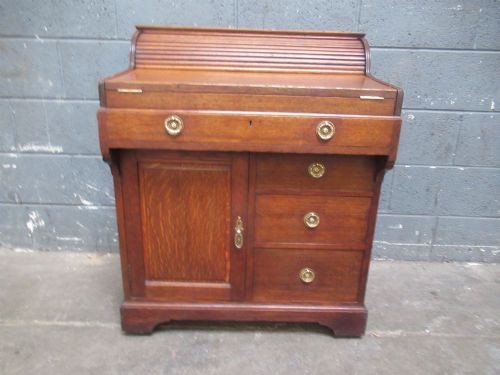
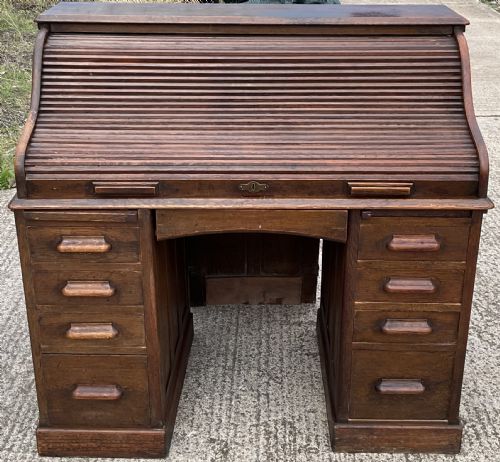
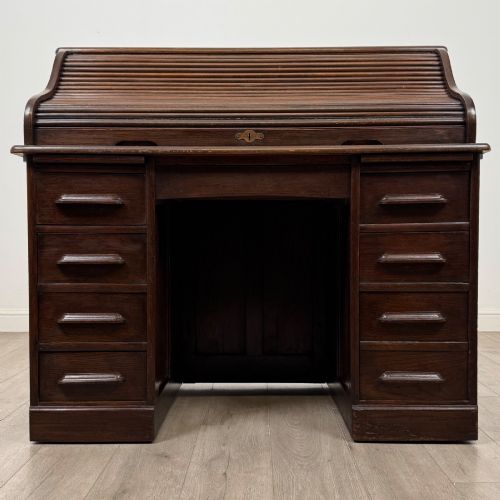
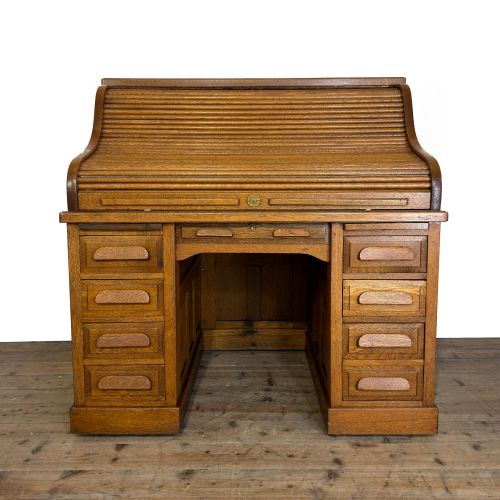
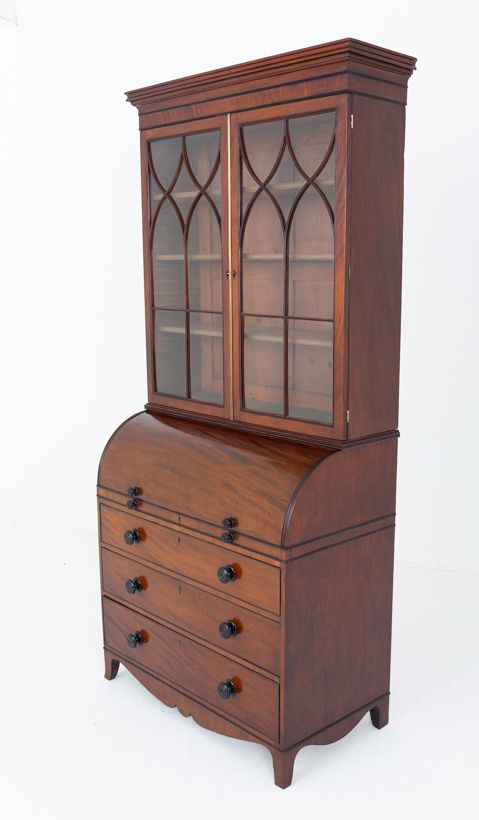
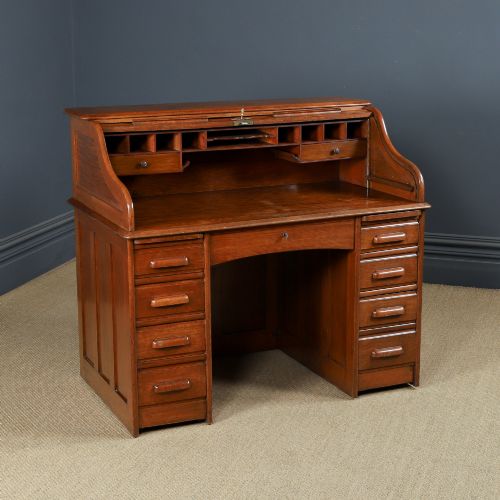
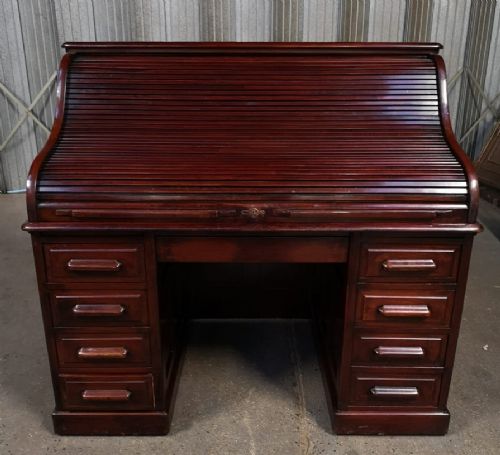
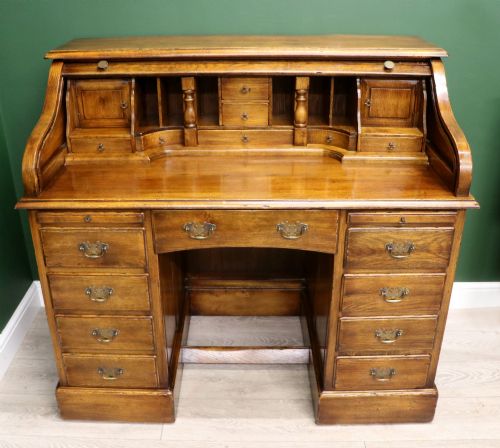
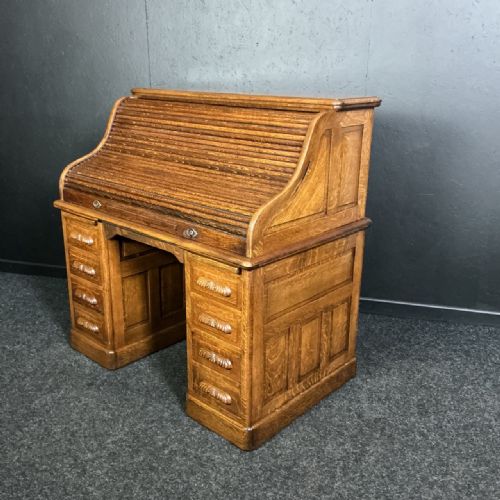
When searching for an antique rolltop, you encounter writing furniture featuring a slatted tambour or a rigid cylinder that conceals the writing surface and pigeonholes. These pieces range from substantial office pedestals to delicate home writing tables.
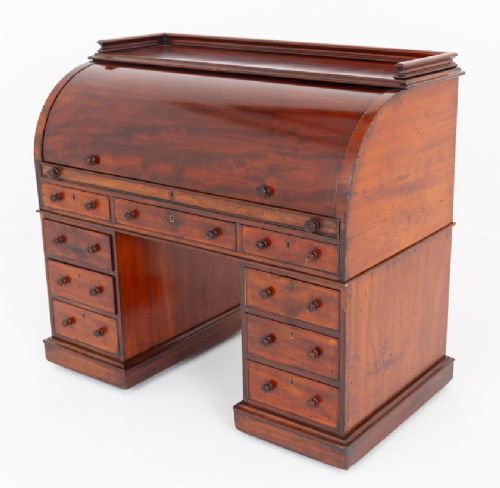
The versions most commonly met on this page date from the Victorian and Edwardian periods, often rendered in oak or mahogany. Alongside these standard pedestals, the selection includes Georgian tambour desks and continental cylinder bureaus.
The form developed to keep paperwork secure and out of sight without the need to lock every drawer separately. Makers applied this mechanism to desks, bureau bookcases, and small cabinets.
Materials and construction
Makers built these desks using solid and veneered timbers including oak, mahogany, walnut, and satinwood, frequently enhanced with brass handles and leather writing inserts. Structural carcases relied on sturdy joinery to support the weight of the moving top and heavy pedestal drawers.
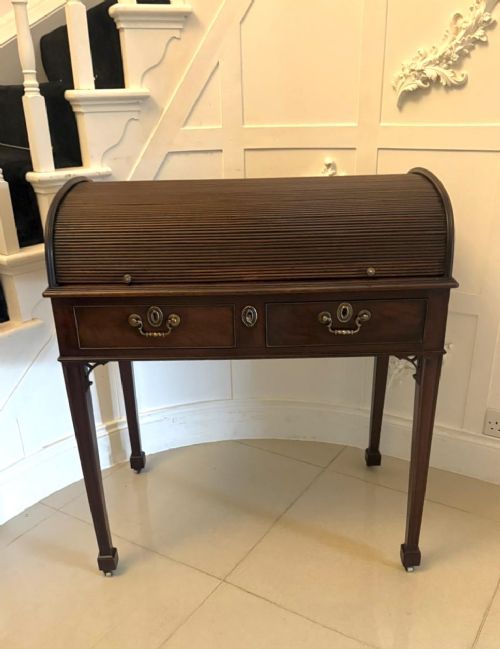
The flexible rolltop itself consists of narrow vertical wooden strips glued to a strong canvas or leather backing, allowing the curtain to slide smoothly within concealed side grooves. Cylinder desks utilise a rigid curved wooden panel that pivots on hidden pivots or tracks rather than flexing.
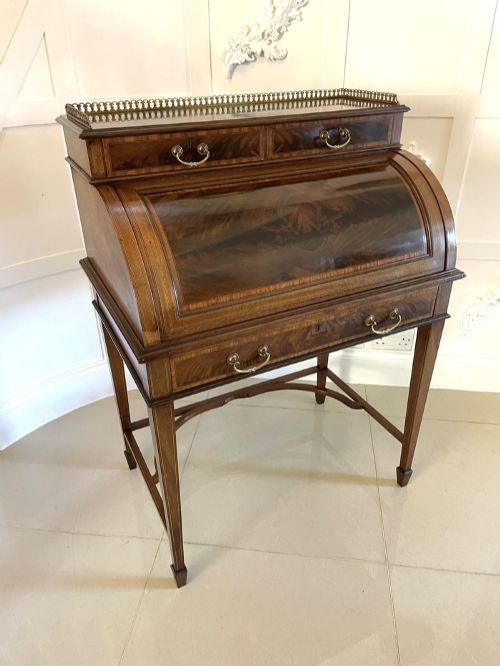
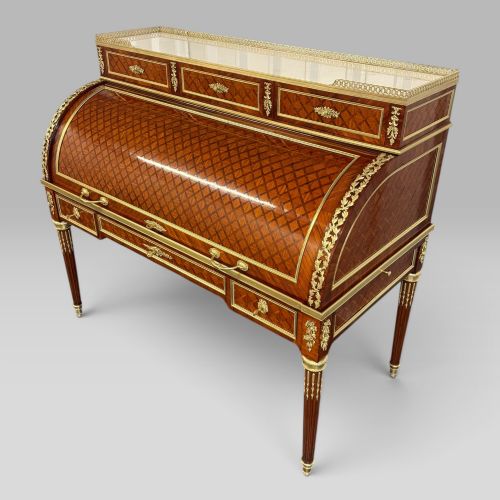
Surface decoration involved marquetry, parquetry, and fine string inlay, particularly on revival pieces influenced by French and Sheraton styles. Ormolu mounts and brass galleries added decorative finish to continental and high-status cylinder desks.
Antique Rolltop Retail Price Guide 2026
Typical asking prices for rolltop among the pieces listed under this phrase on Sellingantiques today, from the lower quarter to the upper quarter. They describe what is for sale here now, not the wider market.
Many rolltop desks contain hidden spring-loaded drawers that release only when you press a secret wooden peg inside the pigeonhole.
Judging quality in rolltop furniture
Quality rests in the precision of the tambour mechanism and the smoothness with which the slatted curtain glides along its tracks. Superior examples operate without binding or sagging, reflecting meticulous alignment of the internal wooden slats.
The choice of timber and the execution of internal fittings separate standard utility desks from high-status pieces. Finely figured flame mahogany, intricate marquetry, and well-organised pigeonholes with secret compartments indicate superior craftsmanship.
Construction methods also reveal grade, with solid drawer linings, hand-cut dovetails, and substantial secondary timbers distinguishing workshop-produced furniture from later mass-produced office equipment.
Maple & Co London·Boston Chair Company
The Antique Rolltop Glossary
- Tambour
- A flexible shutter made from narrow wooden slats glued to canvas, allowing it to slide around a curved track to enclose a desk interior. This method dates back centuries and remains the defining feature of many rolltop desks.
- Cylinder desk
- A writing table featuring a rigid, quarter-circle wooden lid that rotates backward into the body of the desk when opened. Unlike a tambour, the curved front is solid wood rather than slats.
- Pedestal desk
- A heavy freestanding desk supported by two banks of drawers reaching down to the floor. The rolltop sits atop these twin pedestals to enclose the writing surface.
- Marquetry
- Decorative veneer work formed by fitting together contrasting pieces of wood, shell, or ivory to create pictorial or geometric patterns. It appears frequently on French and Sheraton Revival cylinder bureaus.
- Ormolu
- Gilded bronze mounts applied to the corners, feet, and friezes of high-end continental furniture. The technique provides a bright metallic contrast to dark woods like mahogany and walnut.
Antique Rolltop: Frequently Asked Questions
How do I maintain the tambour mechanism?
Keep the wooden tracks clean and free from dust using a dry cloth. Avoid applying heavy liquid polishes inside the grooves where the slats travel.
Applying a minimal amount of appropriate furniture wax to the runners helps maintain a smooth glide without gumming up the mechanism.
Were these desks made for offices?
Many oak and walnut rolltop desks served as heavy-duty office furniture for clerks and business owners during the Victorian and Edwardian eras. Their lockable fronts kept sensitive documents secure at the end of the working day.
Finer mahogany and satinwood cylinder desks were designed for domestic libraries and drawing rooms, prioritising elegance alongside privacy.
How do I distinguish Georgian from Edwardian examples?
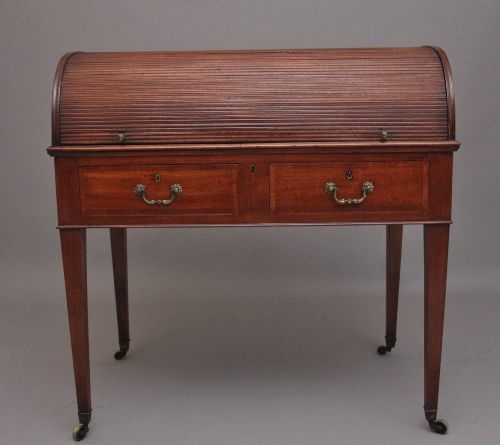
Georgian pieces from the eighteenth century typically feature delicate proportions, tapered legs, and subtle mahogany inlay with genuine tambour fronts. They were built as refined writing cabinets rather than heavy office furniture.
Edwardian and later desks are generally much larger, heavier, and frequently constructed from solid oak with extensive internal stationery pigeonholes designed for commercial use.
Can I replace a damaged leather writing surface?
Writing inserts made from leather can indeed be replaced by a specialist restorer using traditional materials and gold tooling if desired. Many antique desks retain their original hide, which shows character through patination and wear.
When living with an older leather insert, treat it gently with appropriate leather cream to prevent drying and cracking over time.