

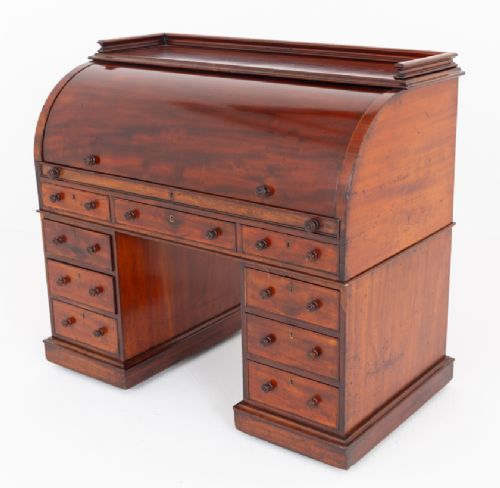
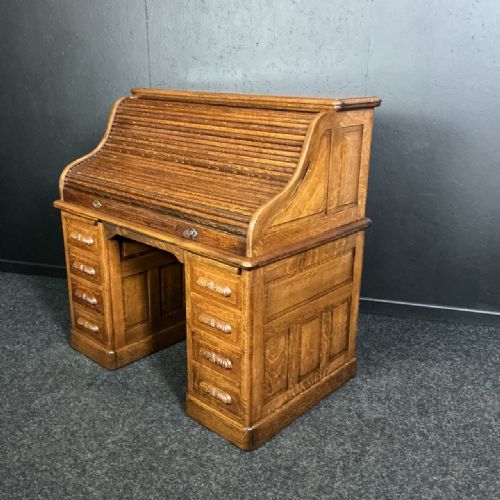
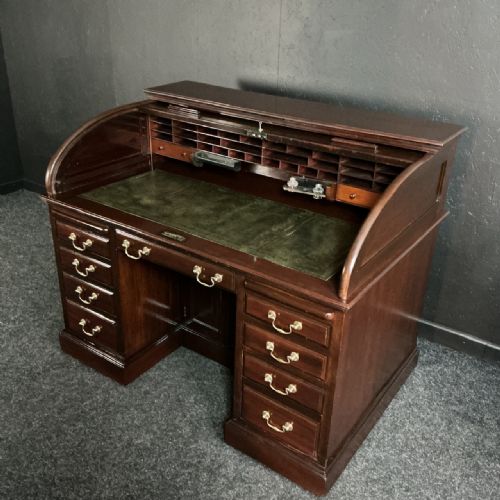

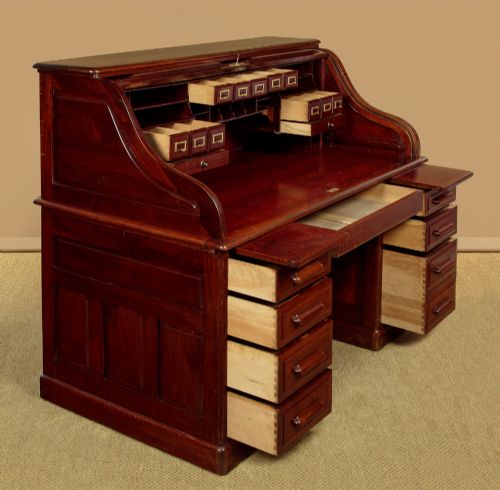


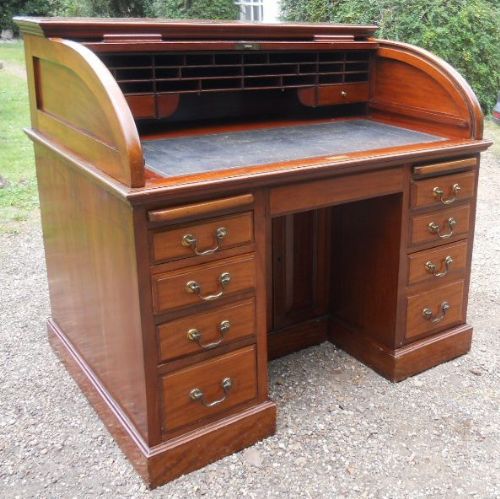


Antique Rolltop Study Desk
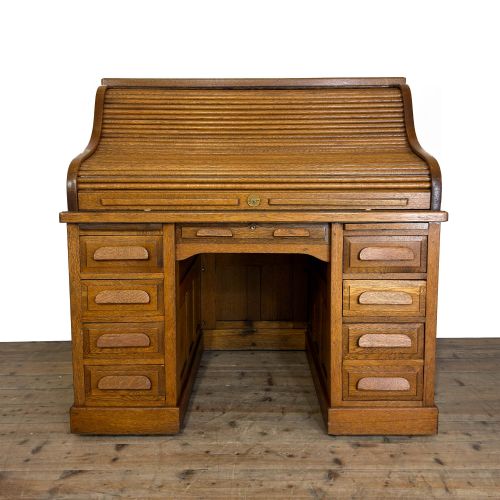
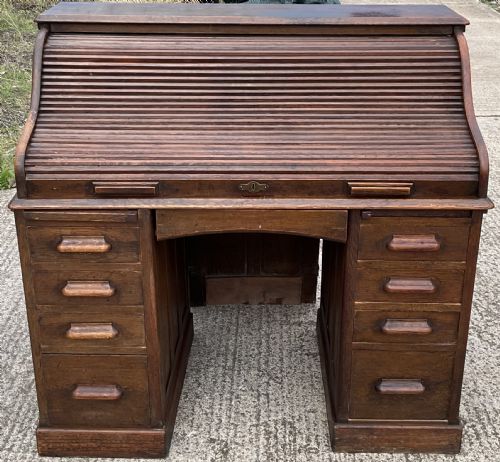
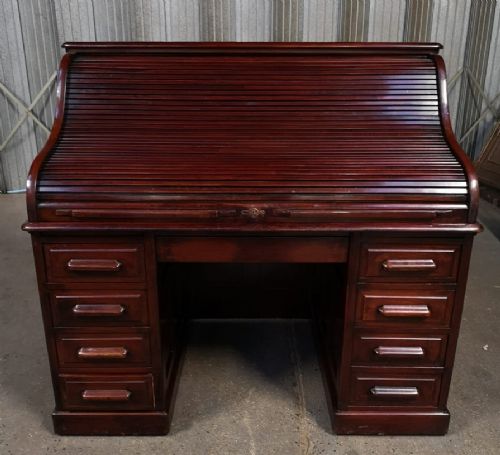
An antique rolltop study desk offers a private, secure workspace concealed beneath a curved slatted wooden lid.
Antique Rolltop Study Desk
An antique rolltop study desk is a dedicated writing station defined by its flexible wooden shutter that pulls down to cover the writing surface and pigeonholes. When you search for this phrase, you encounter pieces designed for serious correspondence, estate management, and home office work. These items provide compartments and drawers hidden safely away from view.
The versions most commonly met on this page span the Victorian, Edwardian, and Georgian periods, alongside late nineteenth century French revivals. Mahogany and oak dominate the timber selection, frequently accompanied by walnut and satinwood. Forms range from compact pedestal units to large kneehole configurations and tall bureau bookcases.
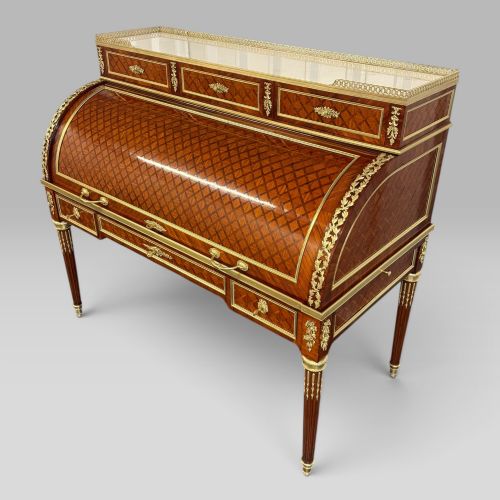
Makers utilised various revival styles, including Sheraton Revival, Louis XVI Revival, and Empire Revival, to decorate these work surfaces. Brass hardware and leather writing inserts frequently accompany the primary wooden construction. Each example reflects the domestic working habits of its specific era.
How they were made
Cabinet makers constructed these desks using dense hardwoods like mahogany and oak, often applying fine veneers of satinwood or walnut across the main body. The signature rolltop curtain consists of narrow wooden slats glued to a sturdy canvas or leather backing, allowing the mechanism to slide smoothly in routed grooves.
Makers incorporated brass handles, hinges, and occasional ormolu mounts to secure drawers and decorate the exterior frame. Writing surfaces frequently feature inset panels of tooled leather, providing a durable platform for daily pen work.
Antique Rolltop Study Desk Retail Price Guide 2026
Typical asking prices for rolltop study desk among the pieces listed under this phrase on Sellingantiques today, from the lower quarter to the upper quarter. They describe what is for sale here now, not the wider market.
Listings feature structural variations spanning Edwardian oak models, Victorian mahogany kneehole units, and Georgian tambour writing desks.
What varies in quality
The distinction between standard commercial pieces and finer workshops lies in the precision of the slatted tambour mechanism and the choice of primary timbers. Superior desks operate with a smooth, silent glide along the track, whereas lesser examples catch or bind during movement. Timber selection shifts from utilitarian oak and plain mahogany up to figured walnut and meticulously matched satinwood veneers.
Internal joinery and the complexity of the pigeonhole arrangement also signal the grade of the item. Higher quality iterations feature dovetailed drawer construction throughout and elaborate internal compartments, while simpler models rely on basic partitioning. The integration of bronze or ormolu mounts and finely tooled leather inserts indicates a higher tier of production.
Maples of London and Paris
The Antique Rolltop Study Desk Glossary
- Rolltop
- A flexible wooden shutter composed of narrow slats that slides over tracks to enclose the desk surface. This mechanism secures the contents without needing a separate cabinet door.
- Tambour
- A series of wooden strips attached to a textile backing to form a flexible panel. It serves the same function as a rolltop on smaller writing cabinets and bureau desks.
- Cylinder desk
- A writing desk featuring a rigid, quarter-circle rotating wooden cylinder that covers the desk interior. Unlike the slatted rolltop, this solid curved lid turns on a central axis.
- Kneehole
- A desk design featuring a central recess for the user's legs, flanked by pedestals of stacked drawers. This layout provides balanced storage and a comfortable seated position.
- Pedestal desk
- A heavy freestanding writing table supported by two pillars of drawers resting on the floor. These pieces offer substantial storage capacity beneath the main work surface.
Antique Rolltop Study Desk: Frequently Asked Questions
How do I care for the rolltop mechanism?
Keep the sliding tracks clean from dust and debris to ensure the wooden slats move freely along their path. Apply a sparing amount of appropriate wax or lubricant to the runners only if the action stiffens.
Avoid placing heavy objects on top of the desk that might warp the frame and misalign the side grooves. Consistent indoor humidity prevents the wood from swelling and binding the curtain.
What is the difference between a rolltop and a cylinder desk?
A rolltop desk uses many narrow wooden slats fastened to fabric, allowing the curtain to bend around a tight curve into the desk body. This flexible shutter slides along a routed track.
A cylinder desk employs a single, solid curved piece of wood that rotates on a pivot or axis to reveal the interior. Cylinder fronts generally represent a more rigid, architectural form of construction.
Are these desks suitable for daily computer work?
Many of these pieces accommodate modern laptops and small writing equipment within their primary compartments. However, the fixed interior pigeonholes and shallow depths of older models may limit space for modern peripheral devices.
Measure the pull-down clearance and internal writing height carefully before placing modern technology inside. Preserving the original leather insert often requires using a protective blotter pad.
How do I identify a Georgian period desk?
Georgian pieces display restrained proportions, classical stringing inlay, and dense mahogany timbers without excessive ornamentation. The joinery relies on traditional hand-cut dovetails and simpler internal arrangements.
硬件 tend to consist of simpler brass drop handles rather than elaborate stamped plates. The overall aesthetic prioritises architectural balance and functional joinery over revival decoration.