




Antique Roemer
These antique roemer glasses bring centuries of German, Bohemian, and European craftsmanship to the table in distinctive green, amber, and amethyst glass.
Antique Roemer
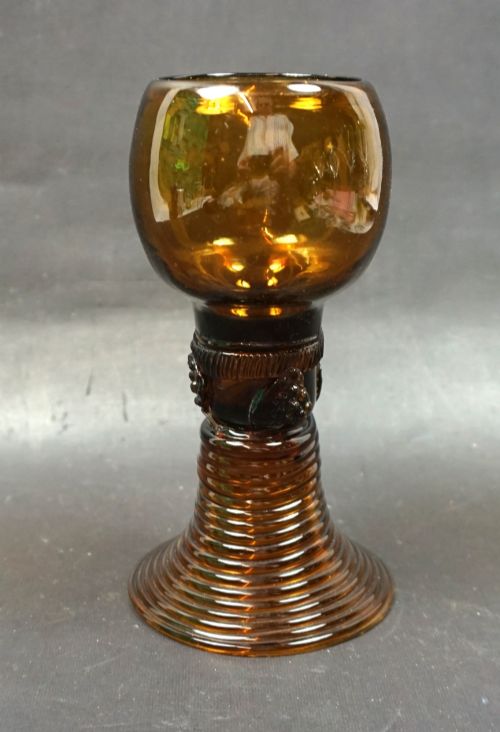
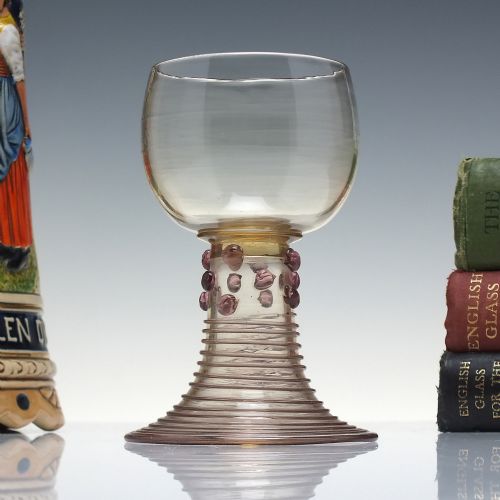
An antique roemer is a traditional European drinking vessel, most frequently encountered here in shades of green glass alongside examples in dark amber and amethyst. These pieces function primarily as wine glasses, hock glasses, and goblets spanning the Georgian and Victorian eras into the early twentieth century. Collectors search for these specific forms to find historic glassware that moves beyond plain vessels into decorative historicism and export styles.
The selections on this page range from simple blown glass stems to elaborate German Historicism and Biedermeier productions. Many items feature the characteristic large bowl resting above a coiled foot or hollow stem, showing forms made for dining tables and cabinets alike. European workshops from Bohemia to France supplied these distinctive drinkware items across multiple decades.
How they were made
Makers shaped these vessels using blown glass techniques, forming the characteristic hollow stems and coiled feet by hand. Coloured glass, particularly green and amber, forms the foundation of the tradition, though cut crystal and enamelled decoration appear on pieces from later periods. Glassmakers applied polychrome enamel and gilding to surfaces, creating detailed heraldic motifs and botanical patterns.
Engraving and cutting added surface texture to the bowls of luxury examples, contrasting with the smooth transparency of standard export glassware. Artisans worked molten materials into tall goblets and wine glasses, finishing each piece with careful thermal cooling and manual polishing.
Antique Roemer Retail Price Guide 2026
Typical asking prices for roemer among the pieces listed under this phrase on Sellingantiques today, from the lower quarter to the upper quarter. They describe what is for sale here now, not the wider market.
Some historic stems feature coiled glass feet designed to stop greasy Renaissance fingers from slipping during a hearty toast.
What varies in quality
Quality rests upon the precision of the hand-blown form and the complexity of surface decoration. Pieces featuring detailed enamel work, gilding, or crisp wheel-engraving sit at the upper end of the range, showing the hand of skilled studios like Moser or Lobmeyer. Simpler export wine glasses rely on the depth of their natural green hue and the balance of the coiled stem rather than ornamentation.
The weight of the glass and the stability of the foot reveal the maker's control over the molten material. Sets matched across multiple pieces command greater appreciation than isolated stems, especially when the original enamelling remains crisp and undamaged by use.
Moser Bohemian·St Louis Massenet·Lobmeyer·Theresienthal·Frits Hechert
The Antique Roemer Glossary
- Roemer
- A traditional European drinking vessel with a large bowl and a decorative foot. These stemmed goblets typically feature green or amber glass.
- Historismus
- A nineteenth-century artistic movement reviving historic styles and motifs. German and Bohemian makers used this approach to copy Renaissance and Baroque glass.
- Biedermeier
- A Central European design style spanning the mid-nineteenth century. Furniture and glassware from this period prioritise clean domestic comfort and functional elegance.
- Enamel
- Opaque glass paste applied to the surface of a vessel and fired to fuse. Makers used polychrome enamels to paint heraldic motifs and floral scenes.
- Hollow stem
- A tubular pedestal foot construction common in traditional wine roemers. This technique lightened the heavy handle while maintaining height.
Antique Roemer: Frequently Asked Questions
What is an antique roemer used for?
These vessels were designed as wine and hock glasses for formal dining tables across European households. Today, collectors use them to serve wine or display them within cabinet collections.
Their striking green and amber tones make them conversation pieces when utilised for special dinners or historical table settings.
How do you date an antique roemer?
Dating relies on stylistic clues, manufacturing techniques, and the type of decoration applied to the bowl. Georgian examples often show simpler blown forms, while Victorian and Historicism pieces introduce heavy enamelling and gilding.
Studying the pontil mark on the underside and the shade of the coloured glass helps place a piece within the eighteenth or nineteenth century.
Why are most roemer glasses green?
Traditional Germanic glasshouses utilised local sand and wood ash impurities that naturally produced a forest green hue in the molten material. This historic tint became the defining characteristic of the form.
Even as glass purity improved, makers retained the green colour to honour the traditional aesthetic of the regional wine goblet.
How should I clean antique glassware?
Wash these delicate pieces by hand in warm water using a mild, unscented washing-up liquid. Avoid abrasive sponges that can scratch the aged surface or wear away delicate enamel and gilding.
Dry them immediately with a lint-free linen cloth to prevent water spots from forming on the historic glass.