





Antique Rocking Cot
These antique rocking cot examples span centuries of timber and metalwork, offering a traditional form that keeps children gently swaying as they sleep.
Antique Rocking Cot
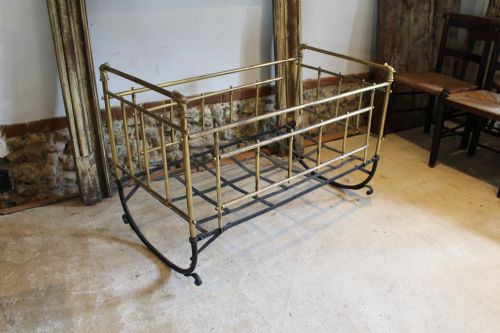
When you search for an antique rocking cot, you encounter domestic furniture designed for infant sleep, featuring curved runners or pivoting mechanisms that allow the bed to sway. The selection on this page ranges from early timber cradles to later iron frames and metamorphic designs.
The pieces you are most likely to meet on this page come from the nineteenth century and the Victorian era, alongside earlier seventeenth-century oak examples and Edwardian metal interpretations. These nursery items take various forms, including hooded cradles, cribs, and combined cots.
Regional vernacular styles feature prominently among the offerings, spanning Welsh pine, Scandinavian country painted pieces, and heavier English oak constructions. Each specimen demonstrates the domestic requirements of its period, whether built for a farmhouse or a formal household.
Materials and construction methods
Cabinetmakers and blacksmiths utilised solid woods and metals, employing sturdy timbers like oak, mahogany, and pine alongside wrought iron and brass. Panel construction and fielded panels appear frequently in the earlier wooden pieces, providing structural integrity to the hood and sides.
Surface treatments vary from polished mahogany and waxed oak to original painted finishes in blue, reflecting both high-style cabinetmaking and regional country traditions. Metal elements incorporate cast iron and brass for structural strength and decorative detail.
Antique Rocking Cot Retail Price Guide 2026
Typical asking prices for rocking cot among the pieces listed under this phrase on Sellingantiques today, from the lower quarter to the upper quarter. They describe what is for sale here now, not the wider market.
Listings feature timbers like mahogany, oak, and pine alongside metal elements such as brass, cast iron, and wrought iron.
Distinctions in quality
The hierarchy of quality rests on the selection of timber and the sophistication of the joinery, distinguishing straightforward utilitarian country pieces from ambitious cabinet-made furniture. Mahogany and finely panelled oak examples demonstrate higher levels of joinery skill than plain utility pine.
Originality of surface finish and hardware plays a major role, with surviving original paint or untouched brass fittings elevating a piece above later alterations. The proportion of the hood and the balance of the rocking mechanism also separate standard workshop output from finer domestic commissions.
The Antique Rocking Cot Glossary
- Cradle
- A low bed for an infant, designed to be rocked. These typically feature curved runners attached to the base.
- Fielded panel
- A wooden panel with its central portion raised above the surrounding framework. This technique adds depth and strength to early chest and cot construction.
- Wrought iron
- Iron that has been heated and shaped with tools by a blacksmith. This material provides durable framing for Edwardian and Victorian metal cribs.
- Metamorphic
- Furniture designed to transform into another form or use. This term describes pieces that adapt from one function to another, such as a cot combining desk or rocking functions.
- Vernacular
- Architecture or furniture built by local craftsmen using traditional regional materials and styles. Welsh and Scandinavian country pieces exemplify this domestic tradition.
Antique Rocking Cot: Frequently Asked Questions
What is an antique rocking cot?
An antique rocking cot is a historical infant bed built with a mechanism or curved base to sway gently. These items served nurseries in centuries past.
They appear in materials ranging from heavy oak and mahogany to painted pine and wrought iron, reflecting the domestic tastes of their respective eras.
How do I date an antique rocking cot?
Dating relies on identifying the timber species, construction joints, and stylistic details associated with periods like the seventeenth century or the Victorian era. Earlier examples often feature hand-planed oak and panel construction.
Later nineteenth-century and Edwardian pieces introduce mahogany, cane work, and metal frames, while painted pine versions frequently embody regional country traditions.
Were these cots used daily?
Yes, these items served as practical nursery furniture for soothing infants to sleep through the rocking motion of the runners or pivots. They were essential household items in both grand residences and rural dwellings.
Their sturdy construction in woods like oak and pine ensured they could withstand regular domestic use over generations.
How do I clean wooden rocking cots?
Maintenance requires gentle dusting with a dry or slightly damp cloth to protect aged timber surfaces and original painted finishes. Harsh chemical cleaners should be avoided to preserve the patina.
Wax can be applied sparingly to unpainted hardwoods like oak and mahogany to nourish the grain without altering the historical finish.
Can I use an antique rocking cot today?
These historical pieces are generally acquired as decorative items, collectibles, or heirloom display objects rather than for modern infant sleeping standards. Contemporary safety regulations for nursery furniture differ significantly from historical manufacturing.
Collectors frequently utilise them to display textiles, quilts, or vintage dolls within a period interior setting.