


Antique Rock Crystal Pendant
An antique rock crystal pendant offers clear quartz mounted in gold or silver, prized for its crisp refraction and crisp period settings.
Antique Rock Crystal Pendant
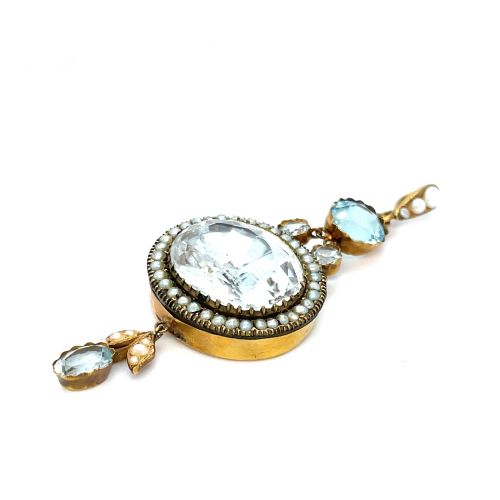
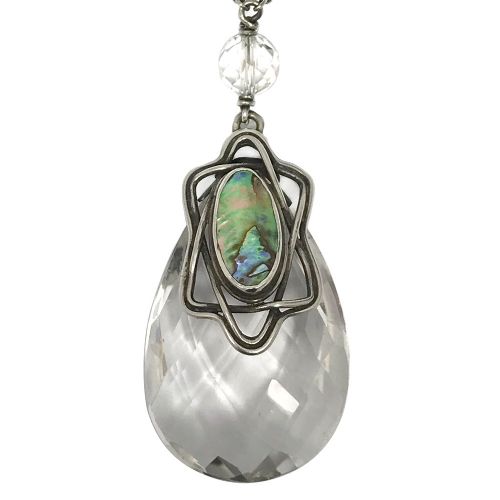
When you search for an antique rock crystal pendant, you encounter pieces that centre clear quartz within historic decorative frameworks. The selections span Victorian, Edwardian, and Art Deco eras, alongside Arts and Crafts iterations.
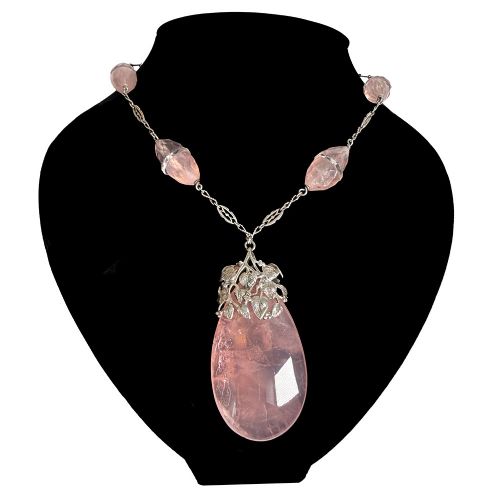
The most common forms on this page include drop pendants and necklaces combining rock crystal with precious metals and supplementary gems like pearls, diamonds, and rose quartz.
Makers ranged from distinct artistic workshops to traditional jewellers working in gold and silver, producing varied drop and necklace designs.
How they were made
Lapidaries shaped and polished natural rock crystal into faceted drops, spheres, cabochons, or intaglios, sometimes employing foil backs to enhance the stone's internal reflection.
Goldsmiths and silversmiths housed these crystals in mounts fashioned from nine-carat or fifteen-carat gold, sterling silver, or mixed metal settings typical of the Victorian and later periods.
Artisans integrated intricate wirework, granulation, and collet settings, frequently pairing the crystal centrepieces with matching metal chains and pearls.
Even William Shakespeare got carved into a rock crystal fob seal, proving that Elizabethan playwrights make surprisingly good pocket accessories.
What varies in quality
The clarity and cutting precision of the rock crystal itself set pieces apart, with superior examples displaying flawless transparency and skilled faceting.
Metalwork execution dictates value, separating standard commercial mounts from hand-forged Arts and Crafts settings or complex Etruscan revival granulation.
The integration of secondary gems, such as genuine diamonds, opals, or pearls, alters the character and material substance of the finished jewel.
Amy Sandheim·George Hunt·La Maison Bagues
The Antique Rock Crystal Pendant Glossary
- Rock crystal
- Colourless, transparent quartz used historically as a diamond substitute and for its high refractive clarity. It appears widely across Victorian and Art Deco jewellery.
- Foil back
- A thin sheet of reflective metallic paper placed beneath a gemstone to enhance its brilliance and colour. This technique occurs in older crystal and aquamarine mounts.
- Cabochon
- A gem shaped and polished with a smooth, convex upper surface rather than faceted. This form highlights the smooth, tactile quality of quartz.
- Intaglio
- A design incised into the flat or curved surface of a stone, intended to produce a relief impression when pressed into sealing wax. Examples include historic fob seals.
- Sautoir
- A long necklace or chain featuring a pendant drop at the end, popular during the early twentieth century. These pieces often combine silver with rock crystal and quartz.
Antique Rock Crystal Pendant: Frequently Asked Questions
How do I date an antique rock crystal pendant?
Dating relies on the mounting style, metal purity marks, and cutting techniques used on the crystal. Victorian pieces often use heavy gold or Etruscan revival motifs, while Art Deco examples favour geometric silver settings.
Examining the clasp type and the accompanying chain can also provide clues to the decade of manufacture.
Are rock crystal pendants made of real quartz?
Yes, rock crystal is natural, colourless quartz, prized by historic jewellers for its durability and optical clarity. Unlike glass, genuine quartz feels cool to the touch and maintains sharp facet edges.
It differs from paste or synthetic substitutes through its natural inclusions and thermal properties.
What metals are typically paired with rock crystal?
Historic jewellers commonly set rock crystal in sterling silver, nine-carat gold, and fifteen-carat gold. The Arts and Crafts movement favoured hand-worked silver, while Victorian and Edwardian makers frequently used yellow gold.
Some pieces combine silver and gold together in the traditional manner of the late nineteenth century.