






Antique Repousse Panel
An antique repousse panel brings tactile warmth to a room through beaten metalwork.
Antique Repousse Panel
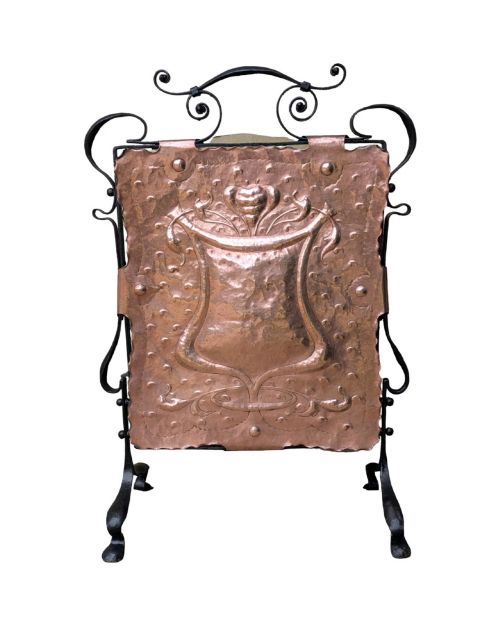
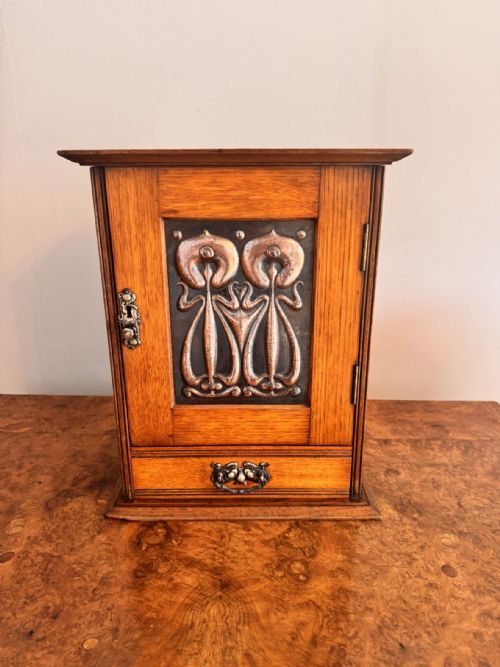
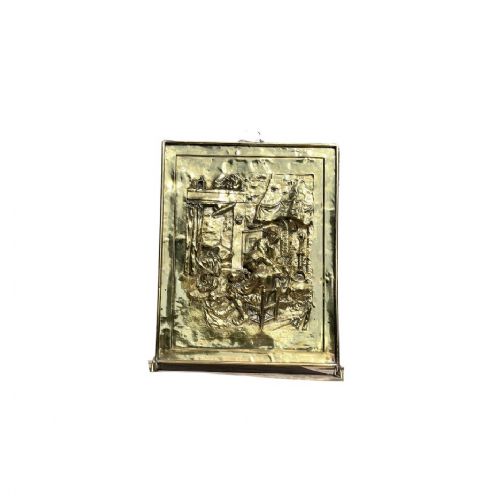
An antique repousse panel showcases hand-beaten metalwork applied to domestic objects and wall art, spanning the nineteenth century through the 1920s. Buyers searching for this phrase encounter various forms, most commonly copper panels mounted on oak or brass fire screens, alongside wall plaques and religious icons.
The aesthetic leans heavily towards the Arts and Crafts and Art Nouveau movements, reflecting a period of intense interest in manual craftsmanship. Pieces range from utilitarian items like coal boxes and smokers cabinets adorned with metalwork to dedicated wall reliefs.
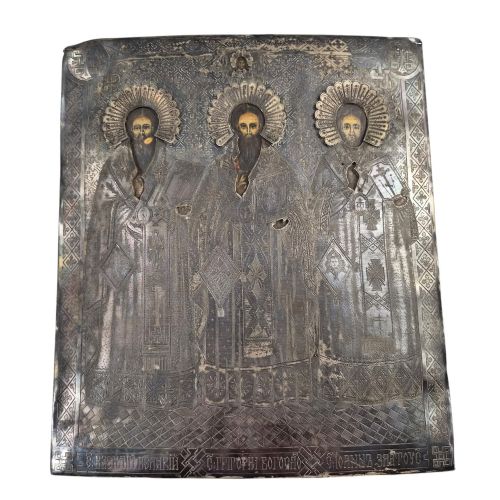
Origins vary from British workshops to Russian Orthodox pieces featuring silver and bronze oklads. The most frequent encounters on this page involve copper panels integrated into wooden furniture or standing fire screens.
How they were made
Makers shaped these items by hammering sheet metal from the reverse side to create raised designs on the front, a technique known as repousse or embossing. Copper and brass dominate the inventory, often paired with oak or mahogany structures.
The metalwork frequently combines with timber frames, whether on cabinets, log boxes, or fire screens. Artisans utilised iron, silver, and bronze depending on the regional tradition and the intended function of the object.
Antique Repousse Panel Retail Price Guide 2026
Typical asking prices for repousse panel among the pieces listed under this phrase on Sellingantiques today, from the lower quarter to the upper quarter. They describe what is for sale here now, not the wider market.
Diana the huntress occasionally oversees your fireplace from a bronzed copper relief.
What varies in quality
The depth and crispness of the hand-beaten detail distinguish finer examples from simpler production pieces. Skilled artisans achieved subtle gradations in relief that catch the light differently across the surface.
The integration between the metal panel and its wooden housing also marks a difference in standard. Superior items show careful framing and secure fixings that complement the weight of the repousse work.
Heinrich Grünbaum·Shapland and Petter
The Antique Repousse Panel Glossary
- Repousse
- A metalworking technique where the artisan hammers a sheet from the reverse to form a raised design on the front. This process relies on skill to control the depth and detail of the motif.
- Oklad
- A metal cover protecting a sacred image on an icon, leaving only the faces and hands visible. These are frequently embossed in silver or brass.
- Fire screen
- A portable screen placed in front of a fireplace when the hearth is unlit, often featuring a decorative panel made of copper or brass.
- Arts and Crafts
- A design movement valuing handcraft and traditional materials over mass production. Pieces from this tradition often display visible hammer marks on the metal.
- Art Nouveau
- A style characterised by organic, flowing lines and plant motifs. This aesthetic frequently appears in the curves of the metal panels and frames.
Antique Repousse Panel: Frequently Asked Questions
What is an antique repousse panel?
An antique repousse panel is a sheet of metal, usually copper, brass, or silver, hammered from behind to create a three-dimensional design on the front. These panels were used independently as wall art or mounted onto furniture and fire screens.
They reflect the handmade ethos of the late nineteenth and early twentieth centuries, particularly within the Arts and Crafts movement.
How do I clean an antique copper panel?
Cleaning requires a cautious approach to preserve the original surface and any aged patina. Dust gently with a soft cloth and avoid harsh chemical dips that strip character.
Consult a specialist before attempting to polish older metalwork, as the dark oxidation often adds depth to the beaten design.
How do I identify Arts and Crafts metalwork?
Arts and Crafts metalwork typically displays visible tool marks and organic motifs inspired by nature. The construction emphasises honest craftsmanship rather than factory perfection.
Look for hand-beaten textures and integration with solid timbers like oak.