


Antique Red Table Lamps
Antique red table lamps bring rich crimson tones and historic character into a room through converted oil burners, porcelain vases, and lacquered wood.
Antique Red Table Lamps
When you search for antique red table lamps, you find a diverse group of lighting pieces spanning the eighteenth, nineteenth, and early twentieth centuries. These items frequently originate as conversions from earlier oil lamps, candlesticks, and decorated vases rather than purpose-built domestic lighting.
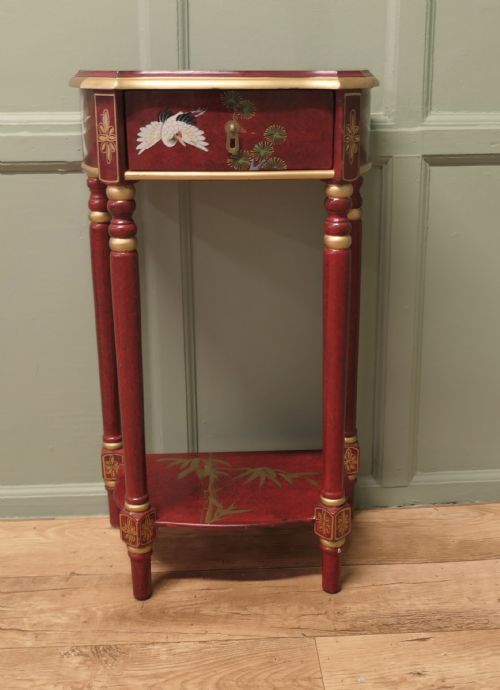
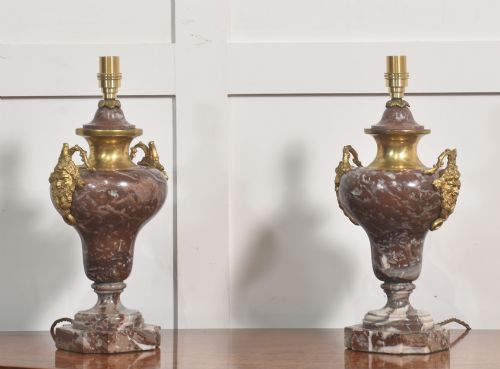
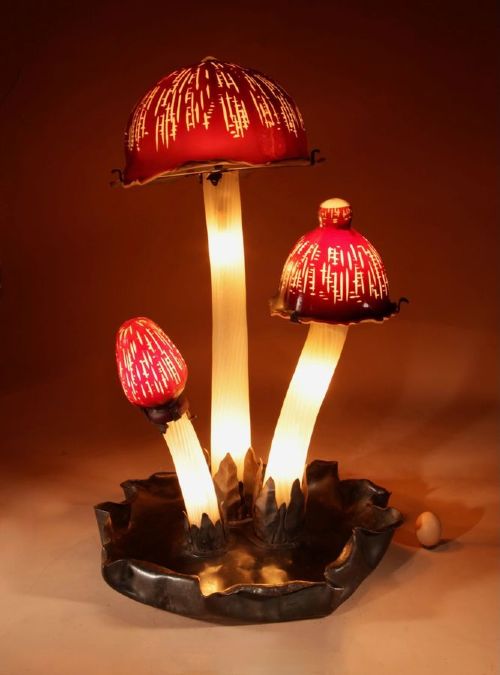
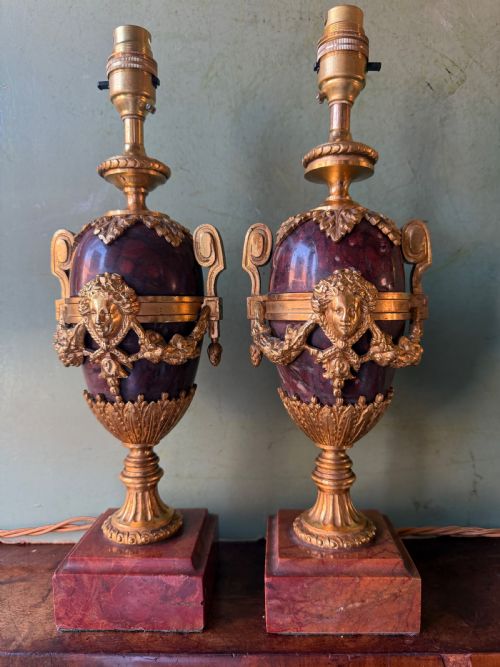
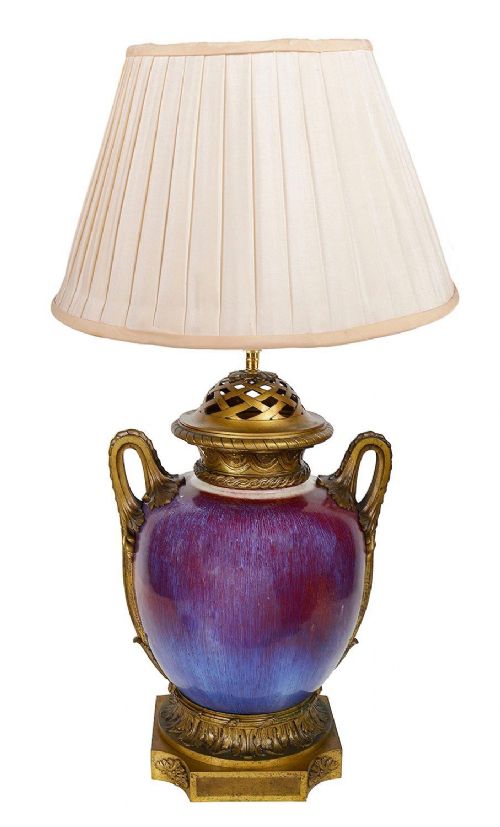
The red coloration appears across several distinct material types and stylistic traditions in the record. Buyers encounter hand-painted Chinoiserie lacquer, deep cranberry glass, rich rouge marble mounted in gilt brass, and vibrant Chinese ceramics.
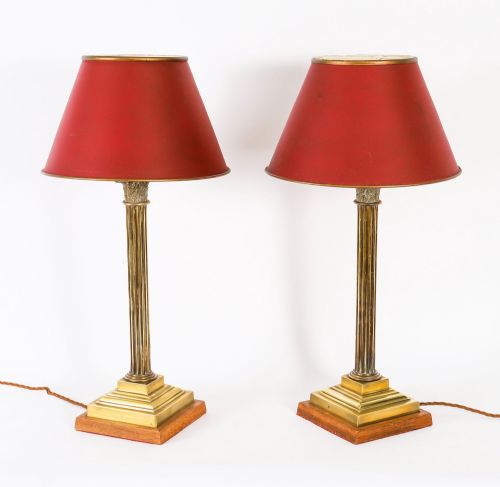
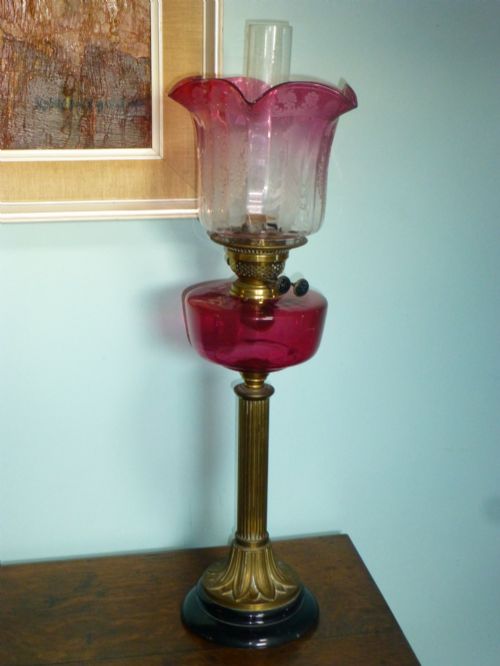
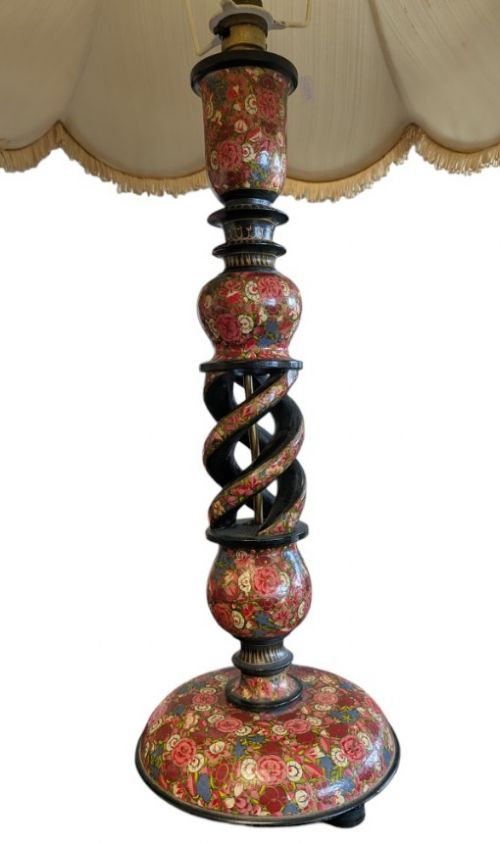
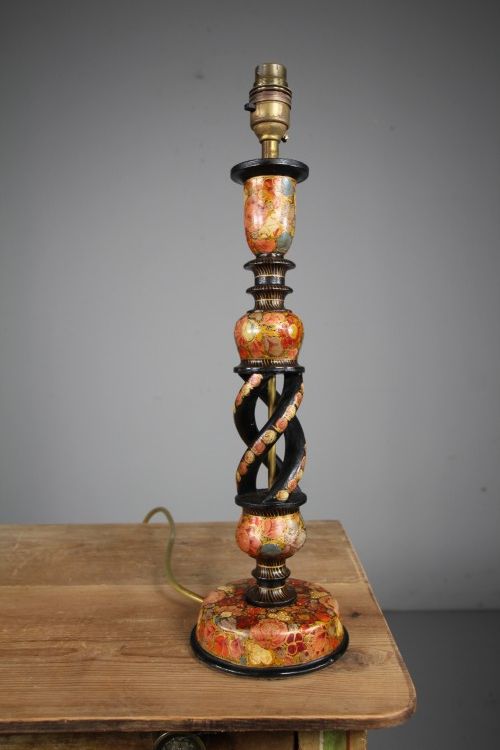
Victorian brass oil lamps fitted with ruby glass fonts and shades represent a common form within this category. Alongside these stand French neoclassical ormolu designs and brightly painted Kashmiri wooden columns dating from the nineteen-twenties.
How they were made
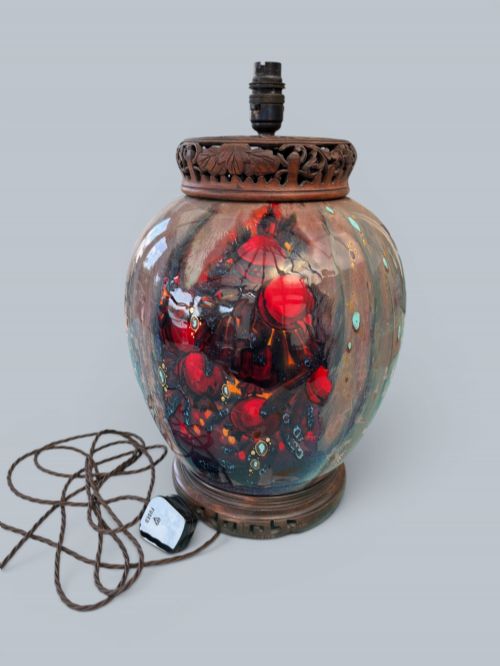
Cranberry and ruby glass elements are mouth-blown and often etched or overlaid with patterns before assembly onto metal bases. Ceramic bodies utilise traditional porcelain techniques, sometimes featuring hand-applied overglaze decoration or sang de boeuf monochrome glazes.
Metal components rely on brass casting, ormolu mounting, and bronze work, frequently combined with carved or turned wooden supports. Lacquered items employ layered resin finishes on wood substrates, embellished with hand-painted gilt motifs in the Chinoiserie or regional Kashmiri taste.
Geographic origins represented in the selection include French, English, Italian, Chinese, Kashmiri, and Japanese workshops.
What varies in quality
The standard of the base material and the crispness of the casting or carving dictate the overall grade of the piece. Finely chased ormolu mounts, heavy cast bronze, and well-proportioned Corinthian columns indicate superior workshop production compared to simpler turned brass or plain wooden alternatives.
Artistic execution in the surface decoration marks the primary division between standard and exceptional examples. Hand-painted lacquer with intricate detail and depth of colour commands higher regard than basic stencilling, while undamaged cranberry glass with deep saturation remains more desirable than pale or cloudy equivalents.
The Antique Red Table Lamps Glossary
- Ormolu
- Gilded bronze or brass mounts applied to furniture, marble, or lighting bases during the eighteenth and nineteenth centuries. This decorative technique adds metallic lustre and architectural definition to the object.
- Chinoiserie
- European decorative style reflecting Chinese artistic influences, popular across Georgian, Regency, and later periods. It employs lacquered surfaces, figures, and botanical motifs rendered in red, black, and gold.
- Sang de boeuf
- Deep red copper-oxide ceramic glaze developed in China, translating literally as ox-blood. Pieces featuring this finish display rich tonal variation across the surface of the vase or lamp body.
- Tole peinte
- Painted tinplate or sheet metal used for decorative objects and lamp bases from the Victorian era onward. The painted surface typically incorporates rich reds and gilt linoleum details.
- Duplex burner
- Double-wick mechanical burner system found on nineteenth-century oil lamps. These heavy brass fittings are frequently retained when such lamps undergo conversion for electrical use.
Antique Red Table Lamps: Frequently Asked Questions
What periods do these lamps come from?
The available selection spans from the eighteenth century through the Edwardian era and into the nineteen-thirties. Pieces include Georgian components, nineteenth-century Victorian brass and French marble designs, and twentieth-century Chinoiserie.
Maker styles and manufacturing methods shift across these decades, moving from heavy cast bronze and hand-blown glass toward painted wooden columns and lacquered finishes.
Are these lamps converted from oil lamps?
Many examples began life as oil lamps or candlesticks before receiving modern electrical fittings. Tall duplex burners and glass fonts frequently indicate a conversion from nineteenth-century lighting.
Other lamps utilise antique Chinese porcelain vases, carved wooden columns, or decorative urns as bodies, adapted for interior illumination during their production or later in their lifespan.
How do I identify Chinoiserie lacquer lamps?
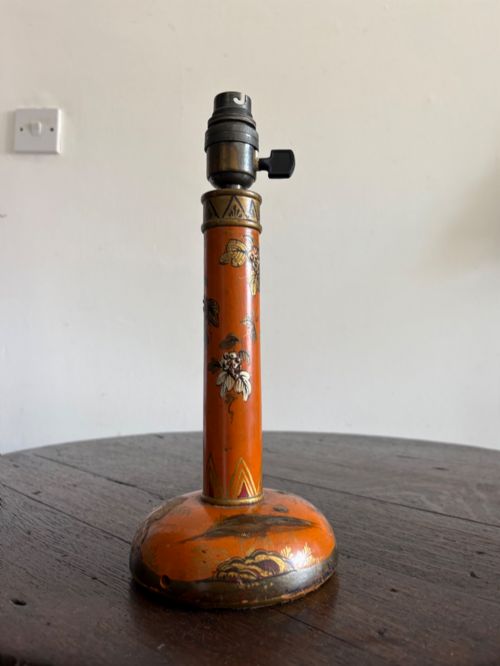
Chinoiserie lamps display hand-painted oriental scenes, figures, and floral motifs against a lacquered background. They often feature mandarin orange or deep red colour schemes highlighted with gilt decoration.
These pieces frequently date from the early twentieth century, incorporating wooden or papier-mache structures finished with traditional layered varnishes.
What materials are used for the red components?
The red elements appear in glass, porcelain, marble, and lacquered wood. Cranberry glass and ruby glass provide translucent red tones, while rouge marble offers a dense, veined stone finish.
Ceramics utilise high-fired glazes like sang de boeuf, and wooden items employ painted finishes or dyed velvet fabrics to achieve the desired crimson hue.