



Antique Red Gilt Mirror
An antique red gilt mirror brings warmth and depth to a room through layered metallic leaf laid over vermillion or scarlet grounds.
Antique Red Gilt Mirror
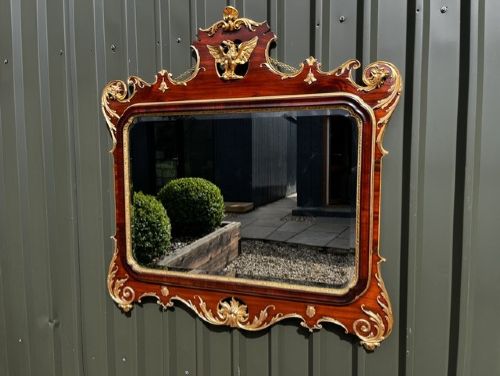
An antique red gilt mirror combines painted or japanned vermillion surfaces with contrasting gold leaf highlights. Wall mirrors, overmantel pieces, and dressing table variants form the core of this grouping.
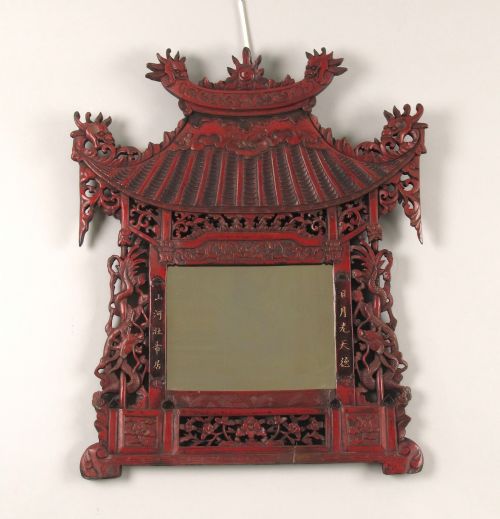
The aesthetic bridges several periods, drawing on Chinoiserie traditions, French Louis styles, and Georgian woodwork. Buyers encounter items ranging from carved wooden frames to lacquered pagoda designs originating across the eighteenth, nineteenth, and early twentieth centuries.
How they were made
Carpenters constructed frames using timber foundations such as mahogany, walnut, or pine before applying coats of gesso to smooth the substrate. Gilders then adhered gold leaf over bole layers, frequently exposing the red clay beneath as time wore the metallic surfaces.
Lacquered and japanned examples utilised layered resin and paint applied in imitation of Asian imports. Artisans built up these red grounds through successive drying and polishing stages before adding gilt decoration.
Several mirrors feature whimsical camel-crested frames, proving that nineteenth-century decorators enjoyed exotic silhouettes just as much as we do.
What varies in quality
The refinement of the carved wood or moulded gesso dictates the baseline of execution. Crisp floral crests, clean scrollwork, and deeply undercut mouldings separate superior examples from softer, shallower castings.
The integrity of the surface finish plays a major role in overall character. Cohesive patination where the red ground and gold leaf interact naturally carries more visual weight than flat or heavy-handed modern repainting.
The Antique Red Gilt Mirror Glossary
- Japanning
- A European imitation of East Asian lacquerwork involving layered varnishes and heat-cured finishes. Artisans often executed this technique in scarlet or vermillion tones beneath gilt motifs.
- Gesso
- A mixture of gypsum or chalk and animal glue used as a preparatory layer on wood frames. This substance provided a smooth base for subsequent gilding.
- Bole
- A prepared clay layer, frequently reddish-brown, applied to wood before laying gold leaf. The colour of this foundation added warmth to the metallic surface once polished.
- Trumeau
- A decorative wall mirror paired with a matching console table or incorporated into wood panelling. These French pieces often integrated painted panels or carved crests above the glass.
- Overmantel
- A large mirror designed to hang directly above a fireplace mantelpiece. These horizontal formats frequently echoed the proportions of the hearth below.
Antique Red Gilt Mirror: Frequently Asked Questions
How do I date a red gilt mirror?
Dating relies on examining the construction methods of the wooden frame, the composition of the gesso, and the silvering technique of the glass plate. Early pieces often show hand-beveled edges and older joinery behind the rebate.
Stylistic cues such as rococo scrolls, Chinoiserie pagodas, or Victorian proportions further narrow down the decade of manufacture when compared against documented examples.
Where should I hang an overmantel mirror?
An overmantel mirror traditionally sits centrally above a fireplace opening to reflect light and anchor the vertical space of the chimney breast. Ensuring secure wall fixings is essential due to the combined weight of the timber frame and glass.
These large formats also function effectively above low sideboards or console tables in principal reception rooms.
How do I clean a antique gilt frame?
Dusting requires a soft, dry brush to remove particles from delicate carved areas without disturbing the metallic leaf. Moisture and commercial chemical cleaners damage brittle gesso and historic gilding.
Preserving the original surface involves minimal intervention and keeping the piece away from direct heat sources and damp environments.
What is the difference between giltwood and gesso?
Giltwood refers to solid timber carved directly and covered in gold leaf, whereas gilt gesso involves a moulded chalk and glue paste built up over a softer wood foundation. Gesso allows for intricate, repetitive floral or scroll motifs that would be costly to carve by hand.
Both materials frequently share the same red preparation layers underneath the gold leaf.