



Antique Prism Drop Chandelier
An antique prism drop chandelier brings shifting plays of candlelight and electric glow into a room through suspended glass.
Antique Prism Drop Chandelier
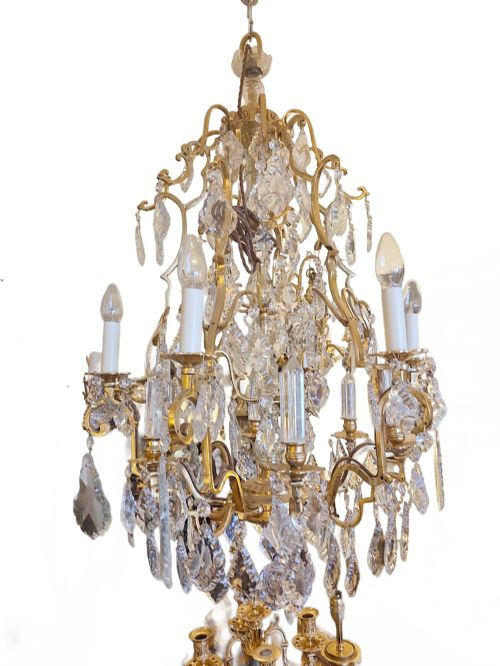
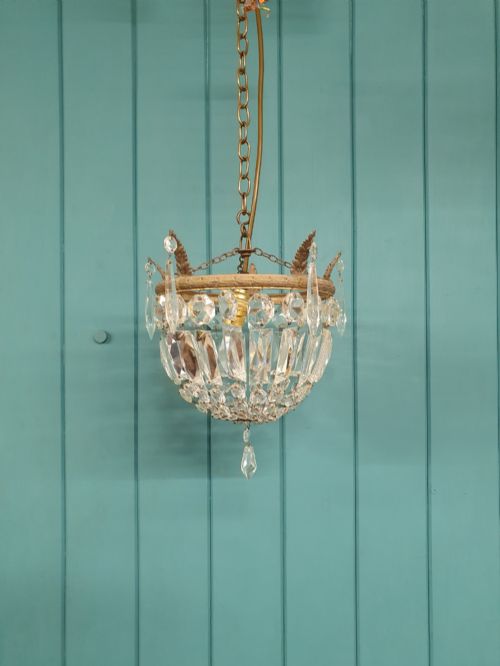
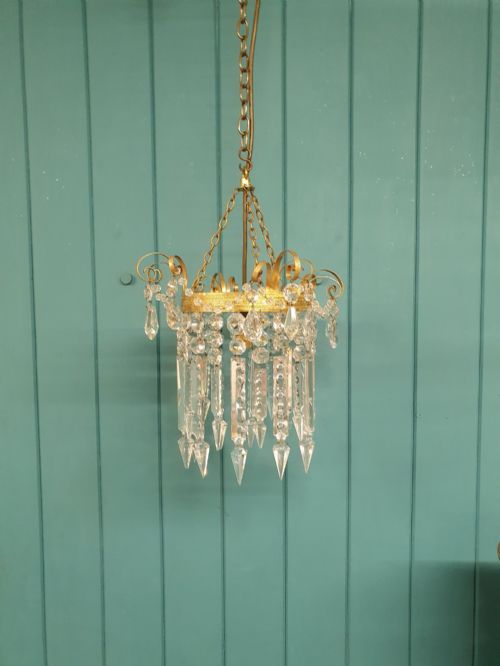
An antique prism drop chandelier focuses on hanging glass elements designed to refract and scatter light across a space. These ceiling fixtures range from small Edwardian spike chandeliers to grand French gilt bronze examples spanning the nineteenth and early twentieth centuries.
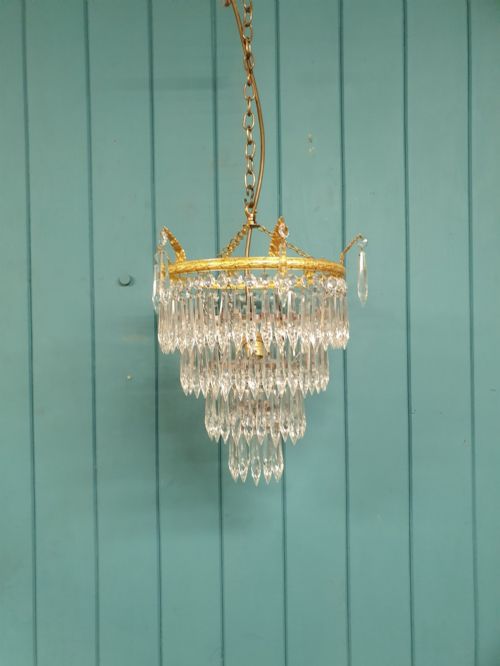
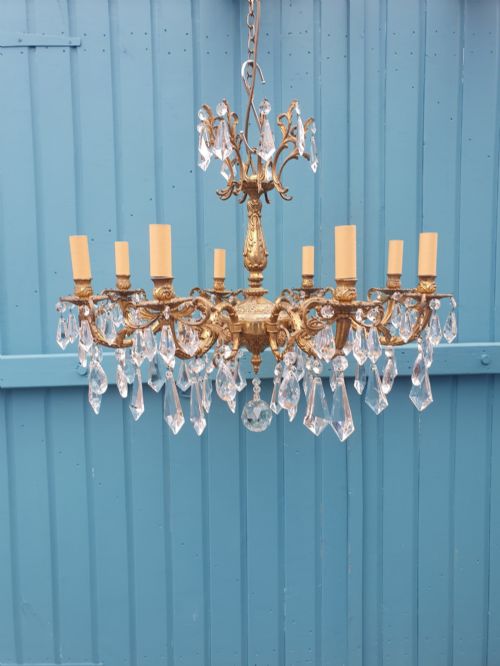
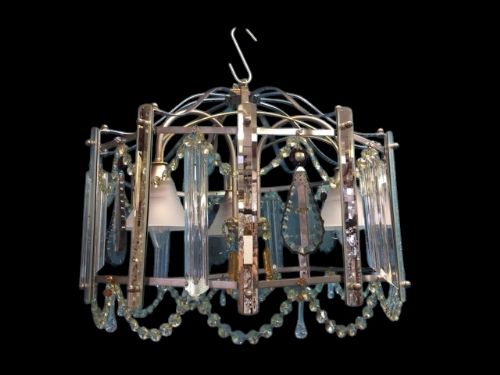
The selections here highlight various forms including tent and waterfall configurations, bag chandeliers, and tiered drop designs. Pieces often feature cut crystal elements paired with brass, gilt bronze, or gilt metal frameworks dating from the Victorian era through the 1930s.
Buyers most frequently encounter Edwardian and 1930s examples equipped with spike prisms, oblong drips, or swags of glass beads. Alongside standard ceiling lights, the selection includes related mantel lustres and pendant lights featuring similar cut glass ornamentation.
How they were made
Maker workshops constructed the primary structural frameworks using cast brass, gilded bronze, or gilt metal. These durable skeletons supported the weight of numerous glass components while incorporating arms and rings for illumination.
Artisans shaped the hanging elements from crystal and cut glass, producing precise facets designed to maximise light refraction. Workers then suspended these individual drops, spikes, and swags from the metal frames using small wire loops or pins.
Antique Prism Drop Chandelier Retail Price Guide 2026
Typical asking prices for prism drop chandelier among the pieces listed under this phrase on Sellingantiques today, from the lower quarter to the upper quarter. They describe what is for sale here now, not the wider market.
Current listings feature pieces spanning from the Victorian era through the 1930s, utilising brass, gilt bronze, and cut crystal glass.
What varies in quality
The caliber of an antique prism drop chandelier depends largely on the depth of cutting and clarity within the glass components. Superior examples utilise high-grade crystal with sharp, clean facets that create distinct light patterns, whereas simpler pieces feature smoother, moulded glass.
Framework construction also distinguishes standard production from finer pieces, particularly in the weight of the bronze or brass and the intricacy of the metal casting. Matching components and the completeness of the original drop configurations influence the overall integrity of the fixture.
The Antique Prism Drop Chandelier Glossary
- Prism
- A cut glass pendant designed to refract light into spectral colours. These hang from the chandelier frame in various shapes including spikes and oblong drips.
- Lustre
- A decorative tabletop or mantel ornament featuring hanging glass drops, sharing stylistic traits with matching ceiling fixtures.
- Bag chandelier
- A lighting fixture featuring a flattened or rounded mass of closely hung glass beads and drops resembling a mesh bag. This design directs light through a dense cluster of crystals.
- Spike
- A long, pointed glass pendant utilised extensively on Edwardian tier chandeliers. They hang in rows to create a distinct silhouette around the light source.
- Tent and waterfall
- A configuration where glass swags form an upper tent shape above a cascading waterfall of drops. This French style layers multiple tiers of crystal for maximum visual impact.
Antique Prism Drop Chandelier: Frequently Asked Questions
How do I clean an antique prism drop chandelier?
Cleaning requires removing the delicate glass drops individually to wash them in warm soapy water. Wiping the metal framework with a dry cloth prevents damage to the brass or gilt surfaces.
Rehanging the crystals demands patience to ensure each drop returns to its correct wire loop or pin position. Regular dusting helps maintain the refractive quality of the glass without risking moisture damage to old wiring.
Were these chandeliers electrified originally?
Most pieces dating from the Victorian era and earlier periods were designed originally for candles or gas lighting. Electrical wiring represents later adaptation to accommodate modern household standards.
When inspecting these fixtures, check how the internal wiring integrates with the historic metal frame. Professional rewiring ensures safe installation while preserving the original structural components.
What rooms suit a small prism chandelier?
Compact fixtures measuring under twelve inches fit well in hallways, cloakrooms, or bedrooms with lower ceilings. Their modest proportions provide decorative illumination without overwhelming smaller architectural spaces.
Stylistically, these smaller lights coordinate with period interiors or add reflective interest to contemporary rooms. Positioning them away from high-traffic pathways protects the hanging glass drops.
How do I date an antique chandelier?
Dating relies on observing the manufacturing techniques, metal types, and the specific shape of the glass prisms. Edwardian and 1930s examples often feature distinct spike or oblong drop formations alongside specific brass alloys.
French pieces from the nineteenth century frequently employ heavy gilt bronze and elaborate cage frameworks. Comparing the wiring channels, fastener types, and glass cutting styles helps narrow the period of origin.