


Antique Print Stand
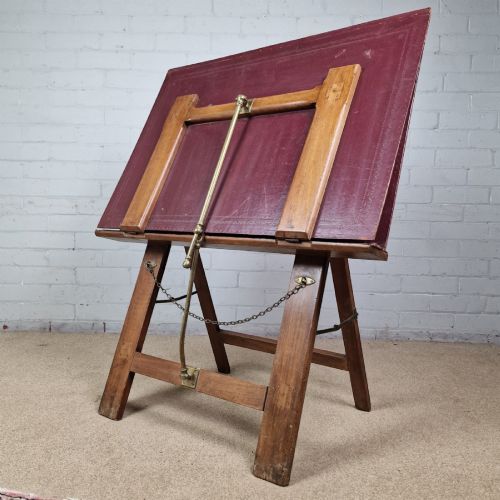
An antique print stand holds loose plates, drawings and maps ready for study.
Antique Print Stand
When you search for an antique print stand, you encounter pieces designed to hold large sheets of paper, prints, and folios for easy browsing. The most common forms on this page are mahogany and oak folio stands, floor-standing cabinets, and adjustable racks dating from the Georgian, Regency, and Victorian periods.
These items served scholars, artists, and collectors who needed to organise maps, engravings, and architectural drawings without damaging the edges. They range from table-top easels and library scroll stands to grand country house folio cabinets in rosewood and birds-eye maple.
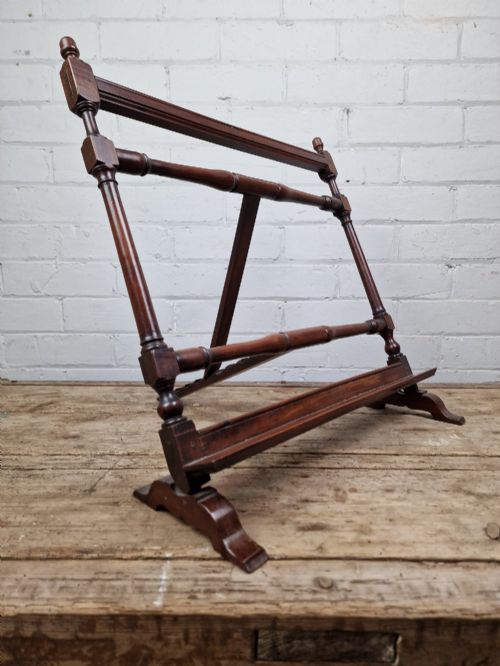
Makers built these pieces with pivoting actions, sliding supports, and deep troughs to display open folios safely. The selection also includes related display items such as pole screens, map globes, and reading stands from the nineteenth century.
How they were made
Makers constructed antique print stands primarily in solid timber, selecting dense and figured woods such as mahogany, oak, walnut, and rosewood. These materials provided the necessary weight and structural strength to support heavy stacks of paper and large hinged frames.
Joinery techniques focused on stability and movement, employing turned stretchers, brass castors, and adjustable wooden ratchets. Cabinetmakers utilised fine veneers like birds-eye maple on carcases while finishing surfaces with traditional hand-polished wax.
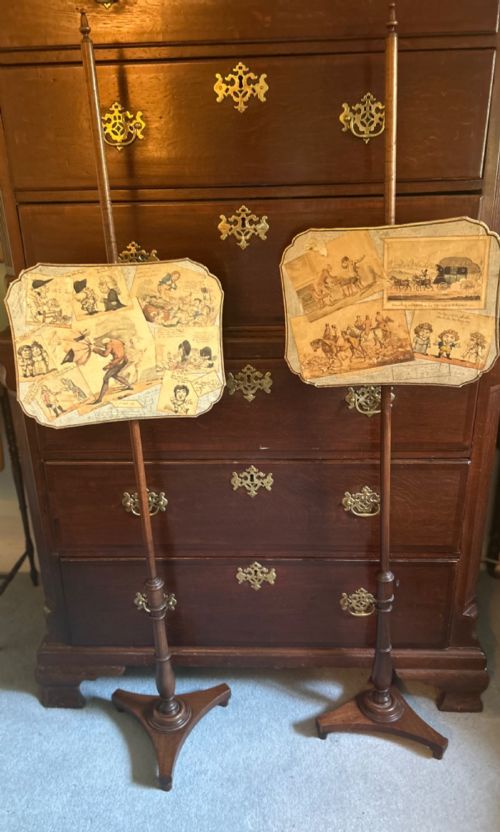
Satirical prints on pole screens remind us that Georgian drawing rooms enjoyed a very sharp wit.
What varies in quality
The distinction between standard utility items and exceptional examples lies in the ambition of the timber selection and the precision of the mechanisms. Superior pieces utilise highly figured timbers, rich grain patterns, and robust brass fittings that operate smoothly without slack.
Proportion and scale dictate the tier of a piece, moving from simple utilitarian racks to grand-scale country house furniture with refined mouldings and secondary woods of high grade. Maker attribution and sophisticated adjustable engineering elevate certain examples far above standard workshop production.
G & J Cary·Benjamin Taylor & Sons·Rogers
The Antique Print Stand Glossary
- Folio stand
- A piece of furniture with two hinged sides or a central trough designed to hold large flat sheets of paper, prints, or maps. These items allow works on paper to be stored upright and viewed without creasing.
- Canterbury
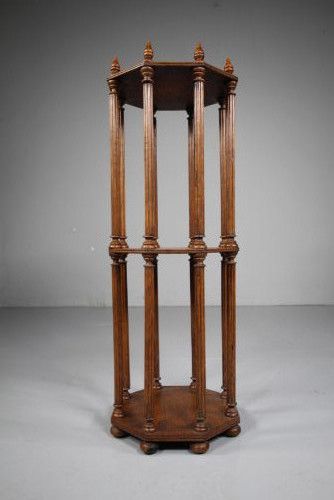
- A low stand with partitions originally intended for sheet music or folios, often adapted as a rack for books or papers. Regency examples frequently feature oversized proportions suited to country house libraries.
- Pole screen
- A vertical stand holding an adjustable screen panel designed to protect a person's face from the heat of an open fire. Many examples incorporate satirical prints or needlework mounted within the frame.
- Pearlware
- A fine earthenware developed in the late eighteenth century featuring a faint bluish glaze that pooled in crevices. It served as a popular ceramic body for transfer-printed tableware and baskets.
- Mauchline ware
- A type of nineteenth-century woodware made from sycamore and decorated with photographic transfers of local scenes or literary quotations. Items typically include small book stands, boxes, and desk accessories.
Antique Print Stand: Frequently Asked Questions
How do I use a print stand today?
A print stand functions well for displaying open books, modern art prints, or maps in a living space. The design allows you to rotate displayed images easily while keeping your collection stored safely.
Ensure you do not overload the trough with too many heavy frames to protect the hinges and wooden stretchers from strain.
How do I clean mahogany wood?
Dust the timber regularly with a soft, dry cloth to prevent grit accumulation on the surface. Avoid using silicone sprays or modern chemical polishes that can degrade the traditional wax finish.
Feed the wood periodically with a quality beeswax to maintain its deep lustre and protect the grain from drying out.
How do I date a Regency piece?
Regency items typically display classical restraint, reeded mouldings, and brass castors reflecting design tastes from the early nineteenth century. Look for specific construction traits like hand-cut dovetails and native secondary woods.
Compare the turned legs and hinge mechanisms with dated examples from the same period to confirm the era of manufacture.