





Antique Pricket Sticks
Antique pricket sticks are altar and church candle holders fitted with a sharp central spike rather than a socket, prized for their striking verticality and liturgical history.
Antique Pricket Sticks
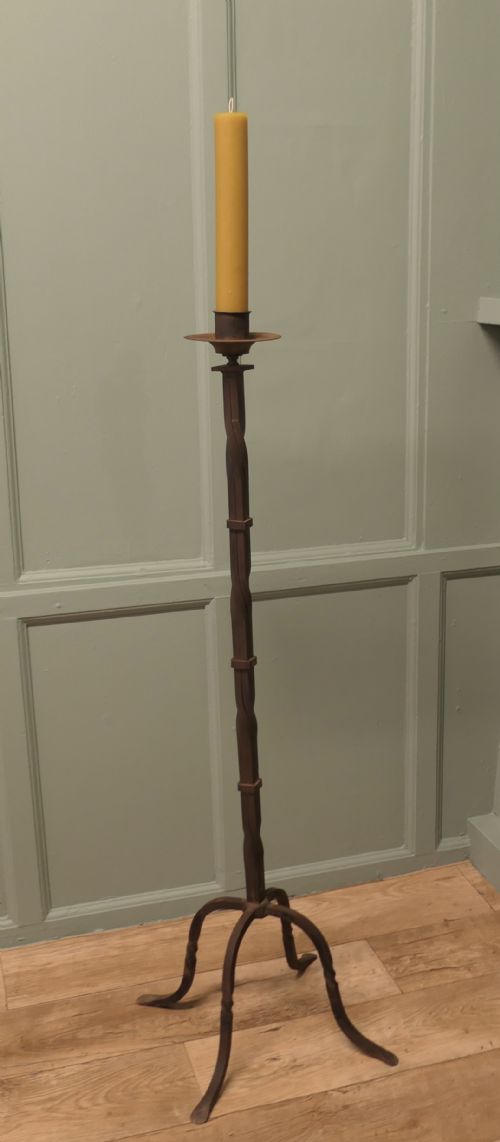
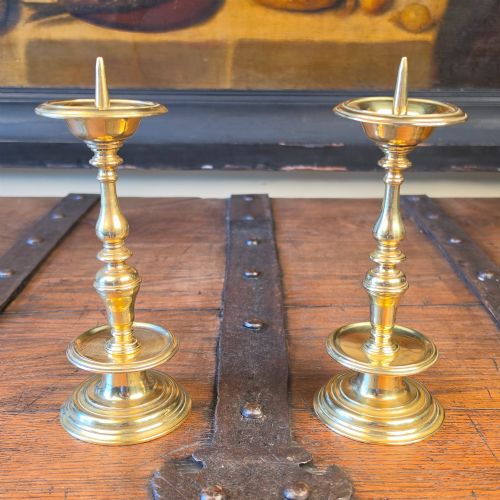
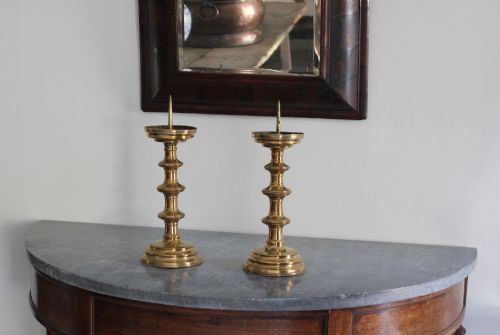
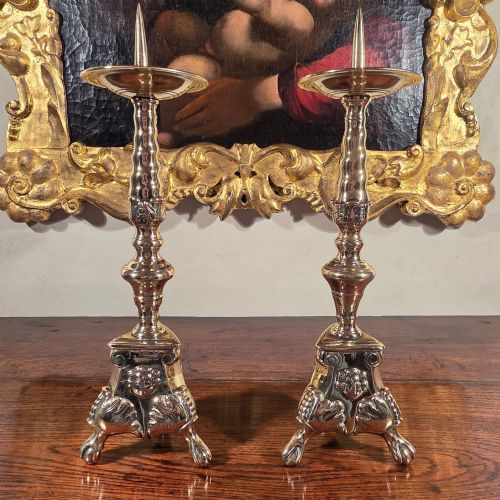
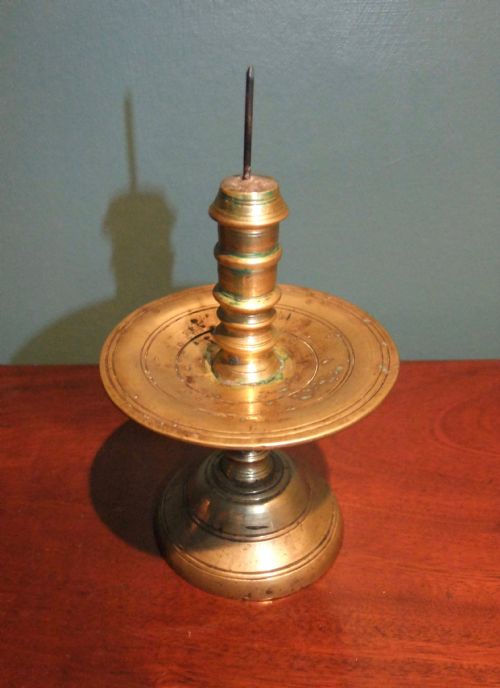
When you search for antique pricket sticks, you are looking at tall candle holders designed to secure a candle upon an upright metal spike instead of sliding it into a cup. These pieces trace their lineage to ecclesiastical settings, appearing primarily as church candlesticks, altar lamps, and torchères.
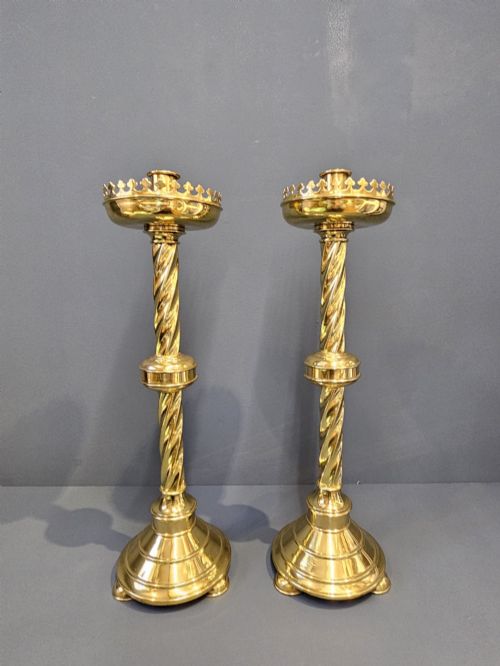
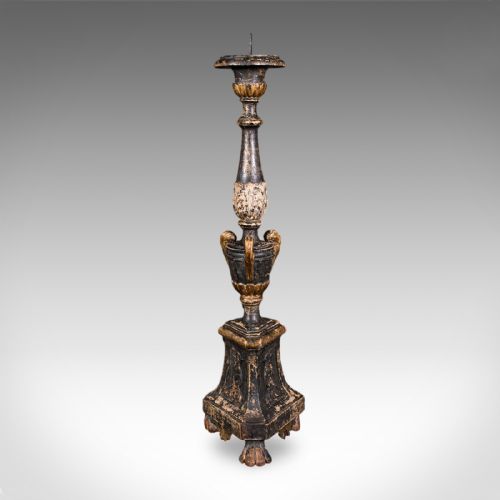
The versions you are most likely to meet on this page span the 16th century through the Victorian era, heavily represented by pairs originating from Italy, France, and the Low Countries. They manifest variously as heavy brass altar pieces, blacksmith-made wrought iron floor stands, and carved wooden candle holders finished in silver leaf, gilt, or ebonised surfaces.
Makers ranged from village blacksmiths hammering utilitarian iron stands to Flemish and Italian workshops casting substantial brass altar furnishings. Stylistically, the selection moves between the austere lines of the 16th century, Baroque curves, and the later revivals of the Gothic and Victorian periods.
Materials and Construction
The construction of these pieces relies heavily on cast brass, hand-beaten wrought iron, and carved wood finished with gesso, silver leaf, or gilt. Metal examples demonstrate traditional foundry casting and forging methods, leaving tangible evidence of the blacksmith's hammer or the moulder's seam.
Wooden items employ carved timbers shaped into classical altar-style shafts and bases, frequently layered with gesso before receiving gilding or ebonising. These diverse materials determine the silhouette, balancing the heavy, grounded nature of iron floor sticks against the reflective sheen of gilded wood and polished brass.
Antique Pricket Sticks Retail Price Guide 2026
Typical asking prices for pricket sticks among the pieces listed under this phrase on Sellingantiques today, from the lower quarter to the upper quarter. They describe what is for sale here now, not the wider market.
The listings span multiple centuries, uniting 16th-century brass work with 19th-century wrought iron and carved wooden altar pieces.
Evaluating the Pieces
Quality in these items rests upon the integrity of the original form and the honesty of the materials used in their construction. Solid cast brass and hand-forged iron demonstrate a substantive weight and structural honesty that machine production cannot replicate.
The subtlety of hand-carving on wooden altar pieces and the preservation of original gilt, silver leaf, or ebonised surfaces separate superior examples from later copies. Proportion and presence matter greatly, as these objects were originally scaled for grand liturgical spaces and derive their impact from confident vertical lines.
The Antique Pricket Sticks Glossary
- Pricket
- A sharp metal spike projecting upwards from the centre of a drip pan to hold a candle securely in place. This ancient method predates the common socket candlestick.
- Torchere
- A tall decorative stand designed to carry a light source, often taking the form of an elaborate column or carved wooden figure. These were typically placed in corners or flanking larger furniture pieces.
- Gesso
- A plaster-like mixture applied to wood surfaces as a smooth base for painting or gilding. It allows for crisp, intricate detailing on carved altar pieces.
- Ebonised
- Wood treated to resemble expensive ebony through staining or chemical darkening. This finish gained popularity in various periods to create a stark, formal contrast.
Antique Pricket Sticks: Frequently Asked Questions
What is an antique pricket stick?
An antique pricket stick is a candle holder featuring an upright metal spike, known as a pricket, which pierces the base of a candle to hold it upright. These items derive primarily from ecclesiastical environments such as churches and domestic chapels.
Historically utilised on altars and tables, they dispense with the standard socket found in later domestic lighting. Their design prioritises height and stability to support large wax candles during religious services.
How do I date an old pricket stick?
Dating relies on examining the material composition, manufacturing marks, and stylistic indicators such as Gothic or Baroque motifs. Early pieces from the 16th and 17th centuries often display the rougher casting textures of Flemish or continental workshops.
Later Victorian and Gothic Revival examples adopt historical forms with cleaner mechanical consistency. Comparing the base construction and wear patterns helps distinguish genuine period items from later style pieces.
Were these used in homes?
While originating in churches and monastic settings, many found their way into domestic interiors as decorative accessories or were adapted later in history. Large iron floor stands and smaller table versions served functional lighting roles before electricity.
Today, collectors place them on sideboards, tables, or hearths as focal points. Their architectural presence allows them to integrate into both traditional and contemporary interior schemes.
Can I still burn candles on them?
Burning candles is possible provided the pricket spike is sturdy and the base remains balanced and secure. Modern candles may need their base slightly hollowed out to sit properly on the spike.
Many collectors prefer to display them unlit or utilise fitted drip catchers to protect fragile antique surfaces from melting wax. Careful handling ensures the preservation of original patinas and delicate finishes.