

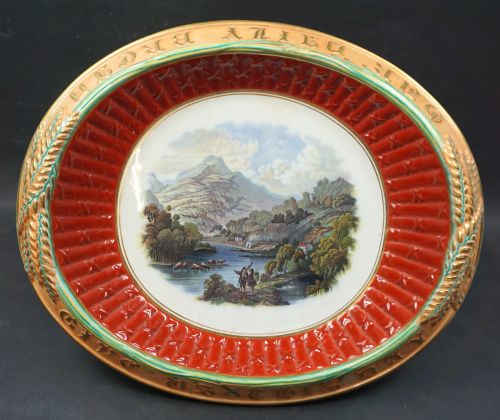


Antique Prattware
These pieces of antique prattware bring English folk art earthenware into the home with colourful underglaze painting.
Antique Prattware
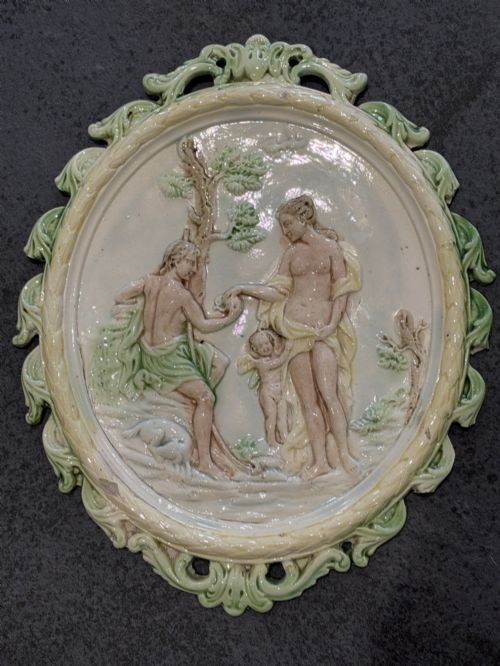
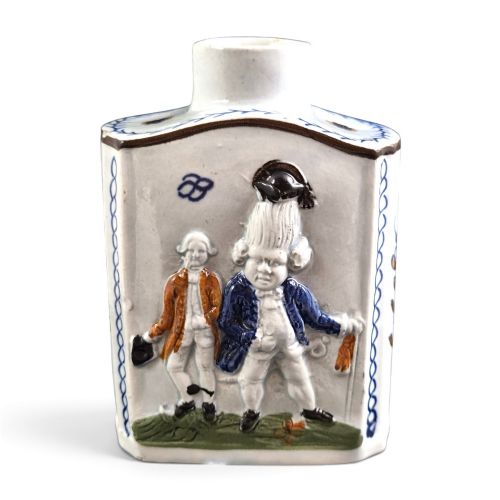
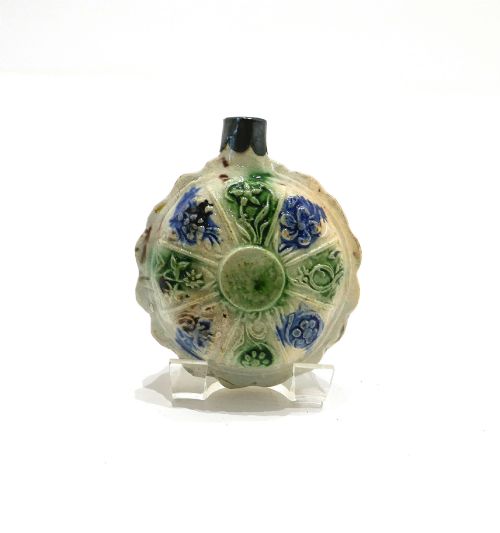
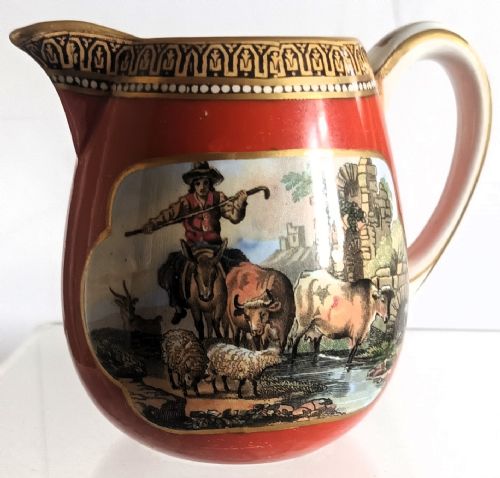
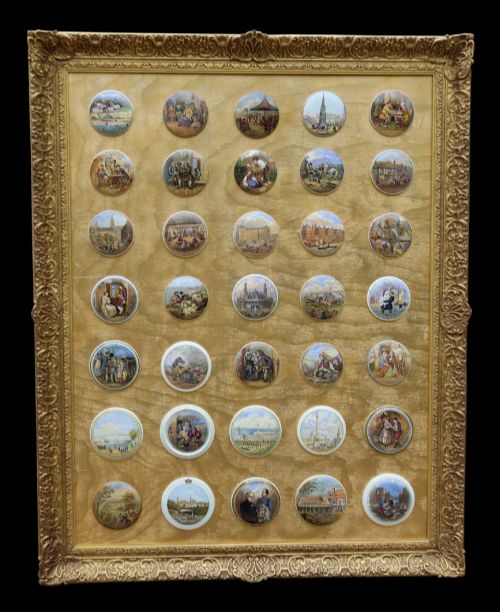
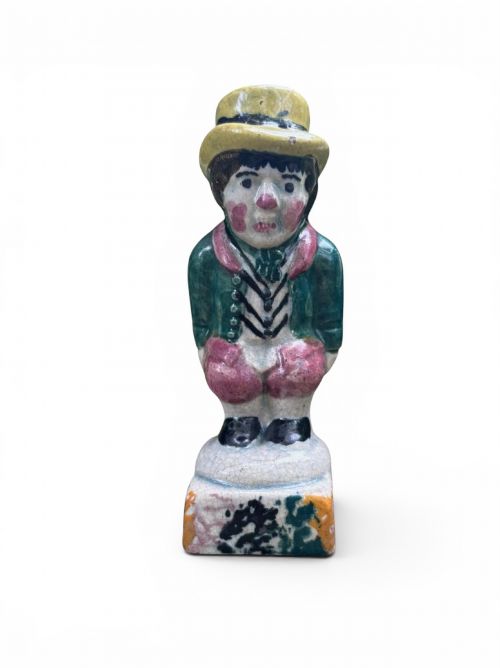
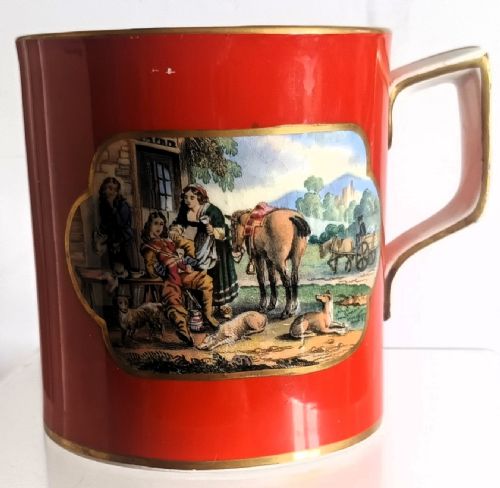
When you examine antique prattware, you are looking at English pottery produced across the Georgian and Victorian periods, largely from Staffordshire potteries. The selection ranges from tea canisters and jugs to wall plaques, pot lids, and figural pieces decorated with characteristic mineral pigments.
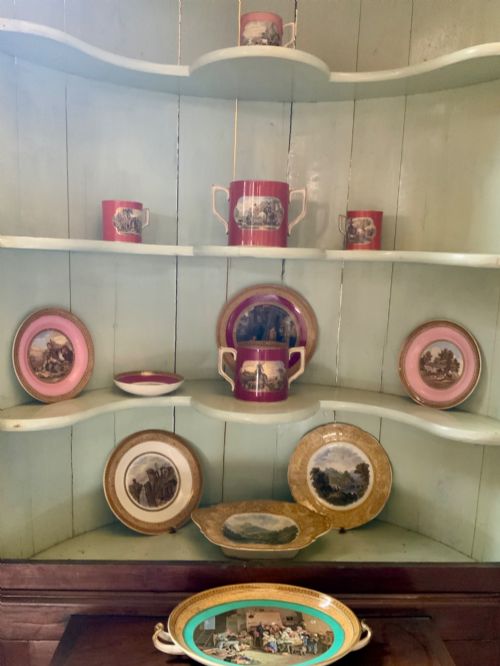
The versions you are most likely to meet on this page span the late eighteenth and nineteenth centuries, taking forms such as mugs, platters, and cream jugs. These items display a lively palette of cobalt blue, ochre, yellow, and brown beneath a clear glaze.
How they were made
Potters shaped earthenware and pearlware bodies by hand or in moulds before applying metallic oxide colours directly to the porous surface. Cobalt, copper, and antimony provided the signature blue, green, and orange tones that stayed bright beneath the glaze.
A transparent lead glaze covered the painted decoration, and the pieces underwent a high-temperature kiln firing to fuse the colours. Gold leaf or enamel touches were sometimes added over the glaze for additional detail on specific figures and tea wares.
Antique Prattware Retail Price Guide 2026
Typical asking prices for prattware among the pieces listed under this phrase on Sellingantiques today, from the lower quarter to the upper quarter. They describe what is for sale here now, not the wider market.
The selection spans the Georgian, Regency, and Victorian periods through the nineteenth century.
What varies in quality
Depth and clarity in the underglaze colour application separate standard vessels from exceptional examples. A clean, even glaze finish that does not obscure the painted brushwork indicates careful control in the kiln.
Enoch Wood & Sons
The Antique Prattware Glossary
- Pearlware
- A refined earthenware developed in the late eighteenth century featuring a bluish-tinted glaze that made the ceramic body appear whiter. It served as the primary canvas for many early painted wares.
- Underglaze
- A method of decorating pottery before the glaze layer is applied and fired. This technique protects the painted pigments beneath a glassy surface.
- Pot lid
- A ceramic disk originally used to seal containers of paste or ointment, often printed with historical or pastoral scenes during the nineteenth century. Collectors prize these framed panels as miniature pictures.
- Earthenware
- A porous pottery body fired at lower temperatures than stoneware or porcelain. It requires a glaze coating to become completely watertight.
Antique Prattware: Frequently Asked Questions
What is antique prattware?
Antique prattware consists of British earthenware and pearlware pottery decorated with specific underglaze colours like blue, ochre, and brown. These items date primarily from the Georgian and Victorian eras.
Potters used metal oxides to paint direct designs onto the clay body before glazing and firing. The results include figurative jugs, tea canisters, wall plaques, and plates.
How do I date antique prattware?
Dating relies on stylistic clues, ceramic bodies, and the evolution of manufacturing techniques from the late eighteenth century onwards. Earlier pieces often appear on a pearlware body with hand-painted motifs.
Victorian examples frequently introduce transfer-printed pot lids and denser floral or narrative borders. Comparing the form and the palette against known dated pieces helps narrow the decade.
How were these pieces used?
Many items served practical domestic purposes in the kitchen, parlour, or dining room for serving tea, milk, or ale. Mugs, jugs, and tea canisters were standard daily utilities in households.
Other objects functioned as decorative art or commemorative pieces, including wall plaques, chimney ornaments, and framed pot lids. These displayed moral scenes, portraits, or local views.
How should I display prattware?
Display these ceramics in stable environments away from direct sunlight to preserve the underglaze pigments. Wall-mounted items like plaques and framed pot lids require secure fixings suited to their weight.
Freestanding figures and jugs benefit from enclosed shelving where they remain safe from accidental knocks. Dust them gently with a dry, soft cloth.