



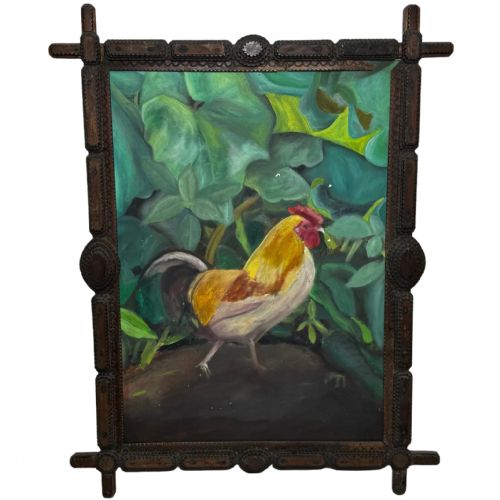


Antique Poultry Artwork
These antique poultry artwork pieces capture farmyard fowl and exotic birds in oils and watercolour across several centuries.
Antique Poultry Artwork
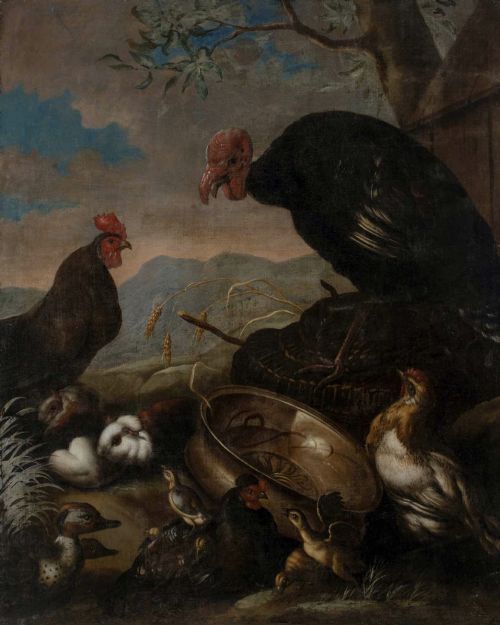
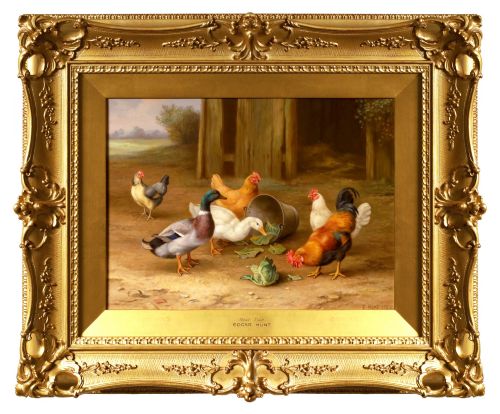
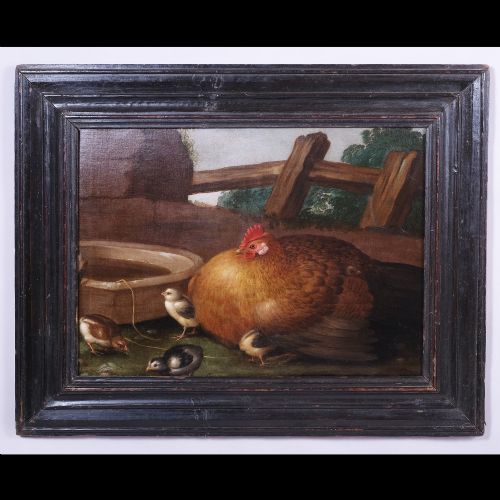
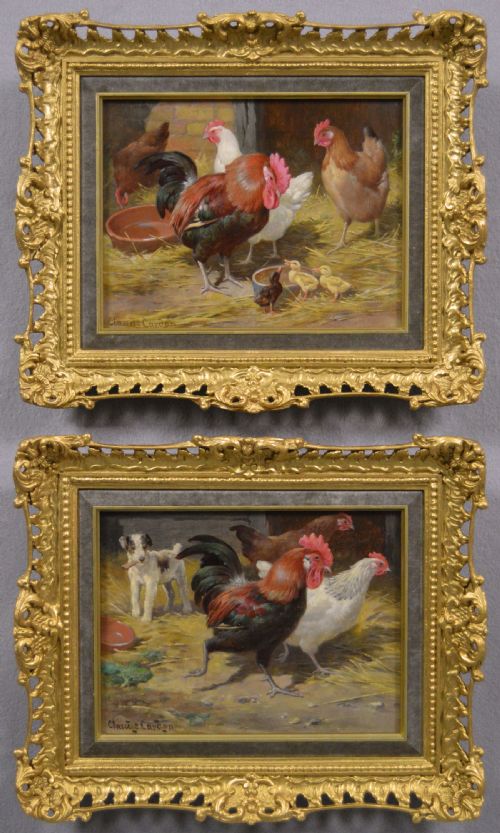
When you search for antique poultry artwork, you encounter painted depictions of chickens, cockerels, hens, and various other birds across multiple periods. The selection on this page spans from seventeenth-century works through to pieces from the 1930s, including Victorian, Edwardian, and eighteenth-century examples.
Most pieces take the form of oil paintings on canvas or paper watercolours, often framed in giltwood. Subjects range from simple farmyard scenes featuring poultry alongside other farm animals to large still life compositions and detailed studies of individual cockerels.
The origins of these works vary from British and European hands, touching on styles such as Victorian realism, British animalier, and the Dutch and Flemish tradition. Buyers frequently find farmyard and interior scenes where domestic fowl take centre stage.
Materials and construction
The physical objects rely primarily upon oil paint applied to canvas, alongside watercolours executed on paper. Wood provides the structural support for stretchers and panels, while many paintings retain their original giltwood frames.
Artists utilised traditional pigments and brushwork to render the plumage, textures, and landscapes associated with agricultural and animal subjects. Canvas preparation and framing methods align with the specific century of production, from seventeenth-century masterworks to twentieth-century folk pieces.
Listings feature oil on canvas, watercolours on paper, and giltwood frames across periods from the seventeenth century to the 1930s.
Distinctions in quality
Quality rests upon the artist's ability to render the anatomy and feather texture of the birds with anatomical conviction. The handling of the surrounding landscape or interior backdrop also separates standard decorative pieces from accomplished fine art.
The condition of the canvas, paint surface, and original frame influences the overall standing of an individual piece. Works attributed to documented historical painters or executed within recognised regional traditions carry distinct artistic weight.
Angelo Maria Crivelli·Edgar Hunt·Claude Cardon·John Atkinson·Marmaduke Cradock·Jacob Bogdani·Percival Glenfern·Owen Bowen·B. Kaufmann·Gustav Goemans·John Frederick Herring Jnr·J L Van Leemputten·Emile Lecomte
The Antique Poultry Artwork Glossary
- Animalier
- A nineteenth-century artistic classification dedicated to the realistic portrayal of animals. Painters in this tradition focused closely on farmyard fowl, horses, and domestic livestock.
- Giltwood
- Wood that has been coated with a thin layer of gold leaf or gilt powder. This finish appears frequently on the decorative frames housing these paintings.
- Still life
- A painting featuring inanimate subject matter, typically commonplace objects or dead animals. In this context, it describes composed arrangements of poultry and game.
- Watercolour
- A painting method in which the paints are made of pigments suspended in a water-based solution. These works are executed on paper rather than canvas.
Antique Poultry Artwork: Frequently Asked Questions
What periods do these paintings come from?
The selection includes works from the seventeenth, eighteenth, nineteenth, and early twentieth centuries. Specific eras represented span the Victorian and Edwardian periods.
Dates range from seventeenth-century creations up to pieces produced in the 1930s, reflecting changing artistic styles over time.
What materials were used to create them?
Artists employed oil paint on canvas as well as watercolour on paper. Wooden stretchers and panels provide the underlying support.
Many pieces are presented in their period giltwood frames, which complete the physical construction of the artwork.
How do I identify different painting styles?
Styles include Victorian realism, British animalier, and influences from Dutch and Flemish painting traditions. Realist works focus on accurate anatomical details of poultry.
Other pieces lean towards folk art or atmospheric landscape settings, demonstrating regional European techniques from different decades.
Where were these poultry artworks displayed originally?
These paintings hung in domestic interiors, country houses, and farmhouses across Britain and continental Europe. They reflected an agricultural aesthetic popular among landowners and rural communities.
Today, they suit similar residential settings, functioning as traditional wall art for country homes and period properties.