




Antique Pottery Group
An antique pottery group brings Victorian parlour life and literary scenes straight into a modern room through modelled earthenware.
Antique Pottery Group
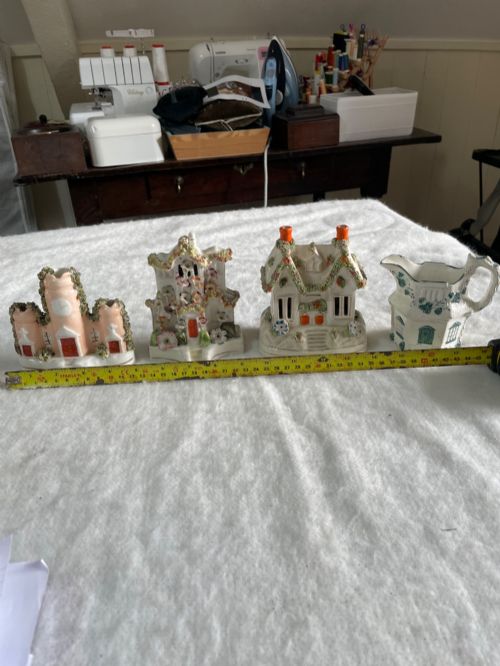
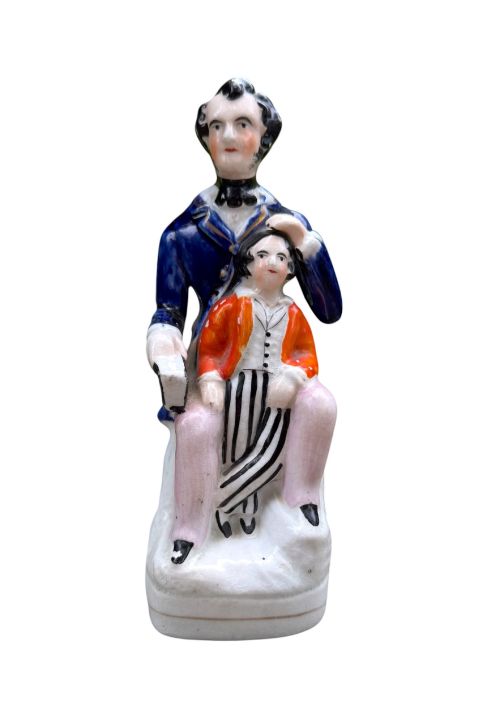
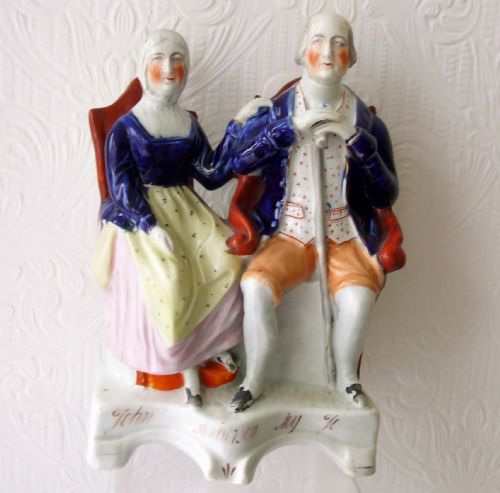
When you search for an antique pottery group, you are looking at moulded and hand-finished ceramic figures, spill vases and sculptural sets originating primarily from nineteenth-century British potteries. The most common version you will meet on this page is the Victorian Staffordshire flatback or figural group depicting literary characters, historical events, royal portraits or domestic animals.
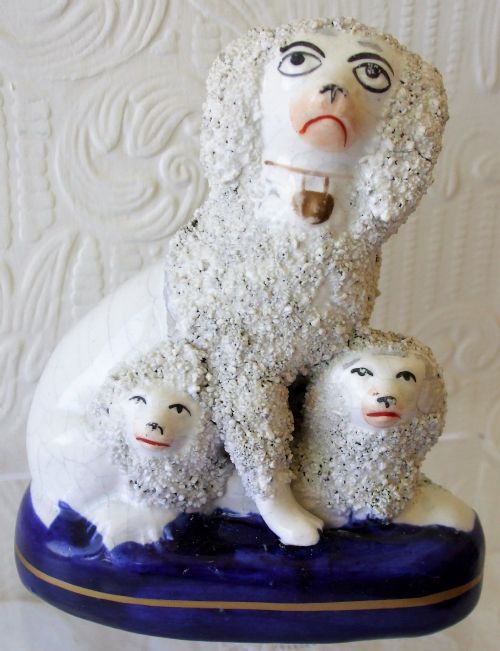
These ceramic assemblies range from single portrait figures and paired poodles to complex multi-figure groups such as literary scenes and political alliances. Makers drew inspiration from contemporary prints, theatrical performances and popular folklore to create mantelpiece ornaments that appealed to middle-class households.
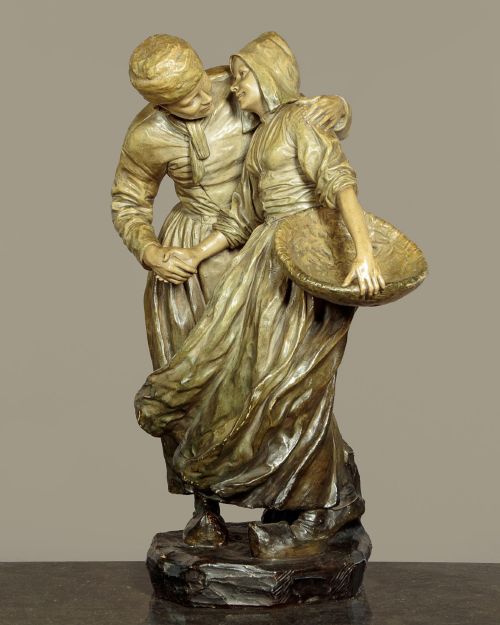
The selection includes terracotta figure groups from continental workshops alongside traditional British earthenware and pearlware. Collectors encounter everything from small spill vases featuring deer to large multi-figure displays mounted on wooden bases.
Materials and technique
Potters formed these figures using earthenware, terracotta and pearlware bodies, often shaped in multiple moulds before being joined together by hand. Earthenware provided a reliable porous base that absorbed the liquid slips and glazes applied during production.
Lead glaze and enamel paint finish the surface, giving these ceramics their characteristic glossy sheen and bright decorative colour palette. Artisans brushed or sponged the pigments onto the fired clay before sending the pieces back into the kiln for a final fix.
Antique Pottery Group Retail Price Guide 2026
Typical asking prices for pottery group among the pieces listed under this phrase on Sellingantiques today, from the lower quarter to the upper quarter. They describe what is for sale here now, not the wider market.
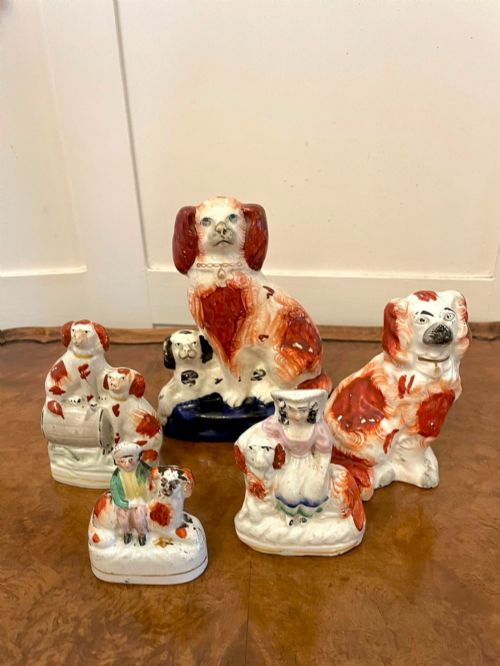
Spotted poodles peer perpetually from Staffordshire mantelpieces, guarding nineteenth-century hearths with unchanging ceramic loyalty.
Distinctions in craftsmanship
Quality rests in the crispness of the moulding and the delicacy of the enamel painting, which separates hurried mass production from superior studio output. Finer pieces display carefully defined facial expressions, cleanly brushed details and well-balanced compositions that remain faithful to their subjects.
The sophistication of the glaze application also dictates the standing of a piece, with even lead finishes and vibrant enamel work marking out the better workshops. Heavier potting and confident modelling elevate works by notable makers above standard factory output.
Ralph Wood·Goldscheider·Wedgwood and Co Ltd·Guido Cacciapuoti·Royal Dux Bohemia
The Antique Pottery Group Glossary
- Flatback
- A ceramic figure finished with a plain or unpainted rear because it was intended to stand against a wall on a mantelpiece.
- Spill vase
- A hollow figural vessel designed to hold wooden spills used for lighting pipes or candles.
- Pearlware
- A refined type of earthenware developed in the eighteenth century featuring a subtle bluish glaze that pooled in recesses.
- Earthenware
- Porous pottery fired at lower temperatures, commonly used for British Staffordshire figures and decorative groups.
Antique Pottery Group: Frequently Asked Questions
What is an antique pottery group?
An antique pottery group is a moulded ceramic ornament depicting multiple human or animal figures, popular during the nineteenth century for interior decoration.
These pieces capture historical, literary and domestic subjects in glazed earthenware, providing a tangible link to Victorian popular culture.
How were Staffordshire figures displayed?
Staffordshire figures were typically arranged on mantelpieces, sideboards and bracket shelves in Victorian parlours where visitors could admire them.
Because most are flatbacked, they sat flush against the wall so that all decorative detail faced outward into the room.
What subjects do these figures show?
The subjects range from royal portrait groups and literary characters to political alliances and biblical scenes.
Common themes include Scottish lairds, dogs such as poodles, and figures drawn from contemporary theatrical and news events.
How do I identify a spill vase?
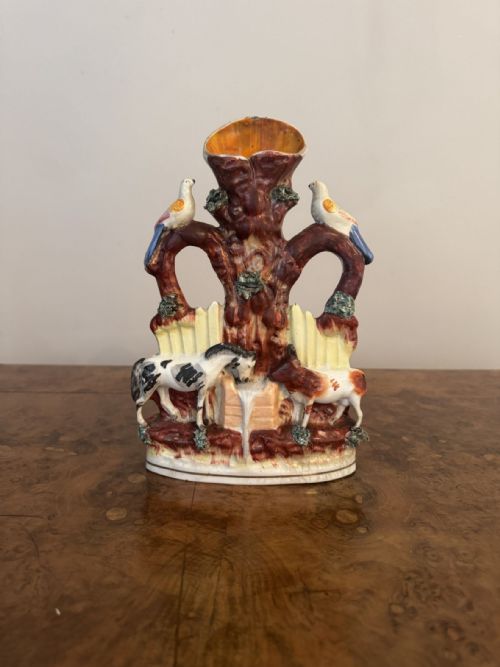
A spill vase incorporates a small hollow cylinder alongside or behind the main figural group to hold wooden tapers.
These combination pieces served a practical household function while doubling as decorative mantel ornaments.