


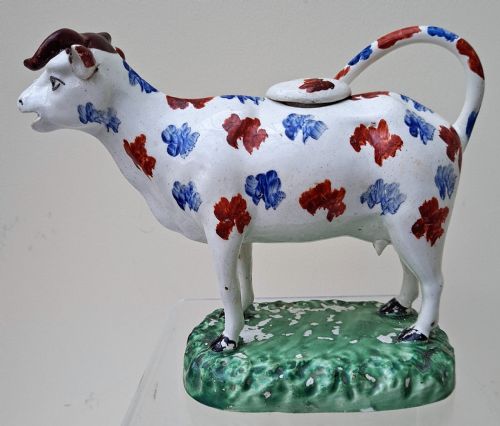


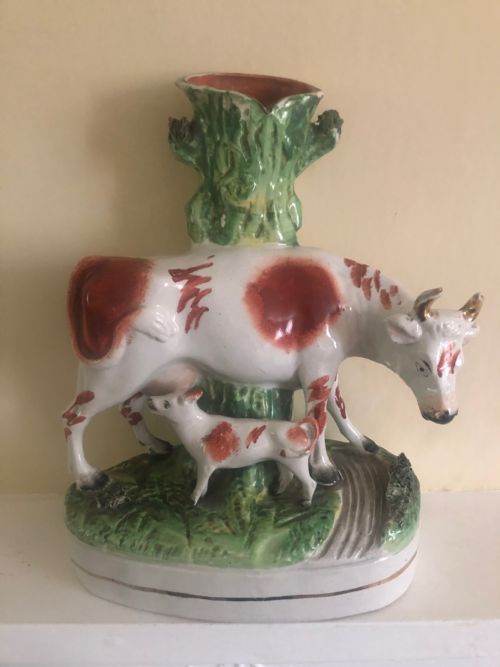


Antique Pottery Cow
These antique pottery cow figures and creamers bring honest folk art charm and domestic utility straight from nineteenth-century parlours and dairies.
Antique Pottery Cow
When you search for an antique pottery cow, you encounter various earthenware forms spanning the Regency period through to late Victorian times. The selection mostly comprises utilitarian creamers, spill vases, and decorative figures originating from English, Welsh, and Dutch potteries.
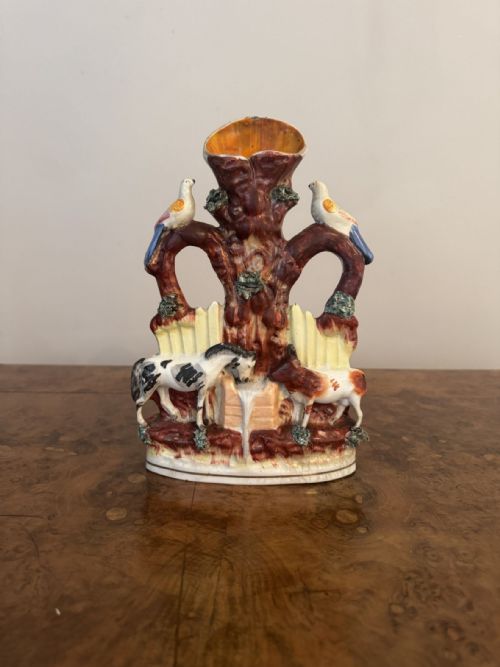
You are most likely to meet Staffordshire figures and cow creamers featuring calves or milkmaids, often modelled as practical vessels or mantelpiece ornaments. These pieces bridge the gap between rural folk art and domestic display items.
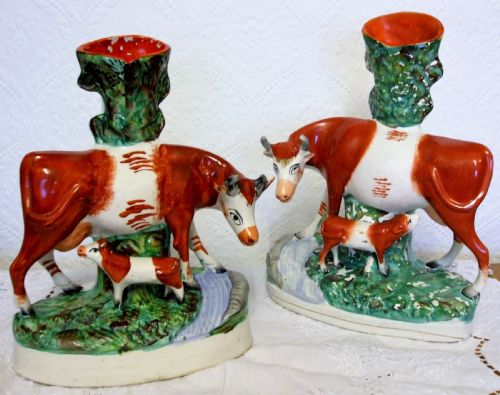
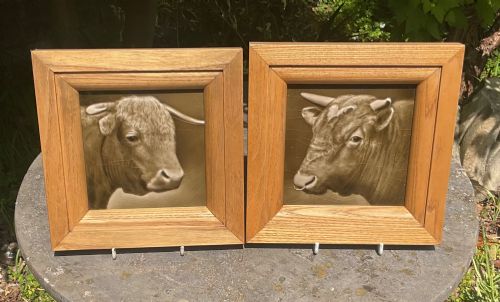
The objects include pairs of spill vases, framed tiles, and flatback figures designed to sit flush against a wall. Each piece reflects the nineteenth-century fascination with pastoral life and agricultural subjects.
Materials and methods of manufacture
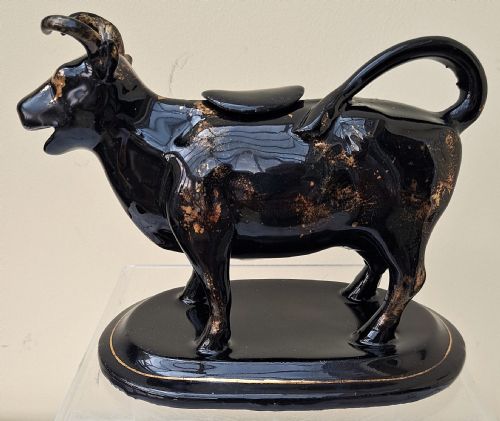
Potters shaped these figures from earthenware and glazed ceramic, applying hand-painted enamels to render the spots and markings of the cattle. Many items display glossy tin-glazed surfaces or deep black Jackfield finishes.
Makers occasionally added gilt highlights to horns and bases, enhancing the decorative appeal of the spill holders and cream jugs. Mould-pressed construction allowed workshops to produce consistent animal forms before final hand-finishing.
Antique Pottery Cow Retail Price Guide 2026
Typical asking prices for pottery cow among the pieces listed under this phrase on Sellingantiques today, from the lower quarter to the upper quarter. They describe what is for sale here now, not the wider market.
Regional styles span English folk art, Welsh pieces, and Dutch Delftware, encompassing both the Regency period and late Victorian production.
Judging the quality of ceramic cattle
Quality rests in the crispness of the moulding and the delicacy of the hand-painted enamel decoration. Finer examples retain bright polychrome colours and clean gilding without excessive rubbing.
The charm of the modelling sets better pieces apart from plainer factory output, particularly in the lifelike posture of the calves and the naturalistic expression of the dairy cows. Pairs with matching spill holders show superior original intent compared to single survivors.
Sherwin & Cotton
The Antique Pottery Cow Glossary
- Creamer
- A small ceramic jug designed for serving cream at the table, frequently modelled in the shape of a cow with a filling hole on the back. These vessels often include a fitted lid or an open mouth serving as the spout.
- Spill Vase
- A hollow ceramic holder placed on mantelpieces to store thin tapers used for lighting candles or fires. The spill holder usually stands beside the main figure of the cow or calf.
- Flatback
- A ceramic figure with a finished front and an unglazed or simply painted flat rear designed to stand against a wall. This construction saved clay and reduced weight for mantel display.
- Jackfield
- A type of glossy black earthenware named after the Shropshire pottery village where it originated. These pieces feature a deep metallic black glaze often accented with gilt details.
- Prattware
- Early earthenware decorated under the glaze with limited mineral colours such as cobalt blue, ochre, and brown. The technique produces soft, distinct tones typical of the Regency era.
Antique Pottery Cow: Frequently Asked Questions
What is an antique pottery cow creamer?
A pottery cow creamer is a hollow ceramic jug shaped like a cow, featuring a mouth that acts as a pouring spout and an opening on the back for filling. Domestic households used them at the tea table during the Georgian and Victorian periods.
Potters painted the earthenware bodies with spots in brown, black, or red, sometimes adding a milkmaid standing beside the animal. These practical vessels combined everyday utility with whimsical rural decoration.
How do I tell Regency from Victorian pieces?
Regency items often utilise Prattware glazes with soft, restricted mineral colours and earlier primitive moulding styles. Victorian pieces tend to display brighter enamel colours, gilt highlights, and glossier finishes.
Staffordshire production expanded significantly during the Victorian era, introducing flatback figures and spill vases designed specifically for mantelpiece display. Examining the base, glaze type, and painting style helps clarify the period of manufacture.
Were these cows used as toys?
These ceramic figures and creamers served as decorative ornaments or functional tableware rather than children's playthings. Their delicate earthenware bodies and painted enamels made them unsuited for rough handling.
Creamers performed a daily function on the dining table, while spill vases and flatback figures remained stationary on parlour mantelpieces. They reflected Victorian and Georgian romanticised views of rural life.
What are spill vases used for?
Spill vases held thin wooden spills or rolled paper tapers used to transfer flames from the fireplace to candles and lamps. The attached hollow tube kept these lighting aids dry and close to hand.
Potters combined the spill holder with figures of cows and calves to create balanced mantelpiece ornaments. The tall section supported the spills while the animal figure provided the decorative base.