




Antique Pottery Couple
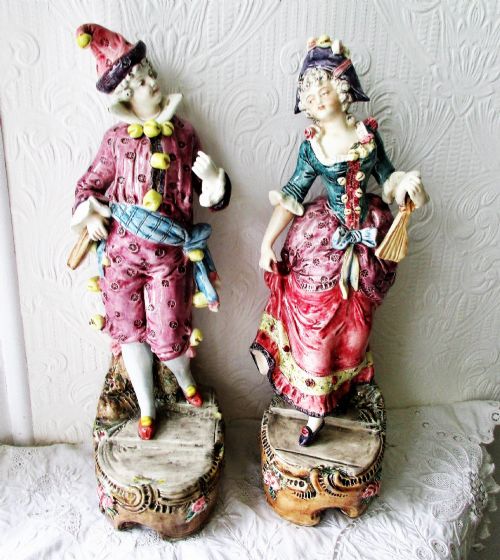
These antique pottery couple figures bring vernacular charm and colourful Victorian character straight into your sitting room.
Antique Pottery Couple
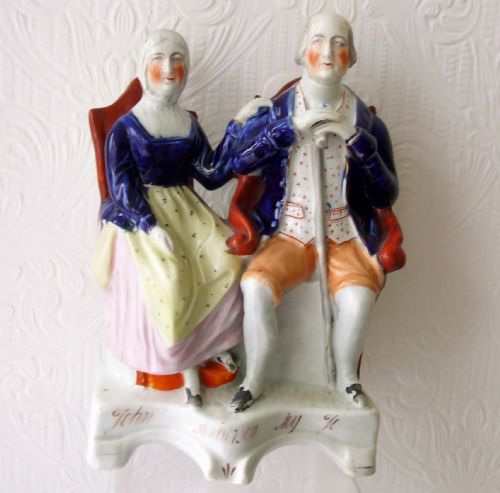
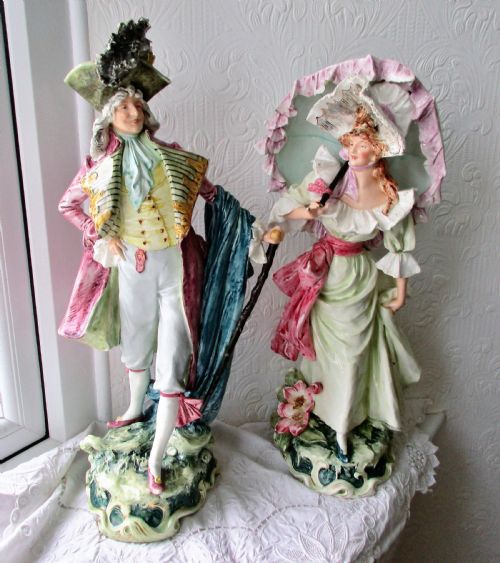
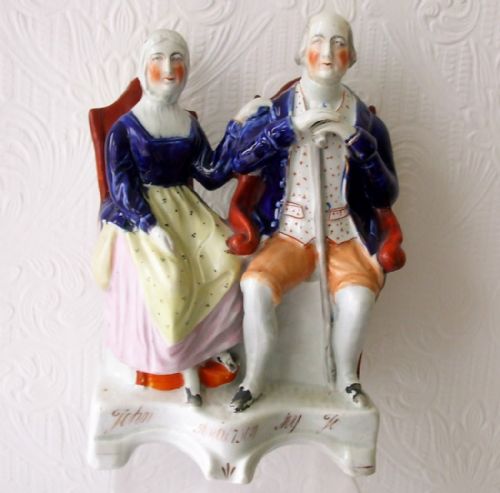
An antique pottery couple represents pairs of figures, gallants, harvesters, lairds and companions modeled to capture domestic scenes or theatrical roles. Buyers seek these pieces for their narrative charm and the distinct regional character they bring to a room.
The most common version met on this page is the Staffordshire flatback figure, alongside French faience figurines and Dutch Art Nouveau examples. These pieces often depict couples in traditional attire, Scottish dress, or theatrical poses designed to be viewed from the front on a mantelpiece.
Makers shaped these ceramic couples during the nineteenth century and into the early decades of the twentieth century. They range from modest Victorian folk art to detailed French earthenware and Dutch ceramics.
How they were made
Potters shaped these figures primarily in earthenware and faience, using ceramic moulds to form the bodies of the couples. Many pieces feature a flat back, meaning the rear was left unglazed or plain because the object stood against a wall.
Antique Pottery Couple Retail Price Guide 2026
Typical asking prices for pottery couple among the pieces listed under this phrase on Sellingantiques today, from the lower quarter to the upper quarter. They describe what is for sale here now, not the wider market.
Listings span the nineteenth century up to 1930, featuring earthenware, faience, and lead glaze across styles from Victorian folk art to Dutch Art Nouveau.
What varies in quality
The precision and coverage of the hand-applied enamel paint and glaze affect the visual weight of the piece. Finer examples display careful brushwork on the facial expressions and costume details rather than hasty decoration.
The Antique Pottery Couple Glossary
- Flatback
- A ceramic figure designed with a finished front and a flat, often unglazed or plain rear intended to sit flush against a wall.
- Earthenware
- Porous pottery fired at a lower temperature, commonly used for nineteenth-century figures and glazed for a smooth surface.
- Faience
- Tin-glazed earthenware, often associated with French production and decorated with colourful enamel paints.
- Spill vase
- A hollow ceramic figure incorporating a small cylindrical holder designed to store wooden spills used for lighting pipes or candles.
- Lead glaze
- A glossy coating applied to pottery before firing that deepens the colours of the underlying paint and protects the clay.
Antique Pottery Couple: Frequently Asked Questions
What do antique pottery couples depict?
These figures portray pairs of individuals in various settings, ranging from Scottish lairds and harvesters to theatrical characters and gallants with their ladies. They capture domestic narratives and popular stories of the nineteenth century.
Potters drew inspiration from contemporary theatre, folklore, and royalty, translating these subjects into accessible ceramic ornaments for the home.
Where were flatback figures displayed?
Owners typically placed these figures on mantelpieces, shelves, or sideboard tops in Victorian parlours. Because many pieces feature a flat rear, they sat securely against the wall.
They served as decorative conversation pieces that brought colour and narrative interest into domestic living spaces.
How do I identify a Staffordshire couple?
Staffordshire figures are generally recognised by their earthenware body, hand-painted enamel colours, and characteristic flat back. They often depict named literary characters, historical figures, or rustic couples.
The style tends to reflect nineteenth-century British folk art traditions, showing robust modeling and simple glaze finishes.
What is a spill vase figure?
A spill vase figure combines a decorative ceramic couple with an integrated cylindrical vase. This tube held thin wooden spills used to transfer fire from the hearth to lamps or pipes.
These combination pieces served a practical function in nineteenth-century households while retaining ornamental charm.