



Antique Potpourri Lidded Jar
An antique potpourri lidded jar brings scent and colour into a room, holding dried flowers beneath a pierced cover designed to release fragrance.
Antique Potpourri Lidded Jar
An antique potpourri lidded jar is a decorative vessel fashioned to hold aromatic dried botanicals while adding a distinct visual accent to a mantelpiece or side table. The examples encountered on this page span from the Georgian era through the Victorian period, reflecting a rich heritage of ceramic production.
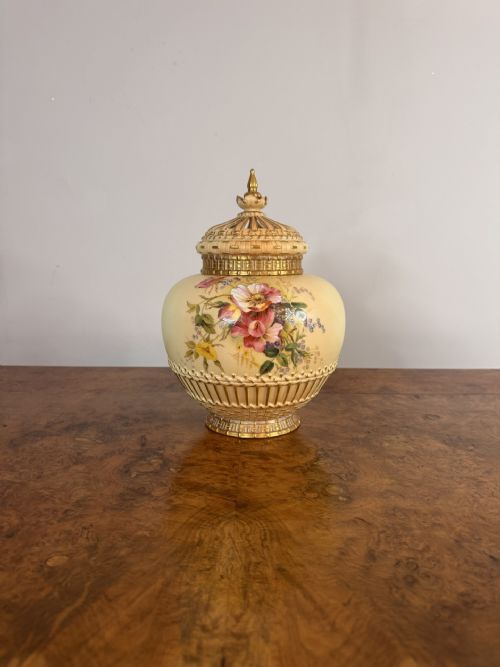
The most common iterations you will find here include nineteenth-century Royal Worcester blush ivory urns alongside Mason's ironstone china jars and Dresden porcelain bowls. These vessels typically feature a pierced lid or crown cover intended to allow the scent of spices and flower petals to permeate a room.
Many of these jars adopt classical urn and vase forms, occasionally drawing on Rococo Revival styling or Victorian Chinoiserie motifs. They serve as tangible links to historical domestic interiors where scent management was an art form.
How they were made
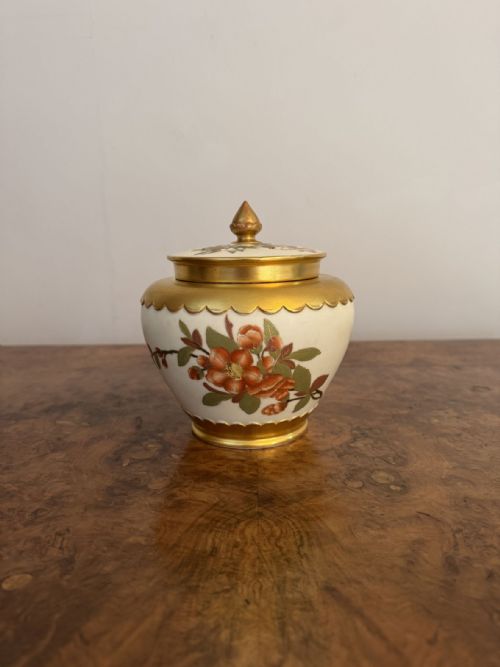
Potters utilised fine porcelain, ceramic, and ironstone as the primary bodies for these vessels, shaping them on the wheel or casting them in moulds. Artisans then applied intricate hand-painting, transfer printing, and rich gilding using gold leaf and gold gilt to enhance the surface detail.
The defining technical feature of the form is the pierced or perforated cover, which required careful cutting before firing to ensure the ceramic did not warp. Enamel colours were subsequently layered and refired to achieve the permanent brilliance seen in Victorian and Georgian pieces.
Antique Potpourri Lidded Jar Retail Price Guide 2026
Typical asking prices for potpourri lidded jar among the pieces listed under this phrase on Sellingantiques today, from the lower quarter to the upper quarter. They describe what is for sale here now, not the wider market.
Victorian households took scent so seriously they matched their jar glazes to the seasonal aroma of their dried rose petals.
What varies in quality
Quality in these pieces is dictated by the crispness of the moulding and the precision of the piercing on the lid, which separates finely executed works from simpler utilitarian forms. Hand-painted botanical details and the richness of the gilding further distinguish superior examples from standard production items.
The reputation of the manufactory, such as Royal Worcester or Chamberlain Worcester, plays a significant role in the standing of a piece. Preservation of the original cover and the integrity of the gilt work also determine the desirability of any given jar.
Royal Worcester·Chamberlain Worcester·Mason's·Wolfsohn Dresden·Sitzendorf
The Antique Potpourri Lidded Jar Glossary
- Potpourri jar
- A lidded vessel specifically designed to hold a mixture of dried flowers and spices for scenting a room. The cover is usually pierced to let the fragrance escape.
- Blush ivory
- A specific ceramic finish developed by Royal Worcester featuring a soft, matte cream ground often decorated with pastel floral sprays and gilt.
- Ironstone
- A dense, durable type of ceramic patented in the nineteenth century that bridged the gap between earthenware and porcelain.
- Gilding
- The application of gold leaf or gold powder to the surface of ceramics to highlight handles, rims, and decorative motifs.
- Pommander
- An early term for a container holding aromatic substances, akin to a potpourri jar or scent vessel.
Antique Potpourri Lidded Jar: Frequently Asked Questions
What is an antique potpourri lidded jar used for?
These jars were originally filled with dried flower petals, herbs, and spices to freshen indoor air during periods when interior ventilation was limited. The pierced lid allowed the stored fragrance to disperse gently throughout the parlour or bedchamber.
Today, they function primarily as decorative cabinet pieces and mantel ornaments. Collectors often keep them empty, though some continue to use them for traditional dried botanicals.
How can I tell a Victorian jar from a Georgian one?
Georgian pieces often display simpler forms or distinct ironstone bodies with Imari palettes, reflecting earlier eighteenth-century trade influences and ceramic techniques. Their decoration tends to rely on hand-painted cobalt blues and iron-red accents.
Victorian examples frequently showcase more elaborate moulding, blush ivory grounds, and lavish gilding characteristic of later nineteenth-century industrial output. Makers' marks on the base also help anchor the piece to a specific reign or decade.
Why do some jars have pierced lids?
The piercing is functional, serving to release the scent of the potpourri housed within the body of the vessel. Without these small holes or cut-outs, the aromatic herbs would remain sealed inside.
These perforations were carefully integrated into the overall design, often forming geometric or floral patterns that matched the decoration of the base.