

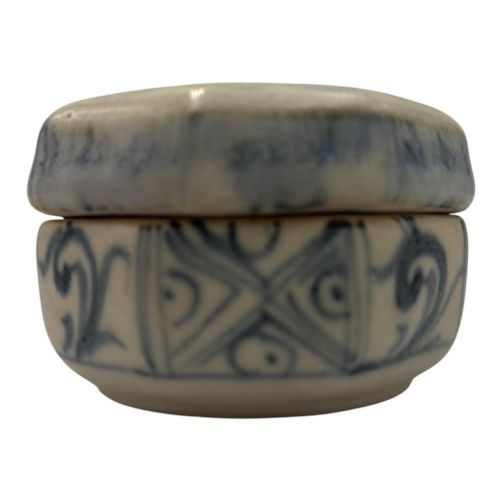



Antique Porcelain Trinket Pots
These antique porcelain trinket pots are small lidded receptacles for dressing tables, offering charm and utility in equal measure.

Antique Porcelain Trinket Pots
When you search for antique porcelain trinket pots, you encounter small lidded vessels designed for dressing tables and vanity sets. The selection spans powder boxes, bonbonniere, lidded jars, and dressing table components from the nineteenth and twentieth centuries.
The pieces on this page lean heavily towards the 1930s Art Deco aesthetic, alongside Victorian, Edwardian, and Meiji period examples. French and German potteries feature prominently, alongside Japanese Satsuma and English works.
Forms range from simple round boxes to novelty powder bowls featuring flapper girls and Pierrots. Buyers often find hand-painted blue porcelain, blush ivory, and gilt-detailed specimens among the offerings.
How they were made
Makers shaped these pots from porcelain, ceramic, and earthenware bodies before applying glazes and enamel decoration. Many examples incorporate hand-painted motifs alongside relief work and moulded details.
Gilding and gold leaf often accent the rims, handles, and surfaces of French, German, and English vessels. Some pieces combine ceramic bodies with glass elements or metal mounts to form lidded boxes.
Antique Porcelain Trinket Pots Retail Price Guide 2026
Typical asking prices for porcelain trinket pots among the pieces listed under this phrase on Sellingantiques today, from the lower quarter to the upper quarter. They describe what is for sale here now, not the wider market.
Periods represented span from the 19th Century through the Victorian, Edwardian, and Art Deco eras.
What varies in quality
Quality reveals itself in the crispness of the porcelain moulding and the execution of hand-painted details. Finer pieces display precise brushwork, clean glaze application, and intact gilding without rubbing.
The distinction between standard production and superior work lies in the artistic merit of the painted motifs, such as figural scenes or distinct animal designs like the black dragon motif. Heavier, well-balanced bodies and secure lid fittings also indicate better manufacture.
Meissen·Royal Worcester·Limoges
The Antique Porcelain Trinket Pots Glossary
- Bonbonniere
- A small decorative box or jar originally intended to hold sweets or confectionery. These lidded vessels later served wider cosmetic and trinket storage purposes on dressing tables.
- Blush Ivory
- A specialised porcelain body developed by Royal Worcester featuring a creamy, soft-toned matte glaze. It often provides a warm background for delicate floral hand-painting.
- Satsuma
- A type of Japanese earthenware featuring a crackle-glaze finish and intricate polychrome and gilt decoration. These pieces were widely exported to Europe during the Meiji period.
- Enamel
- A vitrified decorative material fused to the surface of porcelain, ceramic, or glass through firing. It provides vibrant, durable colour to painted motifs on trinket pots.
- Powder Bowl
- A large lidded jar designed to hold loose cosmetic powder for the dressing table. They frequently feature figural lids, including Art Deco flapper girls and Pierrots.
Antique Porcelain Trinket Pots: Frequently Asked Questions
What were antique porcelain trinket pots used for?
These lidded vessels served primarily on dressing tables and vanity sets to hold small personal items, hairpins, and cosmetic powders. They kept private dressing accessories neatly contained.
Over time, wealthier households utilised smaller lidded jars for sweets, small trinkets, or rings. Their decorative qualities meant they sat on display when not in active use.
How do I date an antique porcelain trinket pot?
Dating relies on stylistic clues, such as the geometric lines of Art Deco pieces from the 1930s or the ornate flourishes of Victorian Rococo Revival. Maker marks on the underside provide the most reliable chronological indicators.
Materials and manufacturing techniques also help narrow the period, as softer earthenware and distinct glazes point towards specific decades like the Edwardian era or Meiji period.
How do I style trinket pots in a modern home?
These pots work naturally on dressing tables, bedside cabinets, and bathroom shelves for holding small jewellery or daily accessories. Grouping different shapes together creates visual interest.
They also sit comfortably on living room mantelpieces or open shelving as standalone decorative objects. Their varied colours and motifs allow them to anchor small display vignettes.