


Antique Porcelain Jewellery Box
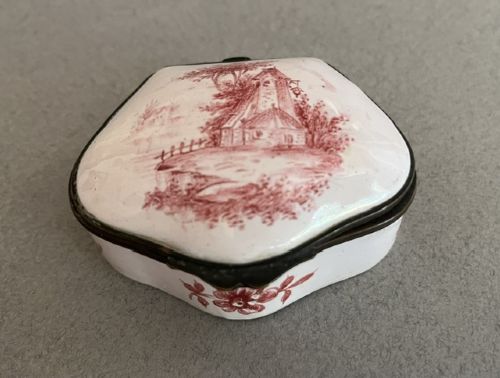
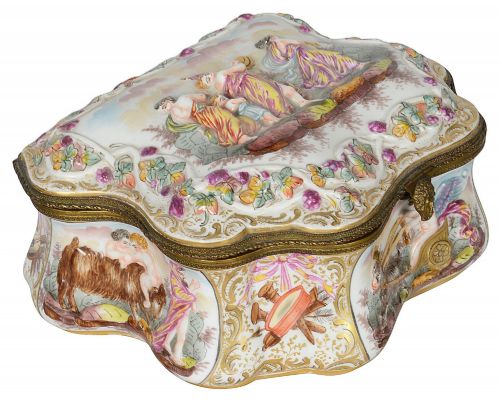
These antique porcelain jewellery box pieces combine painted ceramic plaques with gilt metal mounts to keep small treasures.
Antique Porcelain Jewellery Box
An antique porcelain jewellery box is a container designed for trinkets and valuables, frequently mounted in metal frames and set on small feet. The selection draws heavily on nineteenth century European production, spanning French, Italian, German and English workshops.
Buyers encounter forms ranging from round trinket boxes to large display tables, caskets and miniature commodes. The most common versions on this page are nineteenth century French boxes featuring hand painted panels and gilt bronze or ormolu mounts.
The style leans towards revival movements, notably Rococo Revival, French Second Empire and Neoclassical designs. Pieces often incorporate cobalt blue or white porcelain plaques decorated with floral motifs or figural scenes.
How they were made
Makers combined ceramic bodies with cast metal mounts in brass, gilt bronze, ormolu and gilt brass, sometimes incorporating glass panels or enamel work. The porcelain components were shaped, glazed and hand painted before being secured into metal frames with hinges and clasps.
Wood carcasses in kingwood, walnut or coromandel occasionally served as a foundation for mounted porcelain plaques. Gold leaf detailing was applied to accentuate the ceramic surface and coordinate with the polished metal mounts.
Materials appearing across the inventory include porcelain, enamel, ormolu, gilt bronze, kingwood, coromandel and glass.
What varies in quality
The standard of an antique porcelain jewellery box rests on the crispness of the metal casting and the skill of the hand painted decoration on the ceramic panels. Finer examples display meticulous brushwork on the porcelain and heavy, well chased ormolu or gilt bronze mounts rather than lightweight stamped brass.
Construction details reveal the tier of the piece, such as the precise fit of the lid, the weight of the hinges, and the integration of secondary materials like kingwood or coromandel. Superior items maintain integrity between the ceramic plaques and their structural metal frames.
Sevres·Meissen·Capodimonte
The Antique Porcelain Jewellery Box Glossary
- Ormolu
- Gilded bronze used for decorative mounts on furniture and boxes. The technique involves applying a mercury and gold amalgam to cast bronze before firing.
- Casket
- A decorative box intended for holding jewellery or precious items. These pieces often feature hinged lids and velvet linings.
- Capodimonte
- Italian porcelain originating from the factory established in Naples by Charles VII. The ware is known for distinct sculptural relief work and painted decoration.
- Sevres
- The renowned French porcelain manufactory producing soft-paste and hard-paste goods. Items from this tradition frequently incorporate rich blue grounds and gilded accents.
- Bijouterie table
- A small display table with a glass or glazed panel top designed to showcase jewellery and small decorative objects.
- Rococo Revival
- A nineteenth century design movement drawing on eighteenth century asymmetry, scrollwork and natural motifs. It heavily influences the mounts of many boxes.
Antique Porcelain Jewellery Box: Frequently Asked Questions
How do I date an antique porcelain jewellery box?
Dating relies on the style of the metal mounts, the type of porcelain body, and any factory marks on the ceramic base. Nineteenth century pieces often display French Second Empire or Rococo Revival characteristics.
Construction methods also provide clues, as machine-stamped brass replaced hand-chased ormolu towards the later Victorian period. Comparing the hinge mechanisms and interior linings with documented pieces helps narrow the decade of production.
Were these boxes used only for jewellery?
These containers served multiple purposes on dressing tables and desks, holding trinkets, pins, powder, and small valuables. Larger caskets functioned as display pieces for visiting guests to admire.
Some variations, such as powder box jars and table caskets, were tailored specifically for cosmetics or calling cards rather than personal gems.
What is the difference between hard-paste and soft-paste porcelain?
Soft-paste porcelain contains glass frit and clay mixtures fired at lower temperatures, producing a warmer texture often found in earlier European pieces. Hard-paste porcelain uses kaolin and petuntse fired at higher temperatures, resulting in a denser, whiter, and more durable material.
Many nineteenth century decorative boxes utilise hard-paste panels, while eighteenth century examples may feature soft-paste bodies with distinct glaze characteristics.