


Antique Porcelain Compote Bowl
An antique porcelain compote bowl serves fruit or anchors a table, combining raised porcelain work with gilt bronze and painted scenes.
Antique Porcelain Compote Bowl
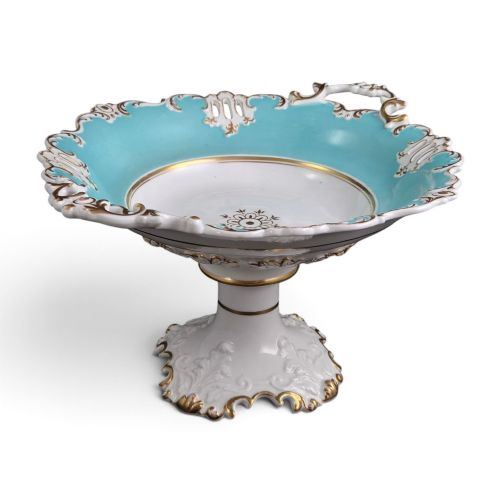
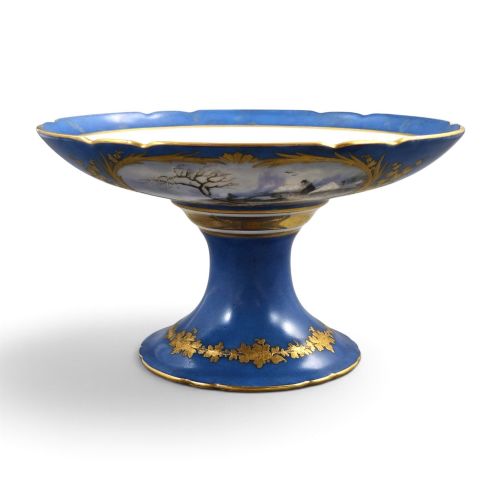
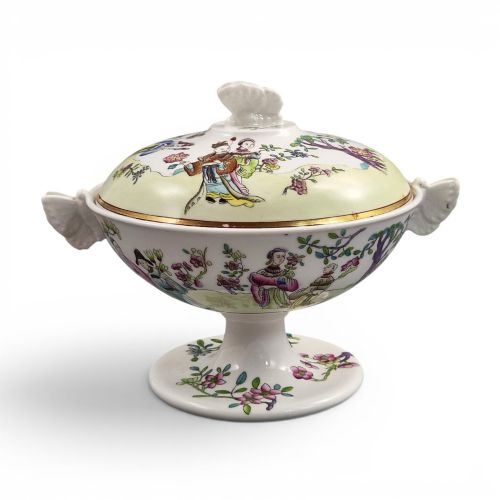
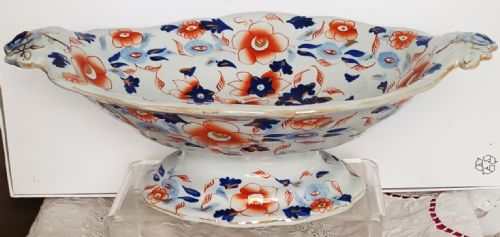
An antique porcelain compote bowl stands on a raised foot or pedestal, serving as a formal vessel for fruit or table decoration. These pieces arrive in various forms including tazzas, footed bowls, and baskets originating across the nineteenth and early twentieth centuries.
Makers shaped these vessels within distinct stylistic movements such as Rococo Revival, Georgian, and Neoclassical traditions. The selection spans English bone china and ironstone alongside continental European porcelain factories.
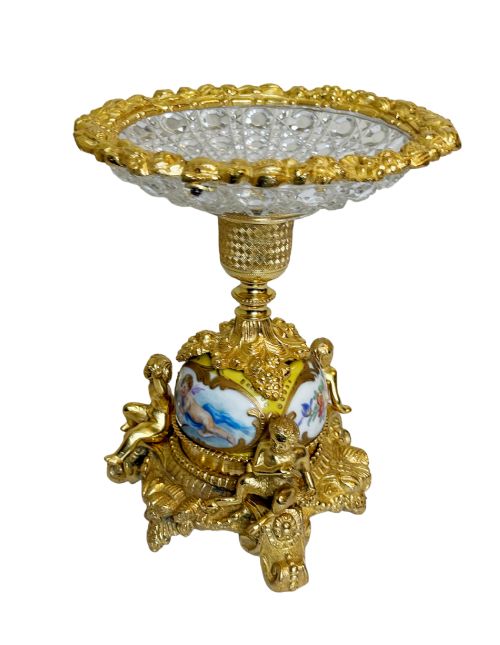
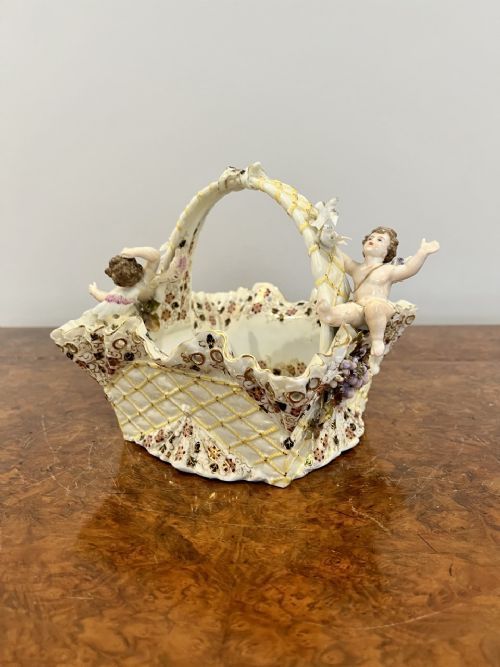
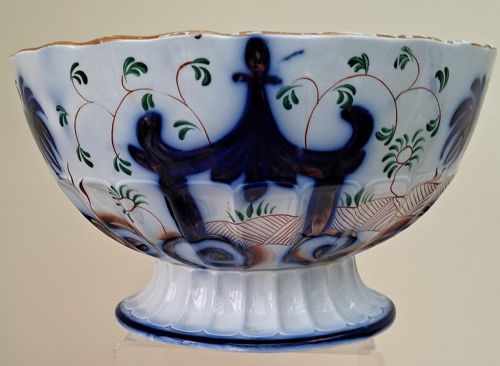
Most examples function as centrepieces for dining tables or decorative display items on sideboards. They range from simple blue and white footed bowls to elaborate pedestal vessels flanked by cherubs or applied roses.
Materials and manufacture
Potters shaped these bowls using hard-paste or soft-paste porcelain, bone china, and ironstone, often building complex forms in multiple sections. Artisans applied glaze and fired the clay before adding hand-painted pigments and metallic accents.
Many examples incorporate cast metal mounts in ormolu and gilt bronze to support or frame the ceramic body. Gilding and gold leaf highlight moulded details, handles, and pedestal rims.
Several German porcelain centerpieces feature energetic musical putti playing tiny instruments amidst clusters of applied roses.
The spectrum of quality
The fineness of hand-painted detail and the crispness of moulded elements distinguish superior vessels from simpler production pieces. Delicate applications like applied porcelain flowers and modeled figures demand high technical skill from the potter.
The integration of porcelain with cast ormolu mounts determines the structural ambition of the piece. Workshops that combined detailed figural sculpture with rich gilding produced the most elaborate compositions.
Coalport·Sèvres·Spode·Limoges·Ridgway·Schierholz·Minton·Wedgwood·Royal Worcester·Mason·Dresden
The Antique Porcelain Compote Bowl Glossary
- Compote
- A raised bowl on a stem or foot used traditionally for serving fruit or sweets. These vessels sit prominently on dining tables or sideboards.
- Tazza
- A shallow saucer-like bowl mounted on a pedestal foot. Originating from Renaissance plate forms, nineteenth-century versions utilise porcelain and earthenware.
- Ormolu
- Gilded bronze mounts applied to furniture and porcelain objects. This technique adds structural support and decorative metallic contrast to ceramic bodies.
- Putti
- Winged infant figures frequently modeled in porcelain around the stem or base of centrepieces. These sculptural additions appear often in German and English nineteenth-century works.
- Ironstone
- A heavy, durable type of earthenware patented in the nineteenth century. It mimics porcelain while offering greater strength for utilitarian tablewares.
Antique Porcelain Compote Bowl: Frequently Asked Questions
What is a compote bowl used for?
These elevated vessels held fruit, nuts, or sweetmeats during formal nineteenth-century dining.
Today they function primarily as decorative centrepieces on dining tables or mantelpieces.
How do I clean an antique compote?
Dust gently with a soft dry brush to protect delicate painted surfaces and gilt details.
Avoid submerging pieces that combine porcelain with metal mounts or applied enamel.
How do I date a porcelain centre piece?
Examine factory marks stamped or painted on the underside, alongside stylistic clues from the period.
Stylistic indicators such as Rococo Revival moulding or Neoclassical painted motifs help narrow the decade of manufacture.