


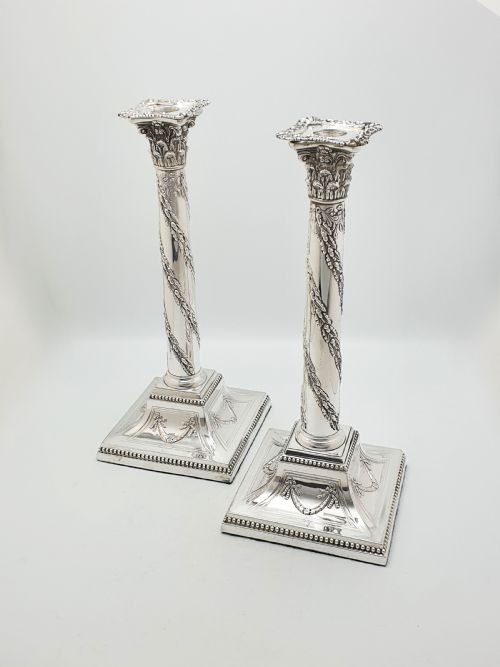


Antique Plated Taper Holders
These antique plated taper holders bring a focused, low-flame light to a dining table or desk, offering substantial metalwork beneath a reflective silver skin.
Antique Plated Taper Holders
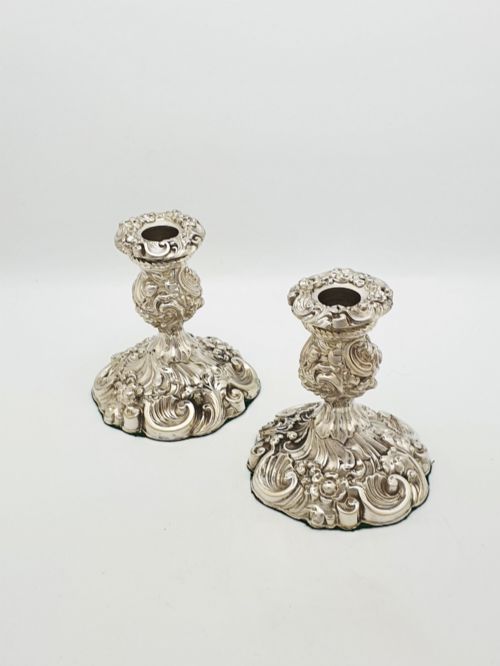
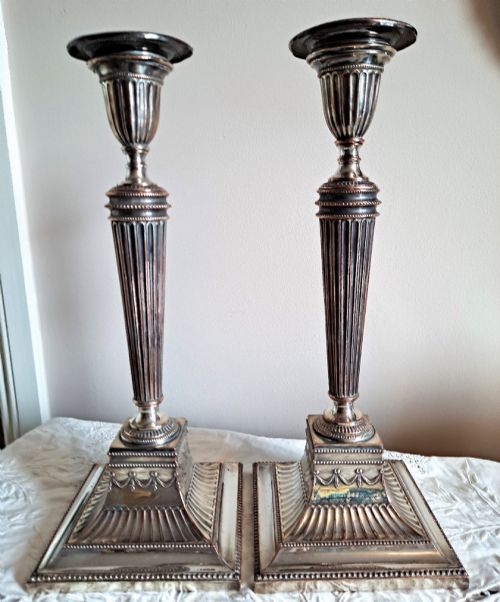
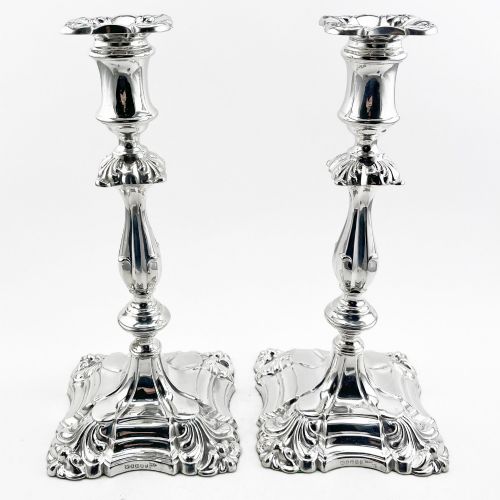
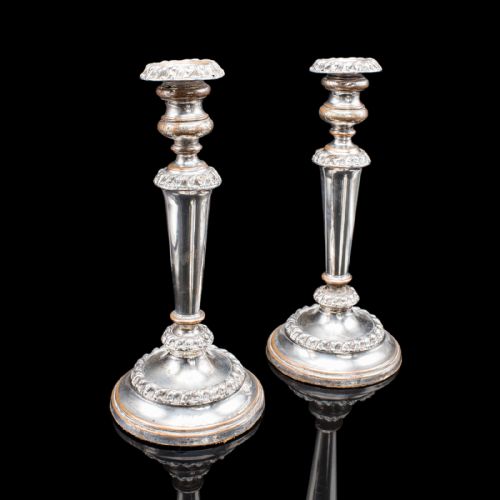
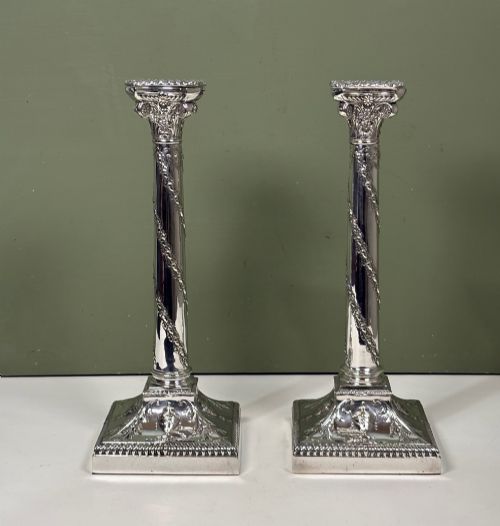
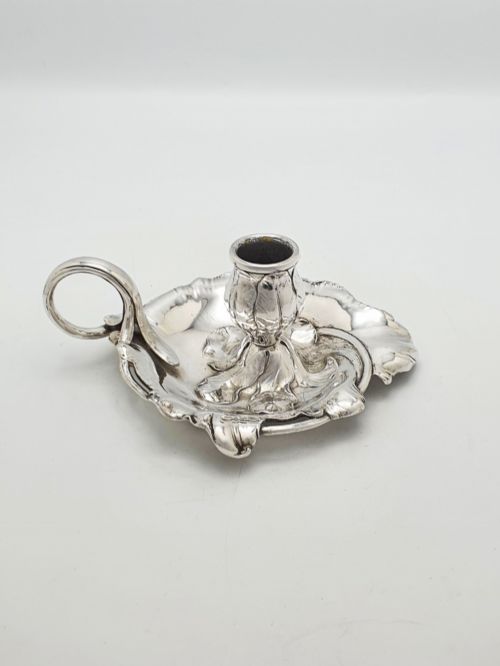
When searching for antique plated taper holders, buyers encounter lighting pieces designed to burn narrow taper candles, spanning periods from the eighteenth century through the twentieth. The forms on this page include pairs of candlesticks, chambersticks, desk candlesticks, telescopic stems, and multi-light candelabra.
The domestic lighting pieces originate primarily in Georgian, Victorian, and Edwardian workshops, alongside later twentieth-century interpretations. Makers produced these items in stylistic idioms ranging from strict Neoclassical columns to fluid Art Nouveau leaf forms and ornate Rococo Revival curves.
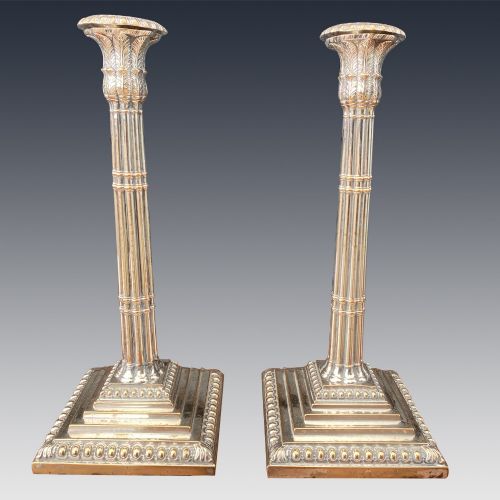
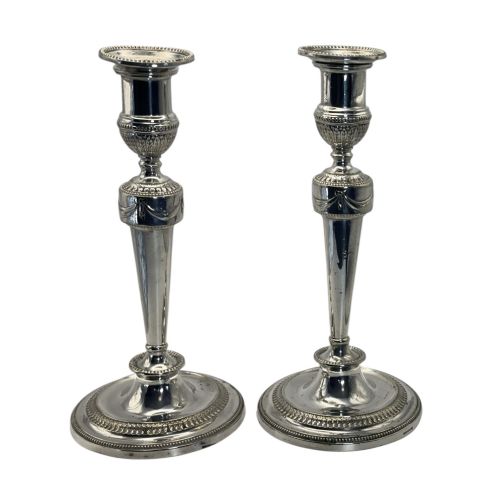
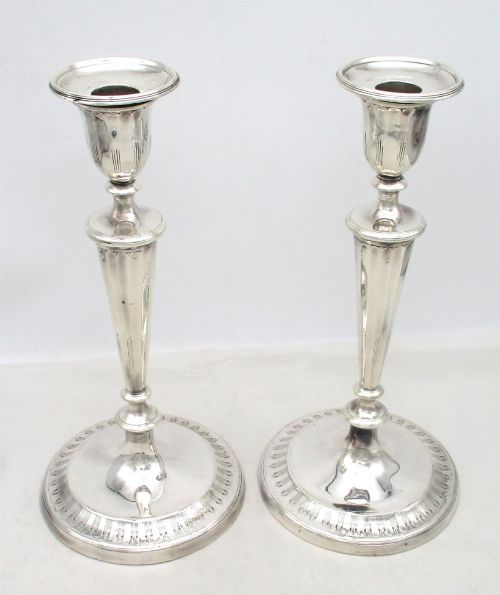
Most entries take the form of paired candlesticks, often equipped with removable sconces to catch wax drips. Collectors also meet taller column designs and smaller desk or mantlepiece pieces suited for confined spaces.
How they were made
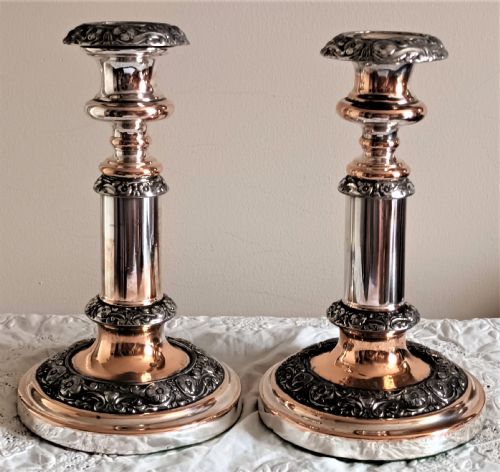
Early items rely on Old Sheffield Plate, a technique fusing a thin sheet of silver to a thicker copper ingot by heat and pressure. This method often reveals thin lines of red copper showing through where the surface silver layer has worn away over decades of cleaning.
Later nineteenth-century production adopted electroplated nickel silver and standard metal plating methods, applying a coat of silver over a base metal base via electrical current. Workshops also combined copper with silver plate directly, or integrated cut glass elements into columnar shafts.
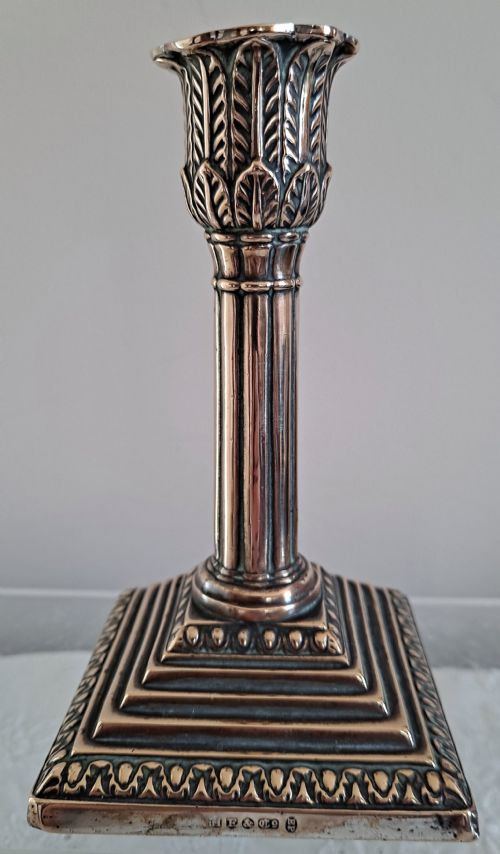
Structural components such as weighted bases, removable sconces, and cast decorative mounts were soldered or fitted together, utilising chased or engraved detailing to define Corinthian capitals, leaf motifs, and reeded stems.
Antique Plated Taper Holders Retail Price Guide 2026
Typical asking prices for plated taper holders among the pieces listed under this phrase on Sellingantiques today, from the lower quarter to the upper quarter. They describe what is for sale here now, not the wider market.
A cavalier and a lady stand ready to hold your taper.
What varies in quality
The distinction between standard and finer examples rests on the crispness of the cast ornament and the integrity of the underlying metal plate. Pieces with deeply struck maker marks, sharp acanthus leaf carving, and intact silver layers represent the upper tier of the range.
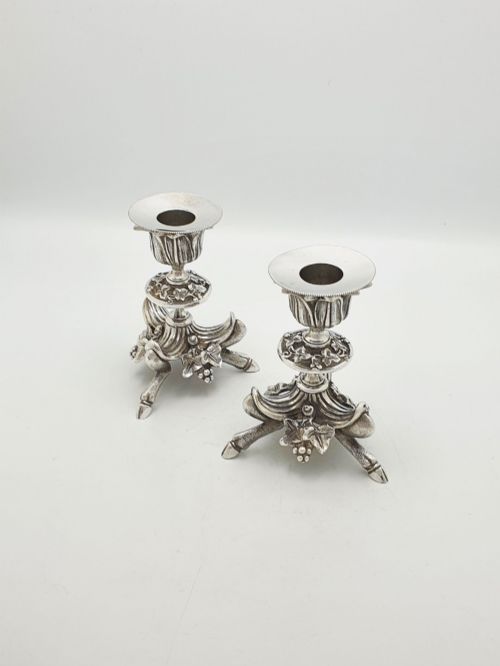
Weight and balance also dictate distinction, as better-made items retain heavy interior filling or solid metal gauge construction that prevents tipping. Simple pressed metal forms sit at the more utilitarian end, while heavy cast columns and figural groups demonstrate greater workshop ambition.
Mappin & Webb·WMF·John Pound & Co·Elkinton & Co·Barker Ellis·Elkington
The Antique Plated Taper Holders Glossary
- Old Sheffield Plate
- An early method of fusing silver to a copper core before the invention of electroplating. This technique produces a distinctive warm tone where the underlying copper occasionally telegraphs through the surface.
- EPNS
- Electroplated Nickel Silver, a common nineteenth-century base material consisting of a nickel, copper, and zinc alloy coated with silver. It provides a durable foundation for detailed cast decoration.
- Sconce
- The removable pan or nozzle fitted to the top of a candlestick to catch melting wax. These pieces are frequently detachable for easier cleaning.
- Chamberstick
- A low, portable candlestick featuring a wide drip pan and a loop handle for carrying through dark rooms. They often include a small conical snuffer resting in the tray.
- Telescopic
- A sliding shaft mechanism allowing the height of the candlestick to be adjusted up and down. This mechanical feature is found in specific eighteenth and nineteenth-century designs.
Antique Plated Taper Holders: Frequently Asked Questions
What is Old Sheffield Plate?
Old Sheffield Plate is an early composite material made by fusing a thin sheet of silver onto a thick copper ingot. This method was used before electroplating became common in the mid-nineteenth century.
Over decades of polishing, the underlying copper can show through at high points and edges, creating a warm, variegated tone that collectors value for its authenticity.
How do I clean silver plate?
Cleaning silver plate requires a gentle silver cream and a soft cloth to avoid wearing through the thin metal layer to the base alloy. Avoid harsh dips or abrasive brushes that strip the remaining finish.
Regular, light dusting and occasional careful polishing keep the reflective surface bright without harming the underlying details of the casting.
What are removable sconces used for?
Removable sconces sit at the top of the candlestick to catch melting wax before it runs down the main shaft or base. They lift out separately to make cleaning hardened wax much easier.
Finding a pair with their original matching sconces intact is a distinct advantage when evaluating older lighting pieces.
How can I tell the period?
Period identification relies on observing the prevailing style, manufacturing technique, and any stamped maker marks on the base. Georgian pieces often feature Old Sheffield Plate and Neoclassical lines, while Victorian items introduce heavier cast figural work and electroplating.
Examining the construction methods underneath, such as the type of seaming and base weighting, provides further clues to the decade of production.