

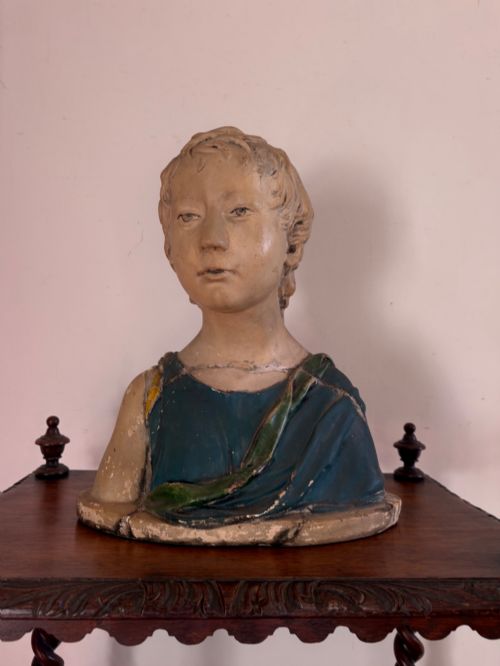
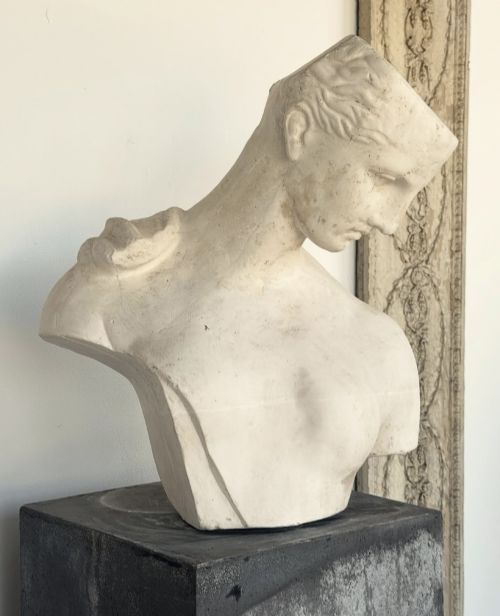
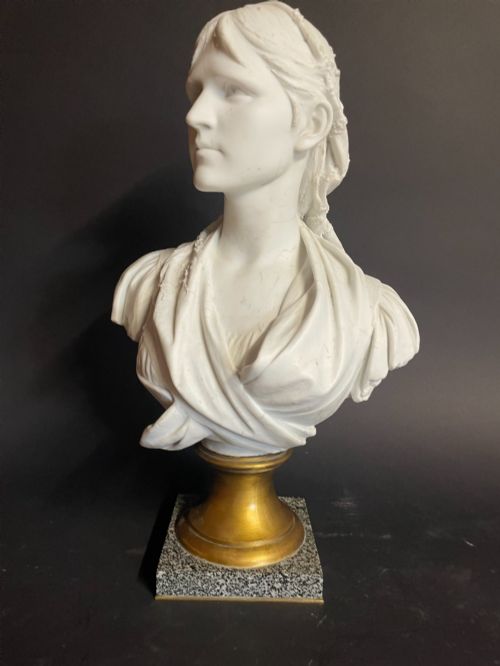
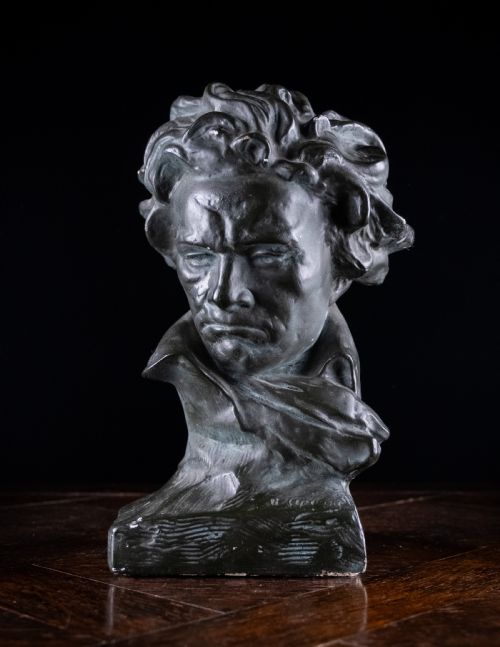
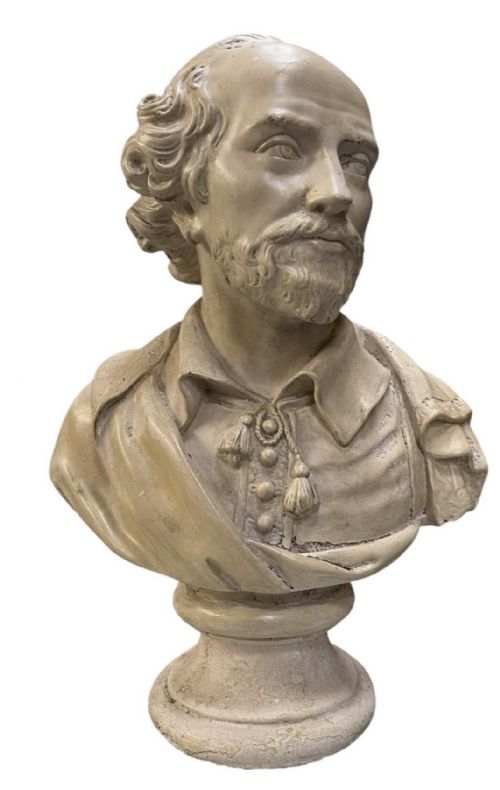
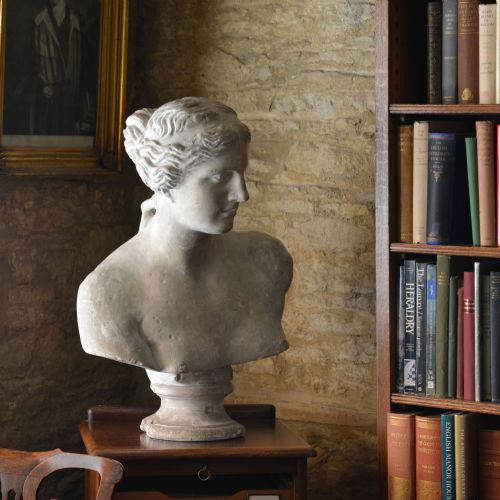



Antique Plaster Statue Bust
An antique plaster statue bust brings classical sculpture and historical figures into a room with striking presence.
Antique Plaster Statue Bust
An antique plaster statue bust captures historical figures, literary icons, and classical subjects in solid form for interior display. When you search for an antique plaster statue bust, you encounter works ranging from severe Roman emperors and Greek poets to nineteenth-century gentlemen and advertising mannequins.
The versions most common on this page date from the nineteenth century through the early twentieth century, spanning Victorian, Edwardian, and Art Deco eras. These pieces often serve as library ornaments, resting on brackets orplinths, rendered in styles that draw heavily on neoclassical and Renaissance revival traditions.
How they were made
Makers cast these pieces using gypsum plaster, pouring the material into moulds taken from original sculptures or life studies. Many examples combine this core medium with surface treatments such as paint, verdigris patina, or simulated terracotta to alter the visual weight and texture.
Some works incorporate contrasting structural elements like brass or granite mounts, particularly on library busts designed to sit securely on brackets. The application of finish layers ranges from simple monochrome washes to detailed polychrome painting on figures and mannequins.
Antique Plaster Statue Bust Retail Price Guide 2026
Typical asking prices for plaster statue bust among the pieces listed under this phrase on Sellingantiques today, from the lower quarter to the upper quarter. They describe what is for sale here now, not the wider market.
Listings feature classical figures such as Homer and Napoleon alongside nineteenth-century portraits and French advertising mannequins.
What varies in quality
The fidelity of the casting and the crispness of the modelling separate simpler commercial pieces from finer sculptural studies. A superior bust retains sharp facial definition, subtle anatomical transitions, and clean rendering of drapery folds without soft or muddy edges.
The handling of the surface finish also determines the character of the object, as skilled patination or deliberate paint application enhances the illusion of stone or bronze. The prestige of the subject, the presence of maker or foundry marks, and the quality of associated mounting brackets all contribute to a piece's standing.
Raffaelo Monti·Antonio Rossellino·Charmereine
The Antique Plaster Statue Bust Glossary
- Plaster
- A building and moulding material composed of calcium sulphate hemihydrate, mixed with water and allowed to set. It forms the primary structural medium for these portrait sculptures and library busts.
- Neoclassical
- A Western cultural movement drawing on the art and culture of classical antiquity. This style informs the proportion, subject matter, and formal dignity of many nineteenth-century busts.
- Patina
- A surface sheen or coloration developed through age, handling, or intentional chemical treatment. Makers often applied patination to plaster to mimic bronze, terracotta, or aged stone.
- Bracket
- A supporting architectural shelf projecting from a wall. Library busts frequently rest upon these wooden or plaster fixtures designed specifically for them.
- Polychrome
- The practice of decorating sculptural works in multiple colours. Painted examples utilise this technique to render flesh tones, hair, and garments with lifelike realism.
Antique Plaster Statue Bust: Frequently Asked Questions
How were these busts displayed originally?
Libraries, studies, and grand hallways served as the primary locations for these portrait sculptures during the nineteenth and early twentieth centuries. They functioned as markers of learning, taste, and classical education for the owners.
Many library busts sat upon dedicated wall brackets or heavy wooden furniture to elevate them at eye level. Smaller or more decorative versions appeared on mantelpieces and parlour tables alongside books and scientific instruments.
Are advertising mannequins considered busts?
Certain trade figures and display pieces share the physical form of a portrait sculpture while serving a commercial purpose. French lingerie and fashion houses utilised plaster and painted forms to showcase garments in shop windows.
These pieces bridge the gap between fine art reproduction and retail display. Their construction methods remain identical to library busts, utilising cast gypsum and applied finishes.
What subjects are most common?
Classical figures dominate the selection, including Roman emperors like Augustus, Marcus Aurelius, and Caracalla, alongside Greek poets such as Homer. Literary giants like Shakespeare and historical commanders like Napoleon also appear frequently.
Portrait studies of anonymous ladies, gentlemen, and youths form another major category. These range from idealized Renaissance revivals to specific nineteenth-century portraiture.
How do I care for an antique plaster piece?
Dry dusting with a soft brush represents the safest method for routine maintenance. Moisture damages historical plaster rapidly by dissolving the surface and lifting paint or patination.
Keeping pieces away from direct sunlight and damp environments prevents the material from weakening over time. Wall brackets should be checked periodically to ensure secure weight distribution.