

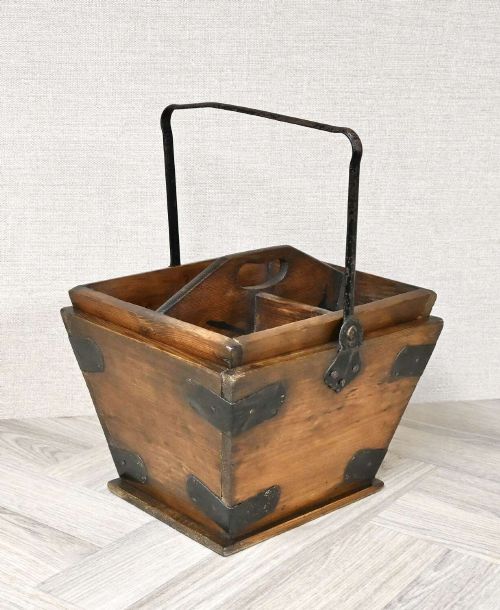
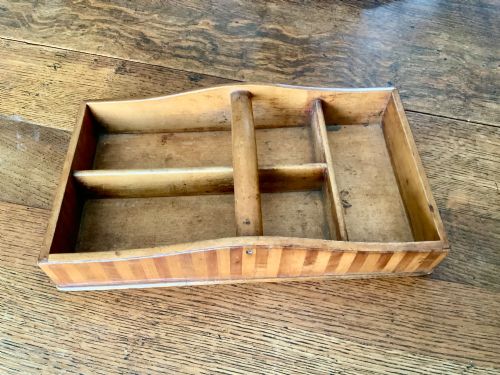
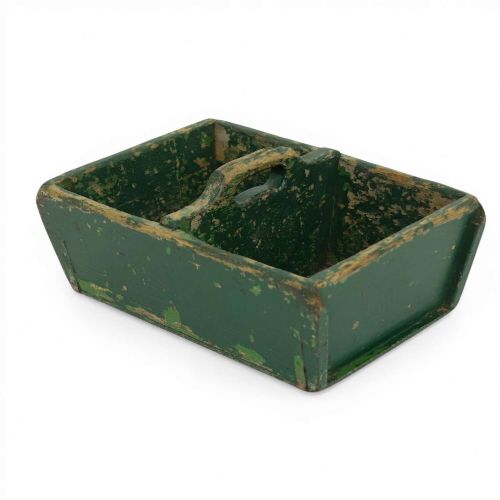


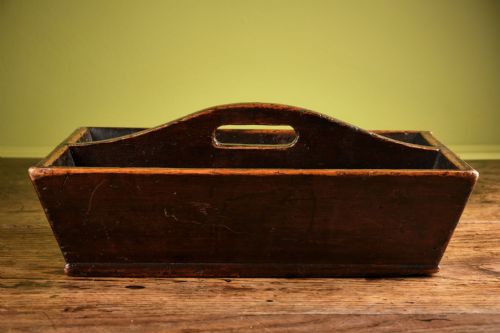


Antique Pine Caddy
An antique pine caddy brings honest utility and warm grain into a room, offering practical storage with genuine domestic history.
Antique Pine Caddy
When you search for an antique pine caddy, you encounter functional domestic vessels designed for carrying or containing household goods, cutlery, and provisions. The evidence shows these pieces originating across the nineteenth century and into the early twentieth century, spanning English, Welsh, and Scandinavian origins.
You are most likely to meet utilitarian forms on this page, including knife trays, cutlery boxes, storage caddys, trugs, and small painted boxes. These items served daily roles in kitchens, pantries, and gardens rather than formal display.
Makers shaped these utilitarian objects using regional vernacular traditions, resulting in rustic country styles, folk art painted surfaces, and robust artisan construction. The forms range from simple single-compartment trays to two-tier stands and lidded apothecary boxes.
How they were made
Makers constructed these pieces primarily from solid pine, often combining it with secondary woods such as sycamore, fruitwood, and bentwood for handles or structural divisions. Iron fittings, nails, and paper linings appear where extra strength or containment was necessary.
Surfaces were frequently finished with hand paint, revealing regional palettes like red paint or traditional Scandinavian decoration alongside polished wood finishes. Construction relied on straightforward carpentry techniques designed for daily durability rather than cabinet-maker polish.
Antique Pine Caddy Retail Price Guide 2026
Typical asking prices for pine caddy among the pieces listed under this phrase on Sellingantiques today, from the lower quarter to the upper quarter. They describe what is for sale here now, not the wider market.
Some nineteenth-century makers built humble cutlery trays with such robust artisan care that they outlasted the grand sideboards they once served.
What varies in quality
The distinction between ordinary and superior pieces rests on the integrity of the original construction and the character of the surface finish. Pieces showing robust artisan building, such as woven pine tier stands or solidly pegged joinery, stand out from simpler work.
Original painted surfaces and untouched patination elevate certain items, particularly where folk art decoration or early red paint remains intact. The balance of practical utility and vernacular design determines the strength of each piece.
The Antique Pine Caddy Glossary
- Pine
- A softwood commonly used in vernacular furniture and utility items for its accessibility and workability. It accepts paint finishes and develops a warm surface patina over decades of handling.
- Trug
- A shallow container traditionally used for carrying garden produce, tools, or household goods. Artisan examples often feature woven or robustly constructed bodies with fixed handles.
- Vernacular
- Everyday objects built by local craftspeople or artisans for functional domestic use rather than following high-style academic design. These pieces reflect regional building traditions and available local materials.
- Sarcophagus
- A box form with a sloping or domed lid reminiscent of ancient stone coffins. In nineteenth-century boxes, this shape provides deeper internal storage.
- Folk art
- Decorative or utilitarian items created within a community tradition by self-taught or artisan makers. These objects often display distinctive painted surfaces and unpretentious structural honesty.
Antique Pine Caddy: Frequently Asked Questions
What is a pine caddy used for?
These pieces served practical storage and carrying roles in traditional households, holding cutlery, dried goods, or tools.
Today, they function well on tabletops or sideboards for holding small items while adding rustic character to a room.
How old are these pine caddys?
The pieces available date primarily from the nineteenth century through to the early twentieth century.
Makers built them during periods when utilitarian woodenware was essential for daily domestic and rural labour.
Are the painted finishes original?
Many items retain hand-applied historic paint surfaces, including traditional red pigments and Scandinavian folk art decoration.
Examining the wear patterns and the way the pigment has settled into the pine grain helps indicate the age of the finish.
Where were these items made?
The pieces originate from various domestic traditions, including English, Welsh, Scottish, and Scandinavian workshops.
Regional construction methods and specific local forms help identify the geographic origins of each caddy or tray.