





Antique Cutlery Carrier
An antique cutlery carrier organises the dining table or kitchen with utilitarian grace, forged from honest woods to move implements where they are needed.
Antique Cutlery Carrier
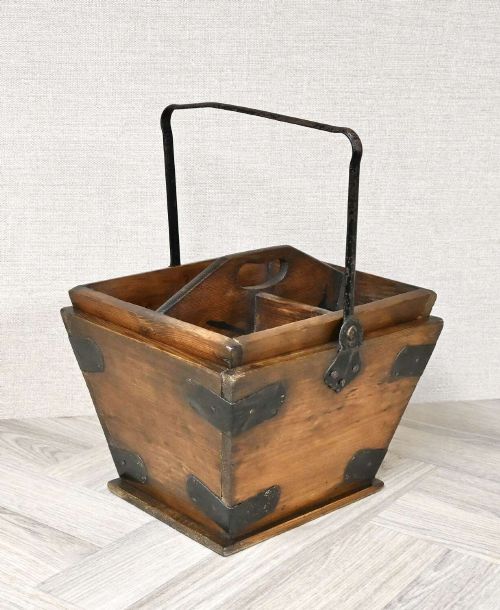
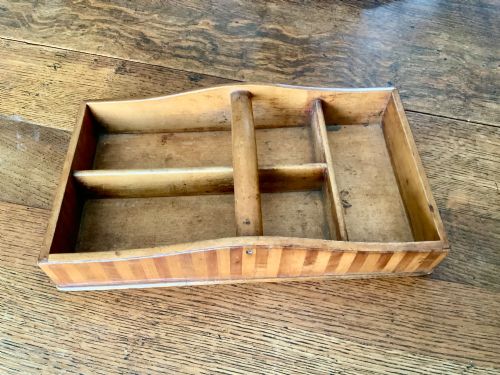
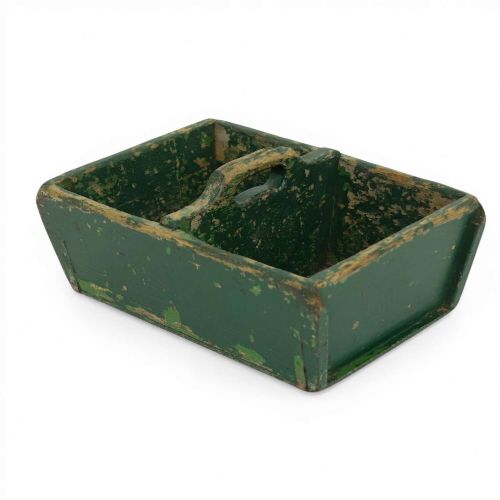
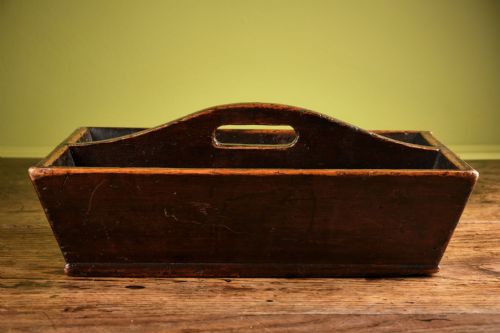
When searching for an antique cutlery carrier, buyers encounter a utilitarian domestic form designed for transporting knives, forks, spoons, or kitchen provisions between rooms. The examples on this page span the eighteenth and nineteenth centuries, taking shapes from simple partitioned troughs to sturdy plate buckets and country trrugs.
The most common forms on this page include mahogany butler trays with central upright brass handles and rustic pine or oak kitchen carriers. These pieces originate from domestic service settings, country houses, and vernacular workshops across Britain and Scandinavia.
Regional variations highlight distinct domestic traditions, ranging from boldly shaped Welsh oak cutlery trays to Scandinavian rustic pine boxes. Buyers select these items for their functional compartments and the rich patination acquired through decades of daily service.
Materials and construction
Cabinetmakers and rural artisans utilised dense hardwoods like mahogany and fruitwood for formal dining pieces, while domestic utility items relied upon accessible timbers such as pine, sycamore, and oak. Dovetail joints and pegged construction ensured these carriers withstood heavy daily loads of metal cutlery or glassware.
Brass fittings frequently appeared on Georgian wine bottle carriers and plate buckets, providing robust handles and structural reinforcement. Painted finishes, including toleware, surface on specific utilitarian buckets designed for kitchen or housemaid tasks.
Antique Cutlery Carrier Retail Price Guide 2026
Typical asking prices for cutlery carrier among the pieces listed under this phrase on Sellingantiques today, from the lower quarter to the upper quarter. They describe what is for sale here now, not the wider market.
Periods represented across these listings include Georgian, Regency, Victorian, and Edwardian eras.
Assessing quality and character
Quality in these carriers rests upon the integrity of the timber selection and the precision of the joinery. Superior pieces display thoughtful grain orientation, hand-cut dovetailing, and original brass hardware that has aged harmoniously with the wood.
The depth of the surface patina reveals how an item was maintained in its original domestic setting. Crisp moulding details and uncompromised structural partitions separate refined town pieces from simpler rural work.
The Antique Cutlery Carrier Glossary
- Toleware
- Painted or enamelled sheet metal household objects. This technique provided durable surfaces for nineteenth-century kitchen buckets.
- Dovetail
- A joint formed by interlocking wedge-shaped fingers. It secures the corners of wooden trays and carriers with lasting strength.
- Patina
- The surface sheen and colour developed through handling, age, and wax polishing over generations. It indicates genuine antique status.
- Vernacular
- Everyday objects made by local craftspeople using regional traditions rather than formal architectural styles. These pieces emphasise function and local timber availability.
Antique Cutlery Carrier: Frequently Asked Questions
What is an antique cutlery carrier used for?
These pieces were originally designed for transporting knives, forks, and spoons from the kitchens to the dining rooms of large houses. Servants utilised them to clear tables efficiently.
Today, collectors use them on dining tables, desks, or kitchen counters to hold modern cutlery, stationery, or dried garden arrangements.
How do I clean a wooden cutlery carrier?
Maintenance requires only a soft cloth and occasional application of quality beeswax to nourish the dry timber. Avoid harsh modern detergents or soaking the wood in water.
Keeping the carrier away from direct heat sources prevents the historic oak or mahogany from splitting and preserves the natural surface sheen.
How do I date a Georgian cutlery carrier?
Georgian pieces often feature dense mahogany, hand-cut dovetail joints, and substantial brass carrying handles. The timber grain displays a deep, warm hue acquired through long usage.
Construction details on eighteenth-century items reveal hand tools rather than modern machinery, showing slight irregularities that confirm their age.
Are pine cutlery carriers durable?
Pine carriers from the nineteenth century were built for robust domestic or rural service. The timber withstands everyday handling remarkably well.
Scandic and Welsh pine examples often display rustic painted surfaces or scrubbed finishes that adapt easily to contemporary kitchen interiors.