





Antique Pie Crust Tilt Top Table
An antique pie crust tilt top table offers clever folding practicality and a carved scalloped rim, making it a sought-after centrepiece for traditional rooms.
Antique Pie Crust Tilt Top Table
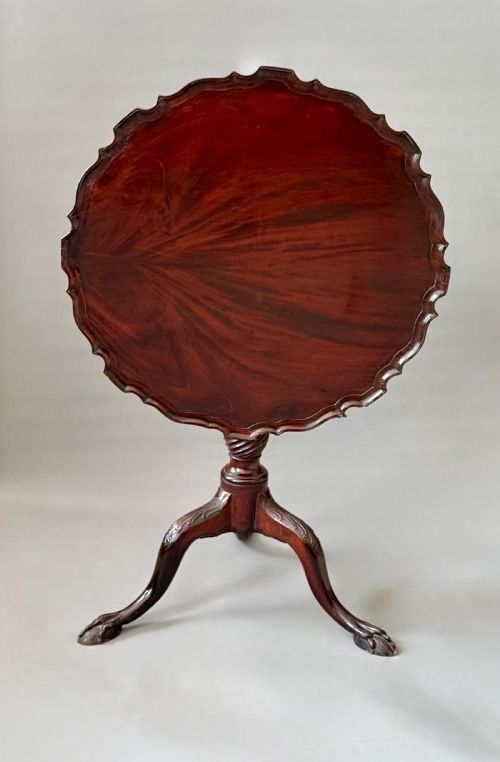
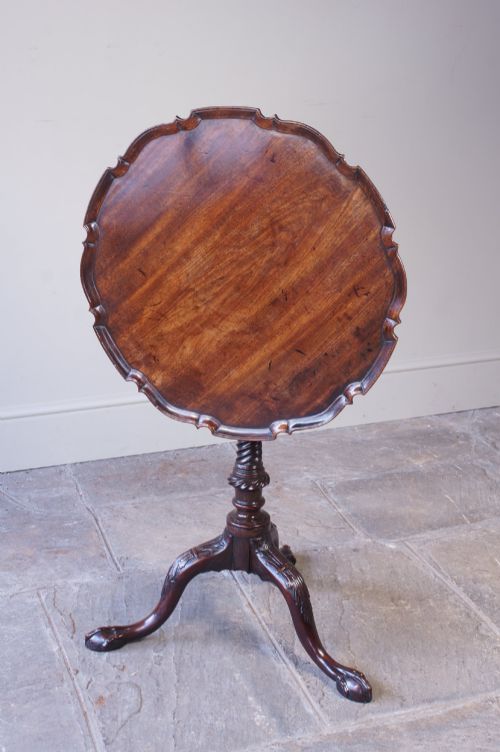
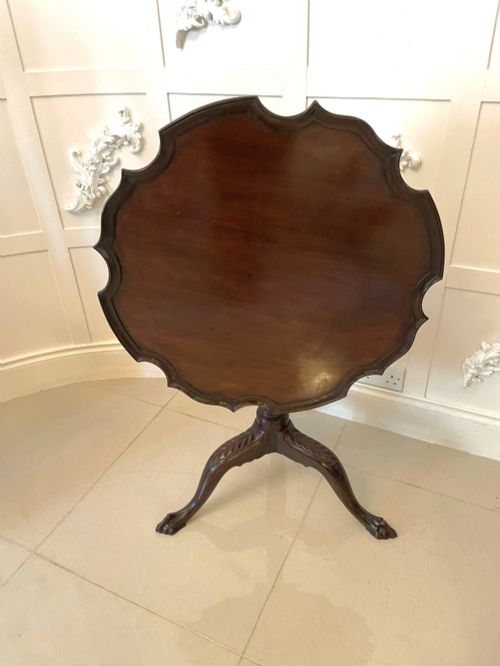
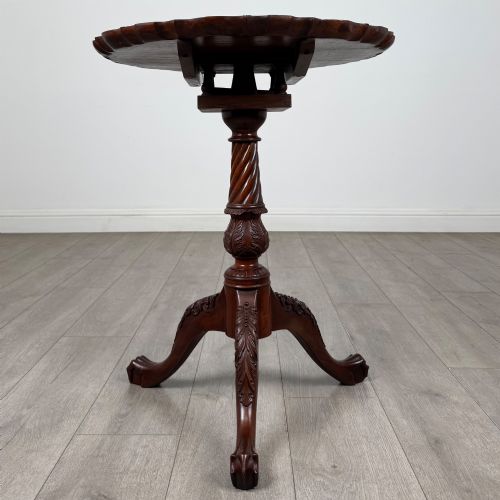
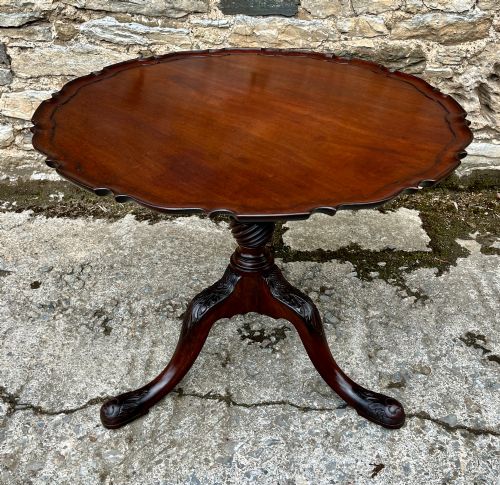
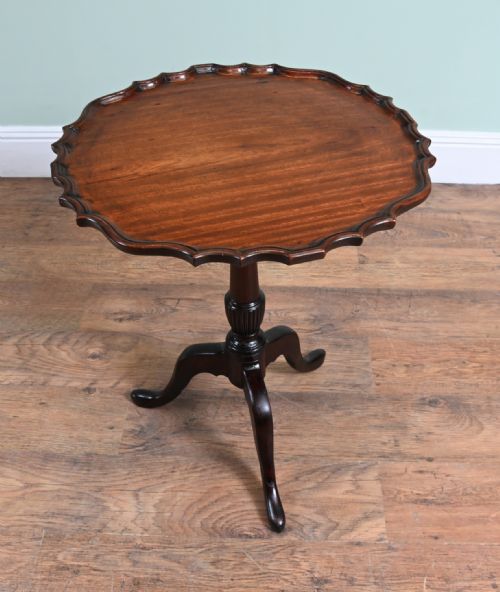
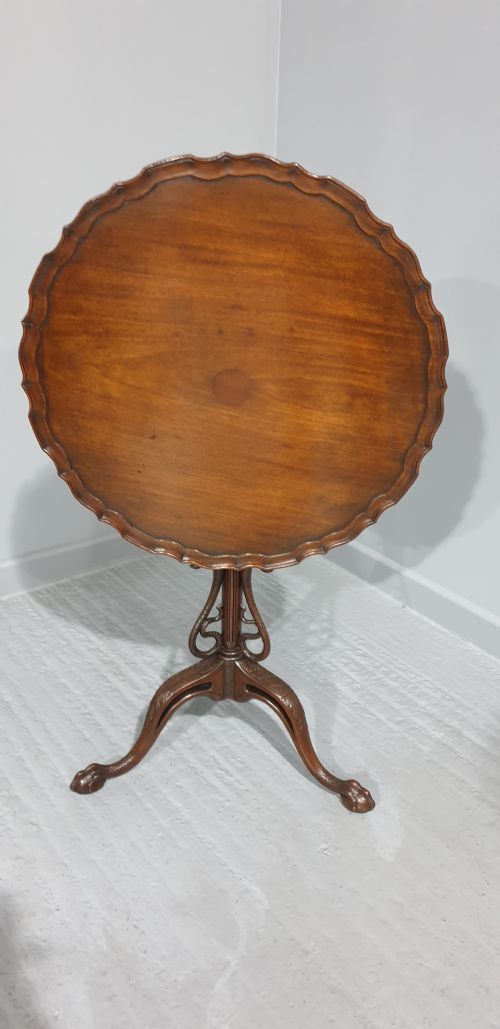
An antique pie crust tilt top table is a versatile occasional piece designed to save space when folded upright against a wall. The characteristic raised, scalloped edge resembles pastry work, giving these small tables their traditional culinary name.
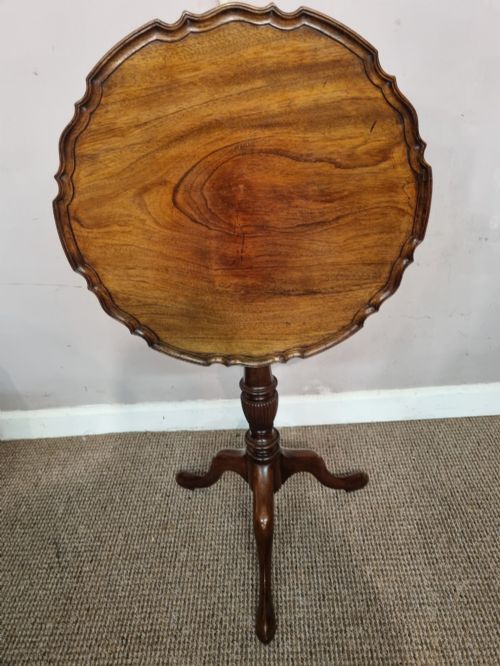
You will encounter pieces originating from the Georgian and 18th century periods alongside later revival interpretations from the 19th and early 20th centuries. Mahogany is the dominant timber, though occasional walnut examples appear across the selections.
How they were made
Cabinetmakers fashioned the distinctive raised rims by cutting and carving solid timber margins rather than applying separate mouldings, demanding high precision with hand tools. The tops connect to central pedestals via tilt or snap mechanisms that allow the surface to pivot flat or vertical.
Tripod bases supported by three cabriole legs provide the standard structural arrangement for these tables. Brass components occasionally reinforce the pivoting mechanisms and catch assemblies beneath the top.
Antique Pie Crust Tilt Top Table Retail Price Guide 2026
Typical asking prices for pie crust tilt top table among the pieces listed under this phrase on Sellingantiques today, from the lower quarter to the upper quarter. They describe what is for sale here now, not the wider market.
Many a dining room has lost a saucer because someone forgot to engage the brass snap catch underneath.
What varies in quality
The crispness of the carved edge separation and the depth of the pie crust mouldings separate ordinary pieces from superior examples. Finely executed carving maintains sharp definition without rounded or softened contours.
Proportion and timber figure dictate overall merit, with rich grain patterns and elegant pillar turnings marking out the better workshop outputs. The stability of the tilt mechanism and the seamless alignment of the folded top also reflect superior original construction.
The Antique Pie Crust Tilt Top Table Glossary
- Pie crust edge
- A raised, carved moulding around the table perimeter shaped into decorative curves and indentations. This rim prevents items from sliding off when the surface is tilted.
- Tilt top
- A hinged tabletop mechanism enabling the surface to pivot into a vertical position. This function allowed tables to stand flat against walls when not in use.
- Tripod table
- A small freestanding table supported by three legs radiating from a central pillar. This design ensures stability on uneven historical floorboards.
- Snap top
- A spring-loaded catch or brass latch beneath the table that locks the top firmly in a horizontal position when in use.
- Bird cage
- A rotating wooden framework beneath the tabletop that allows the surface to both pivot and rotate independently of the central column.
Antique Pie Crust Tilt Top Table: Frequently Asked Questions
What were pie crust tables used for?
These tables served as portable tea tables, supper tables, and occasional stands in principal rooms.
Their tilting mechanism allowed servants to store them compactly against the wall when meals or gatherings finished.
How do I spot a Georgian original?
Examine the timber density, hand-cut joinery beneath the top, and the mellow patina developed over centuries of polish.
Revival pieces from later periods often show machine finishing or different timber preparation methods upon close inspection.
Why does the top tilt?
The tilting function was an essential space-saving device in historic domestic interiors where rooms served multiple daily purposes.
It also protected the polished wooden surface from accidental damage when the furniture was pushed aside.
Are walnut and mahogany both period materials?
Mahogany forms the vast majority of surviving examples, prized for its strength and rich red-brown hue.
Walnut pieces also exist within the record, representing earlier aesthetic preferences or regional timber choices.