



Antique Physics Instrument
These antique physics instrument examples combine brass and mahogany to make scientific demonstration tangible and precise.
Antique Physics Instrument
When you search for an antique physics instrument, you find apparatus built to demonstrate physical principles in classrooms and laboratories. These pieces range from Regency boxwood thermoscopes to mid-twentieth-century generators.
Victorian scientific pieces appear frequently alongside industrial apparatus from the early twentieth century. Each item reflects the technological ambitions of its era, built for education and research.
How they were made
Maker workshops utilised turned mahogany and polished boxwood to house sensitive internal components, providing stability and insulation. Cabinetmakers joined these timbers with precision, often incorporating fitted velvet linings to protect delicate glassware during transport.
Metalworkers cast and machined heavy brass and iron for structural frames, gear trains, and terminals, ensuring durability under regular laboratory use. Glass was hand-blown and sealed for vacuum tubes, while silk-covered copper wire wound tightly around induction coils.
Surface finishes relied on hand-rubbed French polish for woods and clear lacquers to prevent brass from tarnishing in damp workshop environments. Engraved brass plates frequently recorded maker details and operating instructions directly onto the apparatus.
Antique Physics Instrument Retail Price Guide 2026
Typical asking prices for physics instrument among the pieces listed under this phrase on Sellingantiques today, from the lower quarter to the upper quarter. They describe what is for sale here now, not the wider market.
Faraday's egg experiment survived into the Victorian classroom, proving that science could be as theatrical as it was empirical.
What varies in quality
The refinement of mechanical and optical parts dictates the standard of an instrument. Finer pieces display crisp hand-engraved maker signatures and precisely calibrated scales rather than stamped or painted markings.
Selection of prime timber, such as dense figured mahogany or unblemished boxwood, separates superior educational models from standard workshop output. Original components, including undamaged glass tubes and intact winding insulation, elevate the integrity of the apparatus.
G. Adam of Paris·Merkelbach & Co Amsterdam·Watkins & Hill·Max Kohl Germany·Heinrich Daniel Ruhmkorff·William Ladd London·Physica
The Antique Physics Instrument Glossary
- Thermoscope
- An instrument that shows changes in temperature without measuring them precisely. Boxwood versions from the Regency period demonstrate early thermal expansion.
- Induction coil
- An electrical device used to produce high-voltage pulses from a low-voltage direct current. Heinrich Daniel Ruhmkorff produced notable examples of these coils in the nineteenth century.
- Electrostatic machine
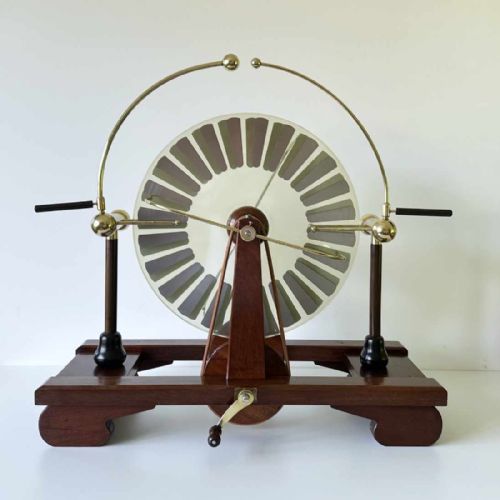
- A generator that produces static electricity through friction or induction. Winters pattern and Wimshurst designs represent prominent configurations of this apparatus.
- Geissler tube
- A sealed glass cylinder used to demonstrate gas discharge physics under low pressure. Cross vacuum scale variants measure internal pressure changes visually.
- Galvanometer
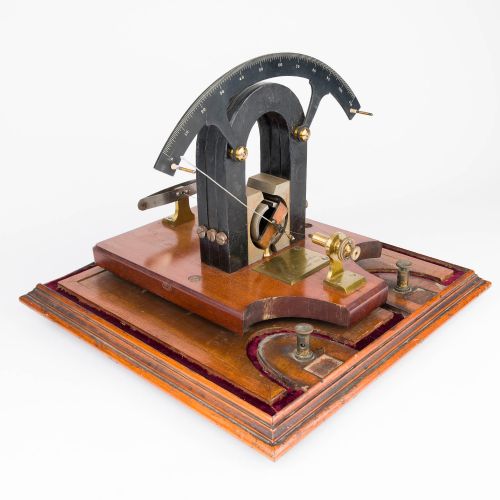
- An electromechanical instrument used for detecting and measuring electric current. Makers such as G. Adam of Paris mounted these movements in polished brass and wood housings.
Antique Physics Instrument: Frequently Asked Questions
How were these scientific instruments used?
Institutions employed them to demonstrate physical laws, electrical phenomena, and thermodynamic principles to students and researchers. Lecturers used projection models and vacuum tubes to make invisible forces visible.
Many pieces served as durable teaching aids in European universities and schools, built to withstand frequent handling during demonstrations.
How do I date a physics instrument?
Dating relies on materials, manufacturing techniques, and engraved maker signatures recorded on the brass plates. Regency and Victorian pieces often utilise boxwood and hand-rubbed mahogany.
Later twentieth-century examples incorporate modern materials such as perspex alongside traditional metals, aligning with industrial production methods of the era.
How do I care for wooden and brass apparatus?
Keep these instruments in stable environmental conditions away from direct sunlight and excessive moisture to protect the timber and lacquer. Dust delicate glass parts and brass surfaces gently with a dry, soft cloth.
Avoid using harsh chemical polishes on brass components, as original patinas and maker engravings require careful preservation.