


Antique Pewter Tankard Lid
An antique pewter tankard lid crowns vessels of metal and ceramic, bringing tactile history and weight to the table.
Antique Pewter Tankard Lid
When searching for an antique pewter tankard lid, collectors encounter covers attached to drinking vessels, measures, and flagons originating primarily from the eighteenth and nineteenth centuries. These components complete metal tankards, spirit measures, and ceramic jugs fashioned in England, Scotland, Ireland, and continental Europe.
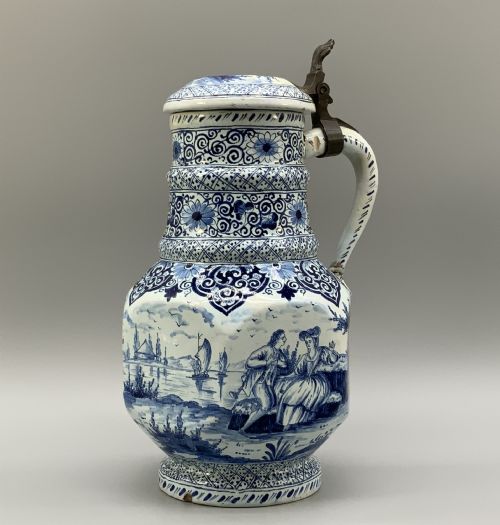
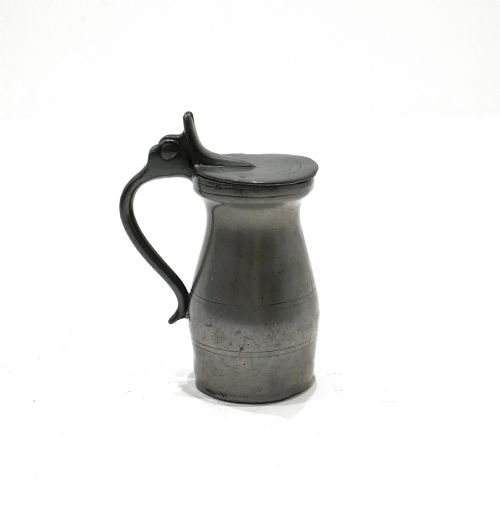
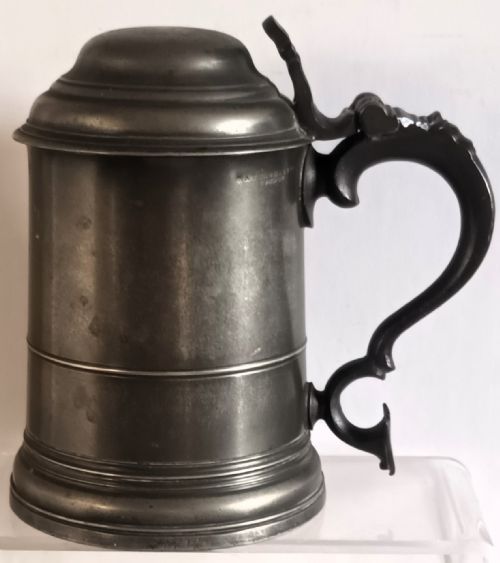
The versions most commonly met on this page include flat-lidded and dome-lidded English pewter tankards, alongside German stoneware and delftware pieces fitted with metal covers. Forms range from small half-gill spirit measures to large quarts and church flagons.
Origins stretch across British workshops in London, Bristol, and Glasgow, as well as continental styles from German and Dutch makers. Each lid operates as part of a drinking vessel designed for ale, wine, or spirits.
How they were made
Makers shaped pewter through casting in metal or stone moulds, relying on an alloy primarily of tin combined with lead or copper to achieve durability and weight. Artisans then hammered, turned on a lathe, and soldered the components together.
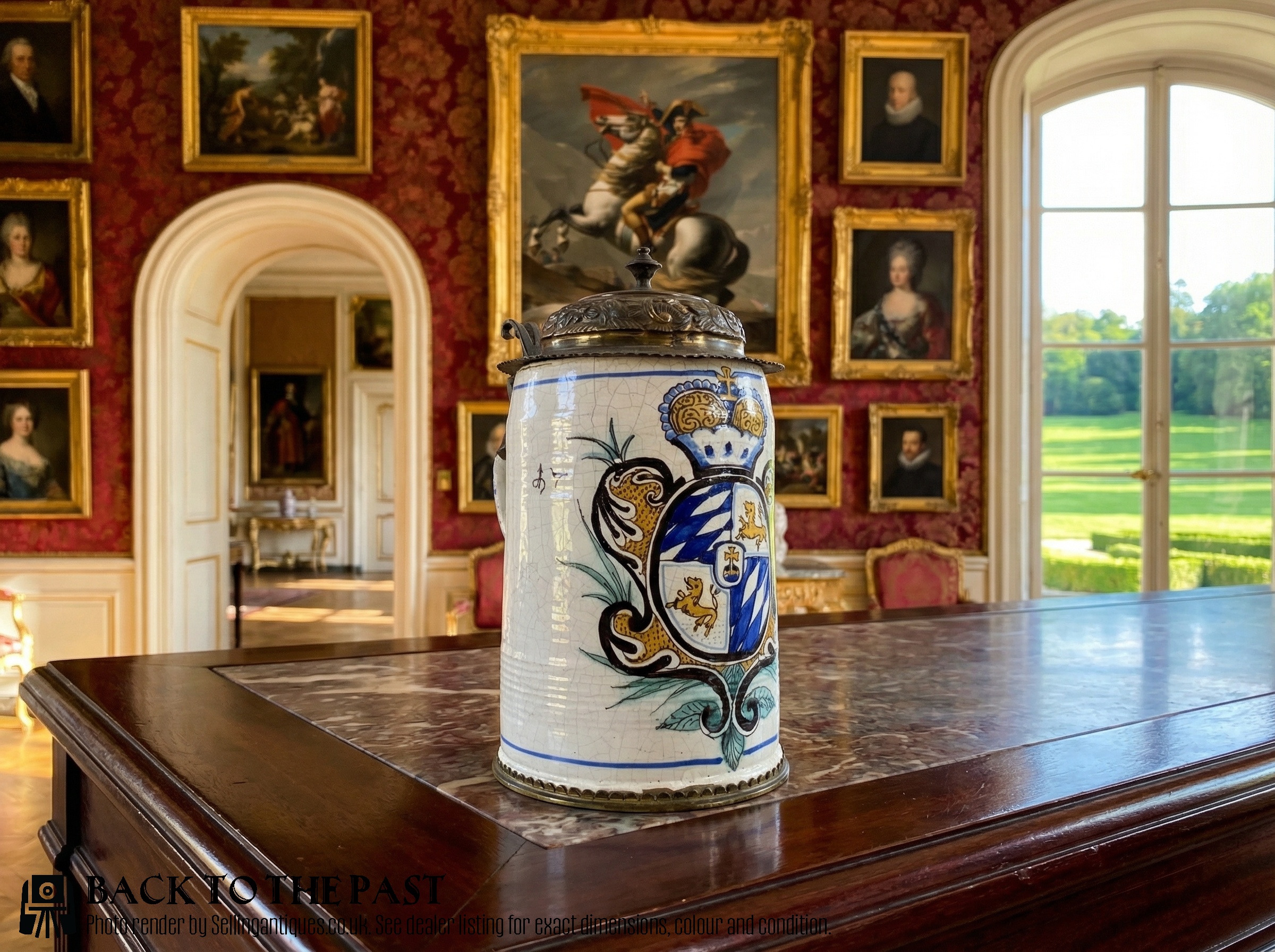
Ceramic bodies such as Westerwald stoneware and Dutch delftware utilised thrown clay finished with salt glazes or tin-glazed earthenware, onto which hinged metal mounts were affixed. Old Sheffield plate and silver-plated examples combined a copper base fused with a thin sheet of silver.
The inventory records regional British pieces from England, Scotland, Ireland, Jersey, and Guernsey alongside continental European examples.
What varies in quality
The standard of an antique pewter tankard lid rests upon the crispness of its casting, the integrity of the hinge mechanism, and the presence of touchmarks or maker stamps. Better examples maintain their original balance and proportion relative to the vessel body without excessive wear or repair to the thumbpiece.
Material thickness and surface patination further distinguish superior specimens, particularly those retaining maker marks from known workshops. Secondary materials like glass bottoms or ceramic bodies show variation in the clarity of glaze and the precision of applied decoration.
Watts and Harton·John Heaney of Dublin·Robert Iles of London·Burgum and Catcott of Bristol·Robert Bush·Allen Bright of Bristol·John De St Croix·Archibald Knox for Liberty and Co
The Antique Pewter Tankard Lid Glossary
- Flat-lidded
- A style of cover featuring a level top surface, common on early eighteenth-century English flagons and tankards. This form sits flush against the rim of the drinking vessel.
- Dome lid
- A rounded cover rising above the rim of the tankard, appearing frequently on later eighteenth and nineteenth-century pieces. This shape offers greater interior volume.
- Touchmark
- An identifying stamp struck by a pewterer into the metal to signify the maker or workshop. These marks serve as primary evidence for attribution and dating.
- Tappit Hen
- A traditional Scottish pewter drinking measure featuring a lid and a knob on top. The form takes its name from the appearance of a hen.
- Westerwald
- A German ceramic region known for producing salt-glazed stoneware jugs and tankards. These pieces often feature cobalt blue ornamentation.
Antique Pewter Tankard Lid: Frequently Asked Questions
What is an antique pewter tankard lid?
An antique pewter tankard lid is the hinged metal cover attached to drinking vessels and measures from the eighteenth and nineteenth centuries.
These covers protected the contents of ale steins, wine measures, and church flagons while providing a thumbpiece for one-handed opening.
How do I identify the period of a lid?
Dating relies on the profile of the cover, such as flat styles versus raised dome forms, along with touchmarks stamped into the metal.
Makers often included civic or capacity marks that place the vessel within specific reigns or decades.
Were these lids only made of pewter?
While metal covers are typically pewter, ceramic vessels from Germany and the Netherlands often paired stoneware or earthenware bodies with metal mounts.
Other variants incorporate silver plating or Old Sheffield plate over copper bases.
How were these vessels used historically?
Tankards and flagons served communal and domestic drinking needs in taverns, homes, and churches for ale, wine, and spirits.
Measures ensured accurate quantities for trade and consumption under official standards.