


Antique Pet Portrait Oil
When you examine an antique pet portrait oil, you find centuries of devotion captured in pigment on canvas or board.
Antique Pet Portrait Oil
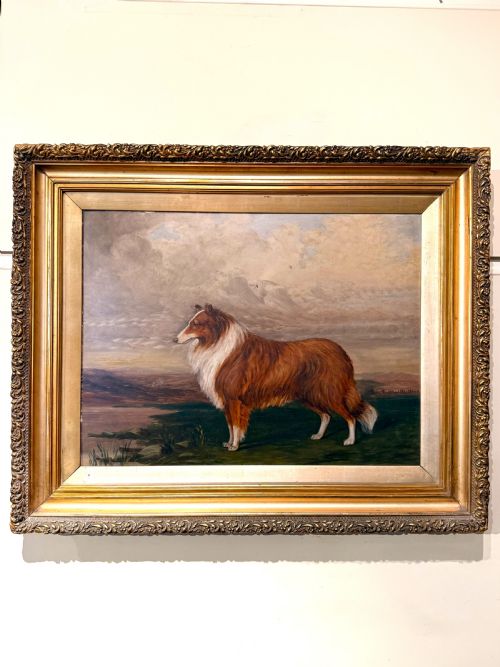
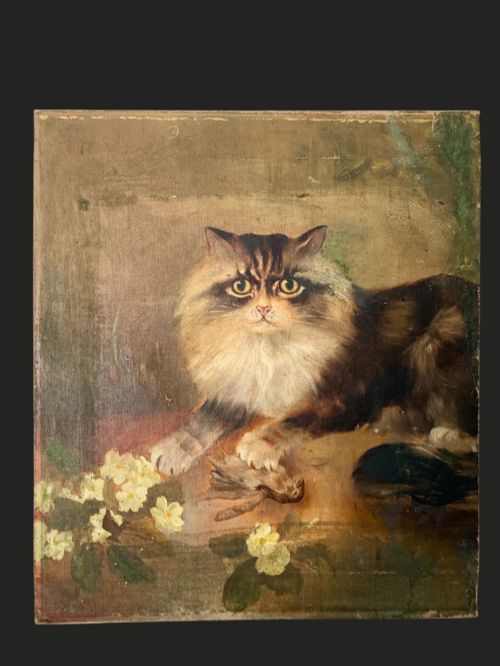
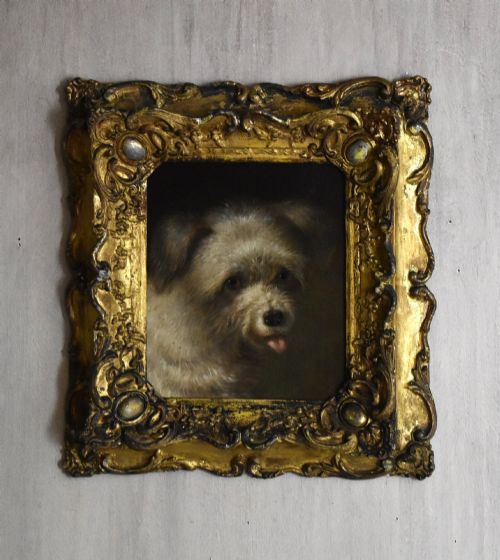
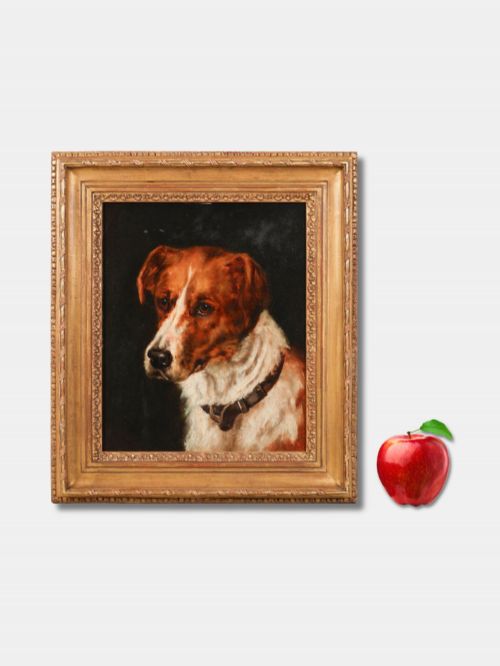
An antique pet portrait oil captures beloved animals, from spaniels and terriers to cats and rabbits, rendered by painters working across the eighteenth, nineteenth, and twentieth centuries. These works range from provincial naive studies to accomplished Victorian realism.
You meet various formats on this page, including oil paintings on canvas, board, and panel, often housed within period frames featuring gesso and gold leaf. Dogs and cats dominate the subjects, sometimes shown alone in interiors or alongside their owners.
The selection extends from Regency canvases to interwar realisms and mid-century panels. Each piece records how families and artists preserved the presence of household animals through centuries of changing artistic styles.
Materials and technique
Painters applied oil paint onto woven canvas, wooden panels, or rigid board supports, utilising brushes to build texture and tone. These mediums allowed artists to render the sheen of animal coats and the specific light of interiors with lasting permanence.
Finished works frequently sat within wooden frames embellished with moulded gesso and gilt gold leaf. These surrounds provided structural support while complementing the domestic display of the artwork.
Antique Pet Portrait Oil Retail Price Guide 2026
Typical asking prices for pet portrait oil among the pieces listed under this phrase on Sellingantiques today, from the lower quarter to the upper quarter. They describe what is for sale here now, not the wider market.
Several canvases capture dogs designated specifically as household favourites, racing champions, or tea party attendees.
Evaluating quality and execution
Quality rests upon the artist's command of anatomy, expression, and material handling. Superior works capture the distinct character and posture of the animal with anatomical precision, while lesser examples rely on stiff repetition or flat application.
The sophistication of the brushwork and the preservation of the original paint layer distinguish finer productions. Evidence of a skilled hand appears in the rendering of fur textures, light falling across a subject, and the harmonious integration of the animal within its setting.
Martin Theodore Ward·William Barraud·Agnes Augusta Talboys·Christian Lindner·John Henry Dell·Valentine Thomas Garland·Florence Mabel Hollams·Philip Eustace Stretton·Francisco Jose Domingo y Marques·Samuel John Carter·Frank Owen Salisbury·Jules Le Roy·Sir Peter Lely·Mary Beale·Peter Monsted·Albert Petersen·Hans Christian Jensen·August Schiott·Robert Surtees Snr
The Antique Pet Portrait Oil Glossary
- Oil on canvas
- Pigment suspended in a drying oil, typically linseed, applied to a stretched woven fabric support. This combination provides flexibility and a textured surface for brushwork.
- Gesso
- A plaster-like mixture applied to wooden frames as a smooth base before gilding with gold leaf. It creates crisp relief details along the moulding.
- Naive school
- Art produced by painters with little or no formal academic training, often characterised by flat perspective and direct observation. These works offer charm and documentary honesty.
- Oil on board
- Pigment applied directly to a rigid wooden or composition panel rather than stretched fabric. This support provides a solid ground that resists puncture.
- Victorian genre
- Artwork depicting scenes from everyday domestic life, frequently including household animals and human companions. It reflects the nineteenth-century taste for sentimental narrative.
Antique Pet Portrait Oil: Frequently Asked Questions
What animals appear in these paintings?
Dogs and cats form the majority of the subjects, particularly terriers, spaniels, greyhounds, and Persian kittens. Occasional works feature birds and rabbits alongside their human companions.
Paintings range from individual studies of prized champions to group scenes of pets in domestic interiors.
How do I date an oil painting?
Dating relies upon stylistic markers, canvas types, framing techniques, and artist signatures or inscriptions. Nineteenth-century works often display specific realism or naive traits, while twentieth-century examples show interwar or mid-century palettes.
Examining the reverse of the board or canvas frequently reveals historical labels, titles, or dates written by the artist.
How should I hang and care for an oil painting?
Display oil paintings away from direct sunlight and sources of rapid temperature fluctuation to protect the canvas and paint layers. Stable indoor humidity prevents the wooden stretcher and panel from warping.
Dust the surface and frame gently with a soft, dry brush without applying moisture or cleaning solutions directly to the pigment.
What is the difference between canvas and board?
Canvas consists of woven fabric stretched over a wooden frame, offering slight give and a textured surface visible beneath the paint. Board provides a completely rigid support made from wood or compressed material.
Both supports were used across different centuries, though board is particularly common in smaller nineteenth and twentieth-century studies.