
Antique Peg Rail
An antique peg rail is a wall-mounted board fitted with hooks for hanging garments, offering practical utility and period character.
Antique Peg Rail
When you search for an antique peg rail, you encounter wall panels and coat racks designed for hallways and cloakrooms. The pieces on this page span the 17th century through to the 1930s, encompassing Georgian, Victorian, Edwardian, and Art Deco eras.
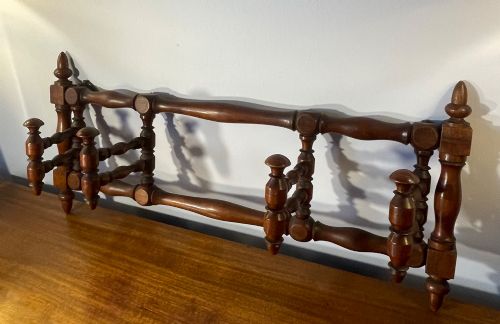
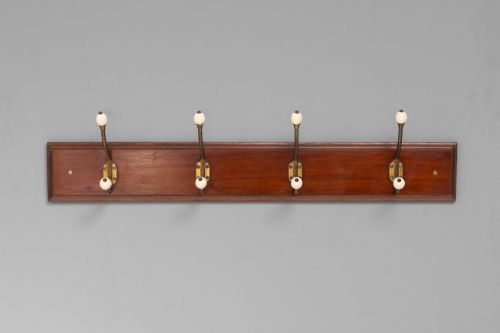
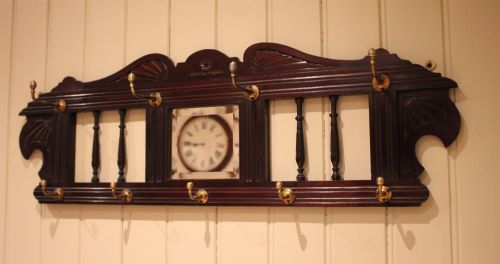
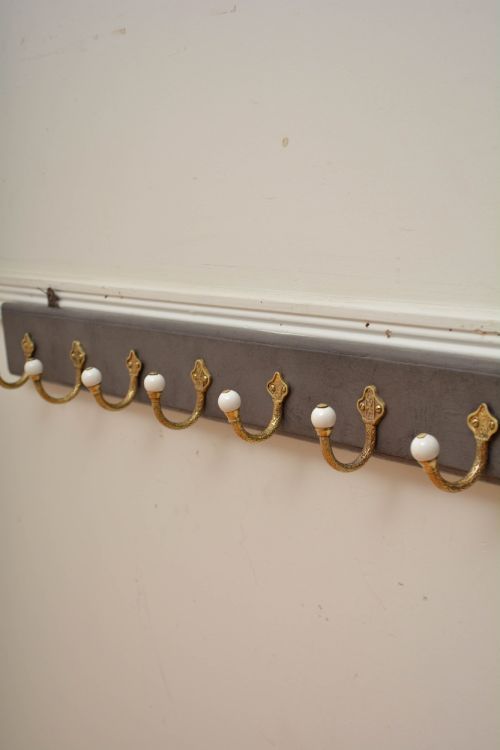
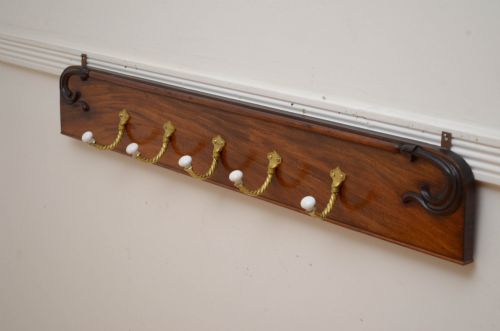
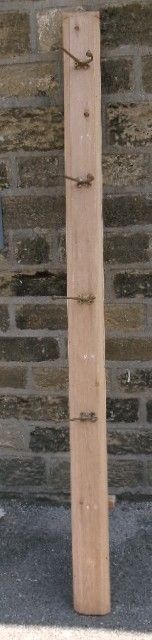
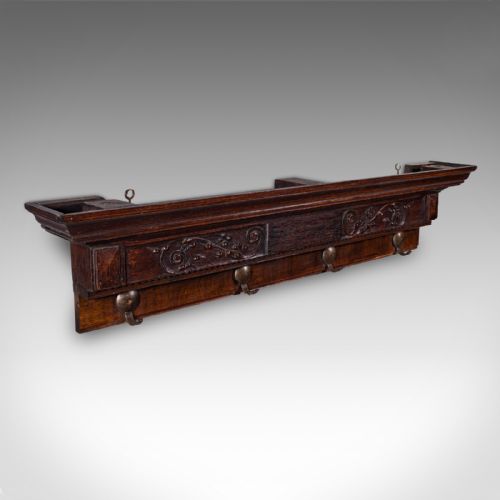
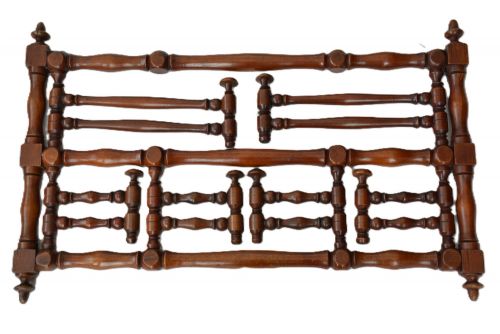
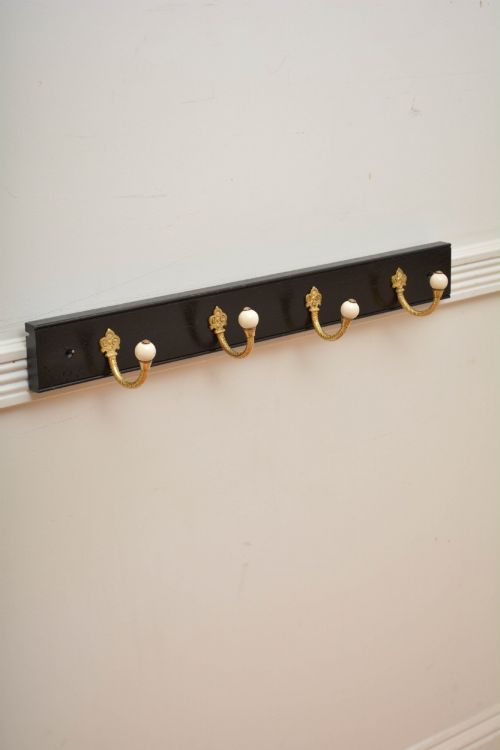
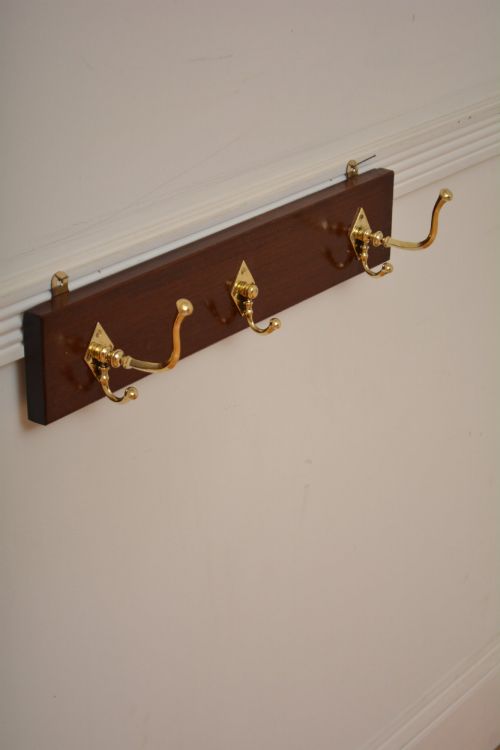
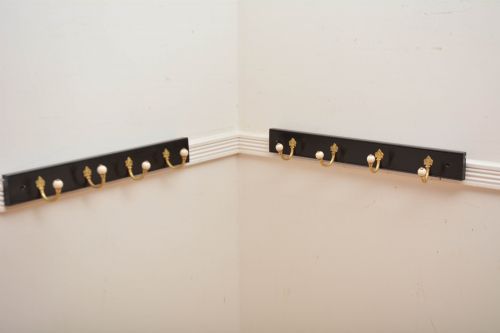
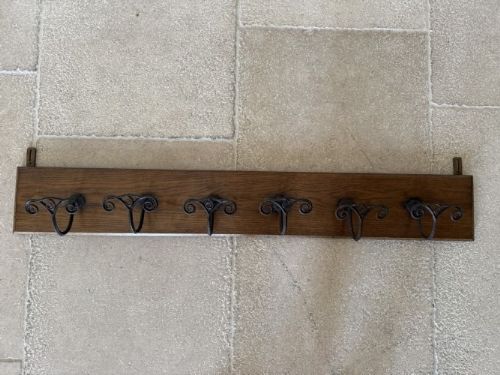
The most common form is a timber backboard set with multiple brass, iron, or ceramic hooks. Examples range from simple pine and oak boards to polished mahogany units fitted with twisted rope details or cast mounting plates.
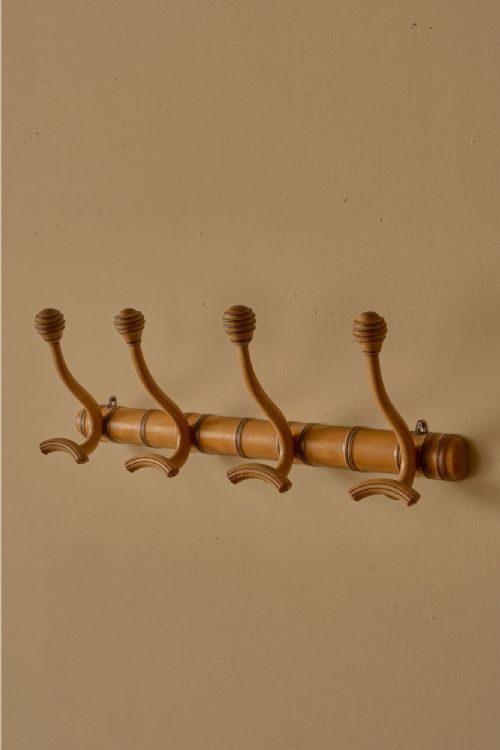
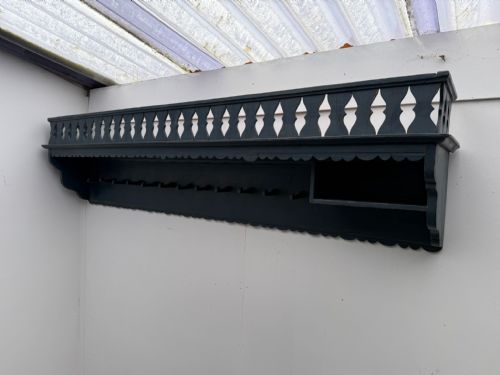
Makers utilised various regional styles, including French faux bamboo and Hungarian painted pine. These utilitarian items served everyday needs in reception halls and domestic cloakrooms.
Materials and construction
Construction relies heavily on solid hardwoods and softwoods such as oak, mahogany, pine, and beech for the backboards. These timbers provide the structural strength needed to support heavy garments and hats over decades of daily use.
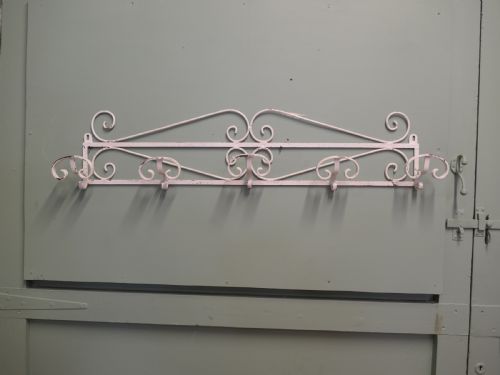
Hooks and mounting plates utilise cast brass, wrought iron, and sometimes ceramic elements. Manufacturers attached these metal components securely to the wooden panels using period fixings.
Listings feature timbers ranging from 18th-century oak to Victorian mahogany, alongside painted pine finishes.
Distinctions in quality
Quality rests in the selection of timber and the casting detail of the metalwork. Hardwoods like mahogany and early oak demonstrate greater durability compared to simpler pine boards.
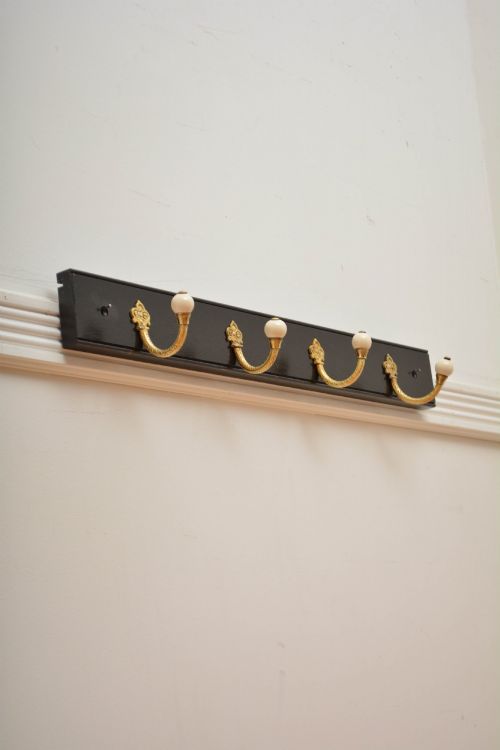
The finishing touches, such as cast brass mounting plates, ceramic inserts, and ebonised details, elevate utilitarian storage into refined interior woodwork. Well-proportioned backboards with intact original hooks command stronger interest.
The Antique Peg Rail Glossary
- Backboard
- The horizontal wooden plank that mounts directly to the wall and secures the hooks. It distributes the weight of hung items evenly across the fixing points.
- Cast brass
- Molten brass poured into a mould to create decorative hooks and mounting plates. This technique allows for intricate designs and robust construction.
- Ebonised
- Timber treated with a dark stain or finish to imitate ebony. This process was popular in Victorian and Aesthetic Movement pieces.
- Cloakroom
- A dedicated room or area near an entrance for hanging coats and hats. Antique peg rails frequently originated in these domestic reception spaces.
Antique Peg Rail: Frequently Asked Questions
How do I hang a heavy coat rack safely?
Fix the wooden backboard directly into wall studs or use appropriate masonry anchors depending on your wall type. Distribute the weight evenly across the mounting holes provided in the board.
Ensure the screws match the depth and weight capacity of the antique timber to prevent pulling away from the wall under heavy garments.
Are these suitable for modern hallways?
These wall-mounted boards fit narrow corridors and entrance spaces efficiently while providing functional garment storage. Their varied periods complement both contemporary and traditional interiors.
Position the rail at a height that allows family members and guests to reach the hooks comfortably without straining.
How do I identify the period of a rack?
Examine the timber species, screw types, and hook designs to narrow down the era. Oak and heavy mouldings often point towards earlier centuries, while brass and ceramic combinations frequently indicate Victorian or Edwardian manufacture.
Look at the overall patina and construction methods on the reverse of the backboard for additional clues regarding age.
Can I polish the brass hooks?
Gentle cleaning with a soft cloth removes dust and preserves the accumulated age of the metal. Avoid harsh chemical cleaners that strip away the historical surface finish.
Leaving a degree of natural tarnish maintains the authentic appearance expected on period hardware.