

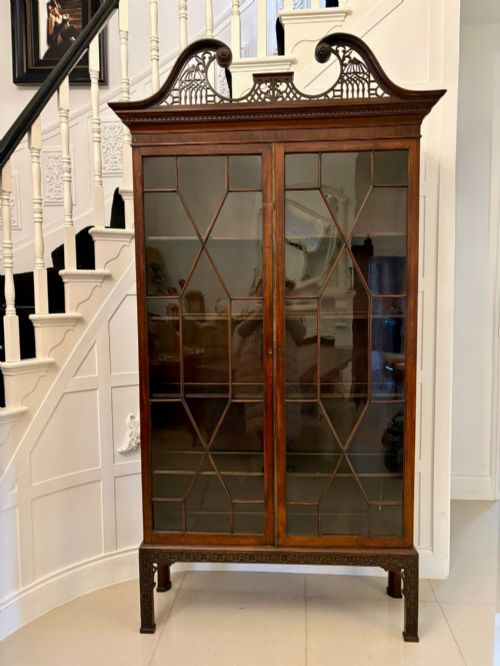
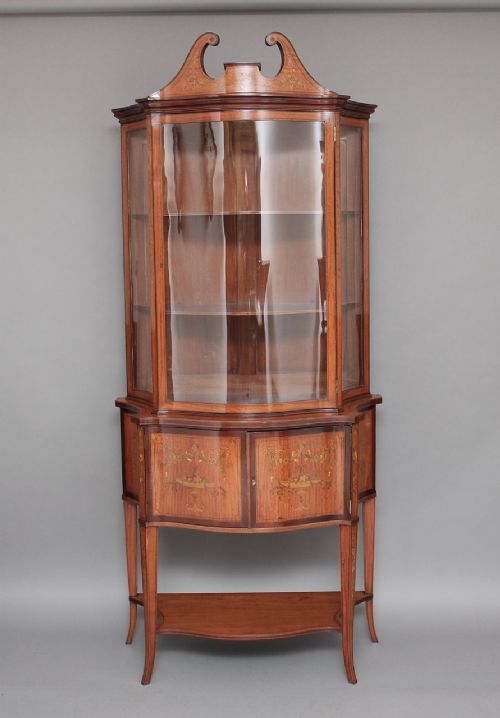
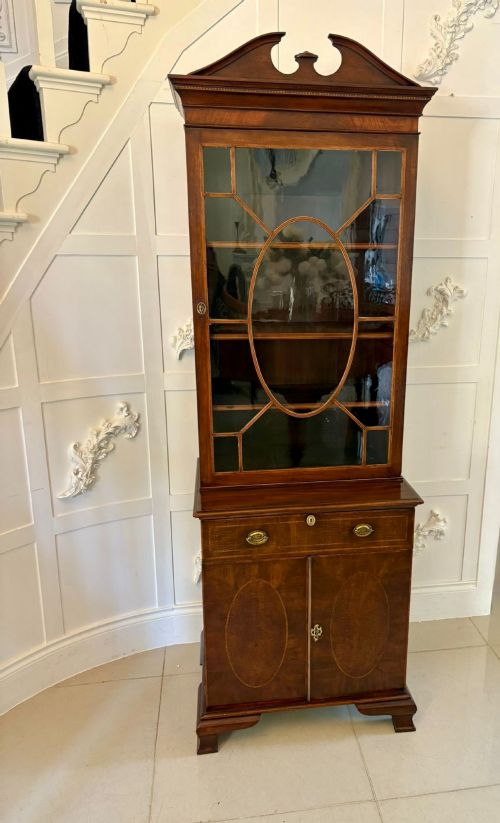
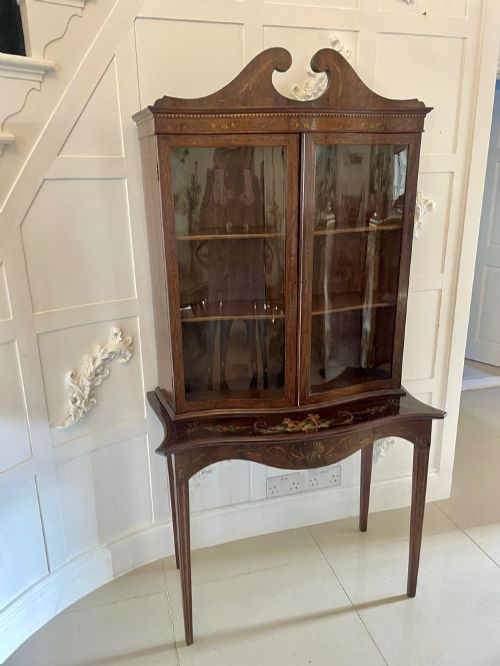
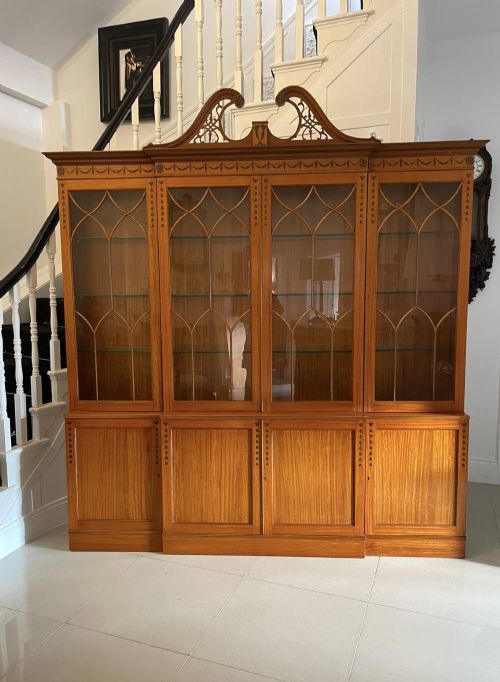
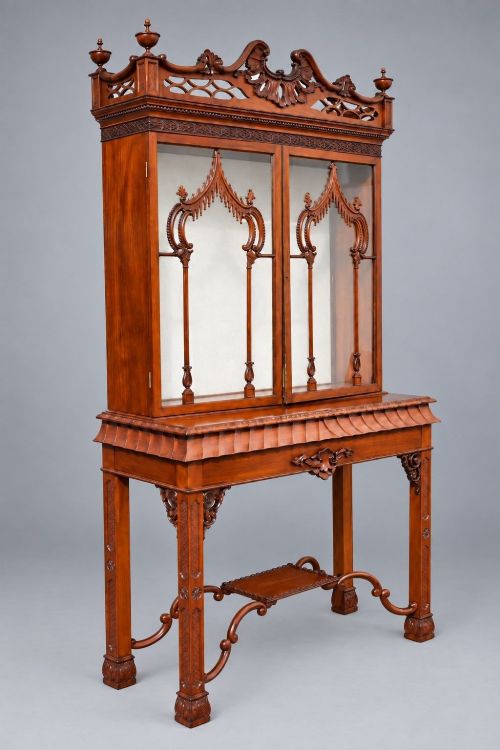
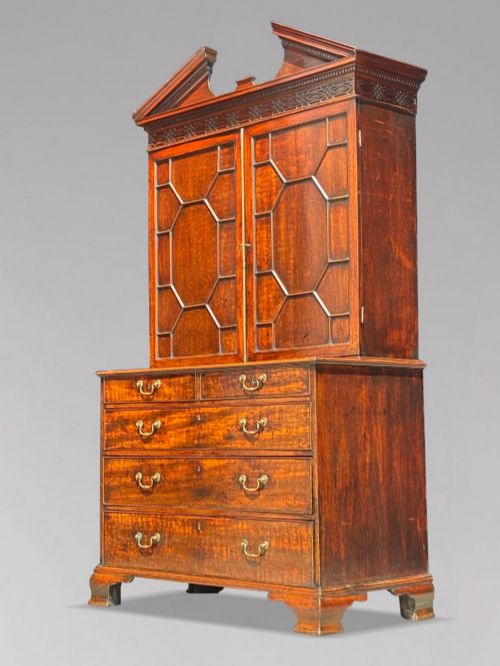
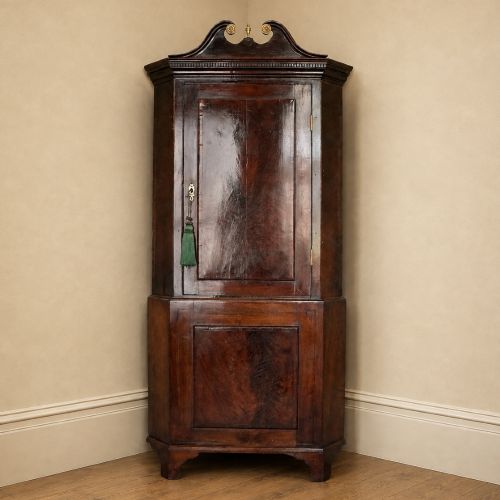
Antique Pediment Display Cabinet
An antique pediment display cabinet brings architectural dignity to a room, housing cherished volumes and collections behind glazed timber doors.
Antique Pediment Display Cabinet
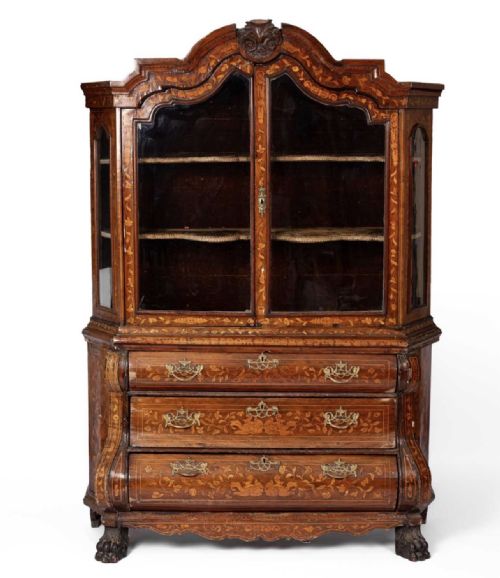
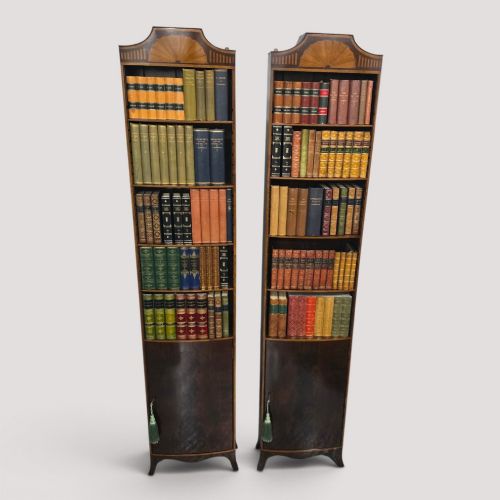
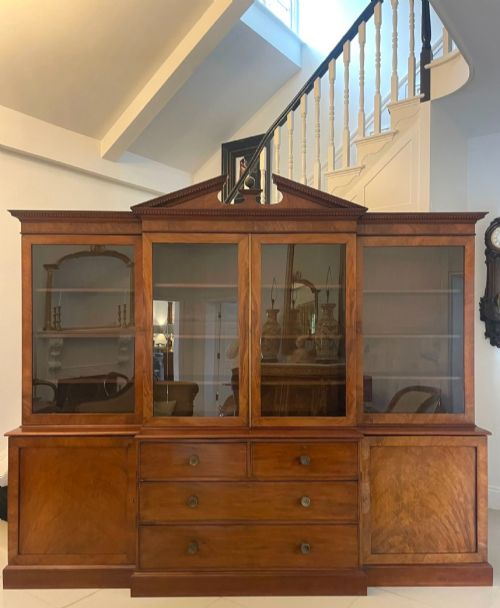
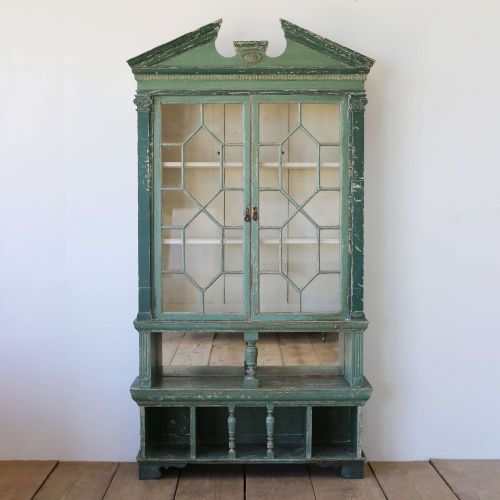
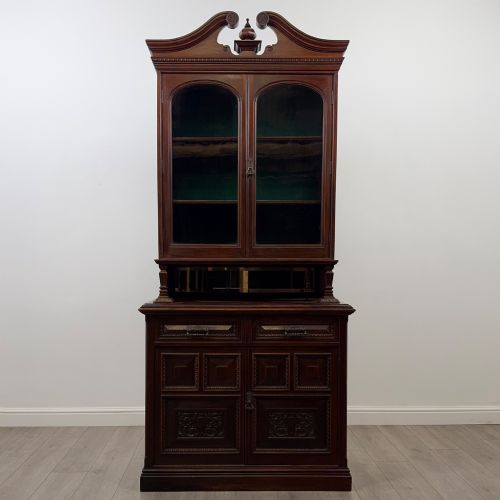
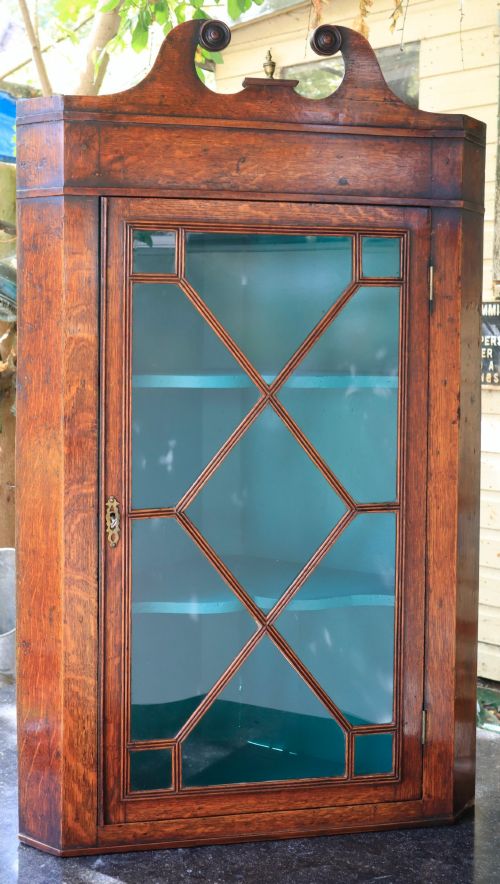
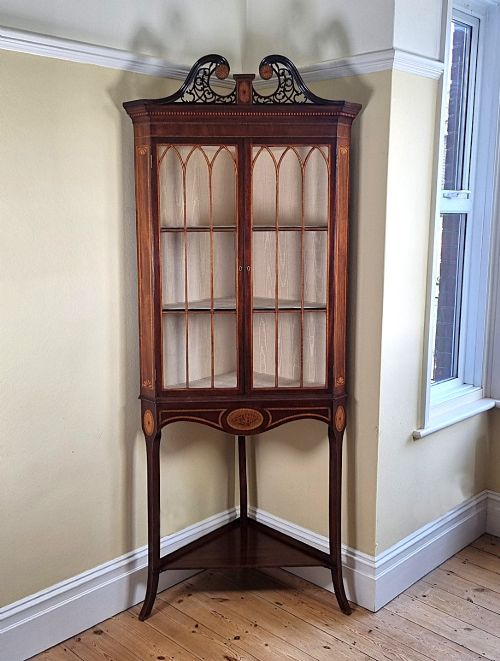
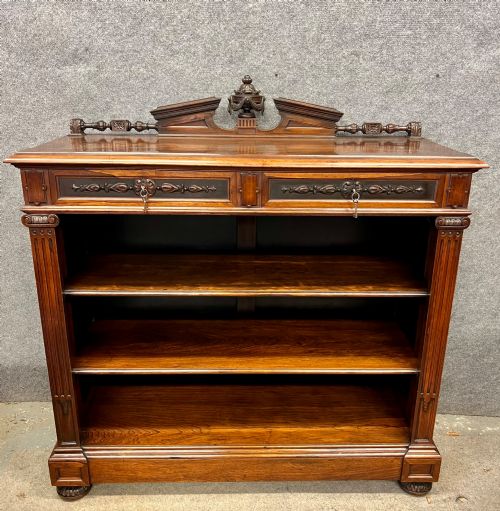
When searching for an antique pediment display cabinet, a buyer encounters formal storage pieces designed to protect and exhibit books and precious objects. The selection spans grand breakfront bookcases, standing and wall-hanging corner cupboards, and dedicated display furniture.
Most pieces seen here belong to the Georgian and Victorian eras, alongside Edwardian revivals. Formats range from large multi-door breakfronts standing on the floor down to compact corner units suited for smaller spaces.
Makers drew on established classical vocabularies, producing everything from robust oak country cupboards to refined satinwood and mahogany library pieces with glazed panels.
Markers of Quality
Distinctions in quality rest upon the crispness of architectural carving on the pediment and the precision of the joinery in the glazed doors. Finer examples display balanced proportions across large breakfront bodies and crisp execution of inlaid details.
Materials also separate standard production from superior work, particularly the depth of grain in selected mahogany or the complexity of marquetry patterns. Original surface finishes and intact painted decoration elevate the status of a piece considerably.
Antique Pediment Display Cabinet Retail Price Guide 2026
Typical asking prices for pediment display cabinet among the pieces listed under this phrase on Sellingantiques today, from the lower quarter to the upper quarter. They describe what is for sale here now, not the wider market.
Current listings demonstrate a strong presence of Georgian and Victorian items, alongside Edwardian interpretations executed primarily in mahogany, satinwood, and oak.
Edwards & Roberts·Thomas Chippendale
The Antique Pediment Display Cabinet Glossary
- Pediment
- The triangular or broken-arch architectural crowning feature above the main body of a cabinet. It provides the defining classical silhouette characteristic of these larger storage pieces.
- Astragal
- A narrow moulding used to hold glass panes within a door frame. In these cabinets, intersecting astragal bars create elegant geometric patterns across the display windows.
- Breakfront
- A large cabinet design where the central section projects forward from the flanking wings. This configuration adds architectural depth and presence to library bookcases.
- Marquetry
- Decorative veneer work arranged in pictorial or geometric patterns using various coloured woods. It appears frequently on Edwardian and Georgian cabinet doors.
- Bijouterie
- A shallow display cabinet specifically designed for small ornaments, medals, or jewellery. These pieces often feature glass tops and mirrored interiors.
Antique Pediment Display Cabinet: Frequently Asked Questions
What is an antique pediment display cabinet?
These pieces are timber storage cabinets featuring a decorative architectural crowning pediment above glass-fronted doors. They were built to house libraries and display collections.
Cabinets range from towering multi-door breakfront bookcases down to corner cupboards designed to utilise awkward angles in period rooms.
How do I identify a Georgian cabinet?
Georgian pieces date from the eighteenth and early nineteenth centuries, displaying solid proportions and traditional timber construction. Look for hand-cut dovetails and classical pediment details.
Many incorporate astragal glazed doors and fine mahogany surfaces without the lighter decorative inlay typical of later Edwardian revivals.
Where should I place a corner cabinet?
Standing and wall-hanging corner cabinets fit neatly into unused room angles, making them practical for smaller spaces. They elevate corners by adding vertical height and display capacity.
Ensure the wall structure can support hanging models, while standing units benefit from placement away from direct heat sources.