



Antique Pedestal Parlour Table
An antique pedestal parlour table brings a strong centrepiece to a room, offering rich timber surfaces and sturdy columnar supports.
Antique Pedestal Parlour Table
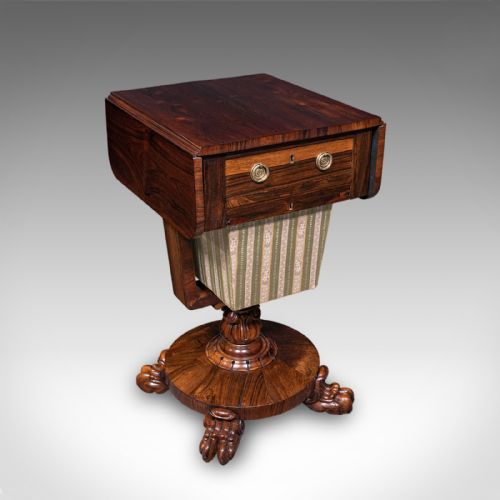
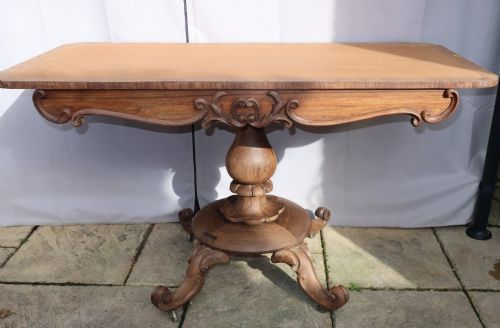
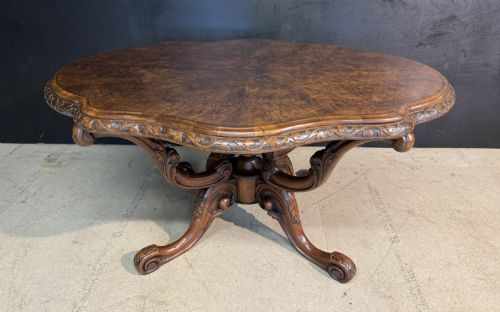
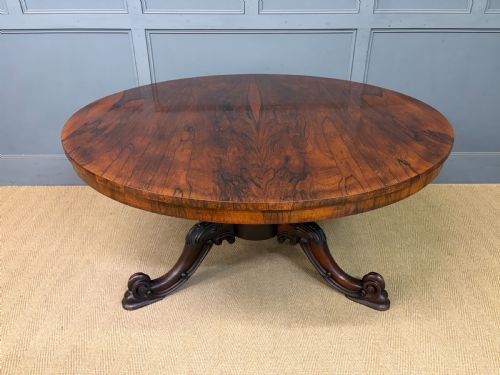
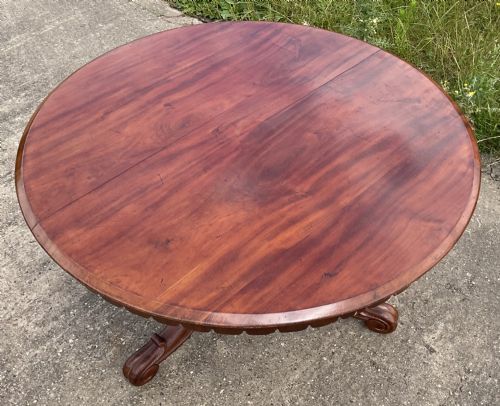
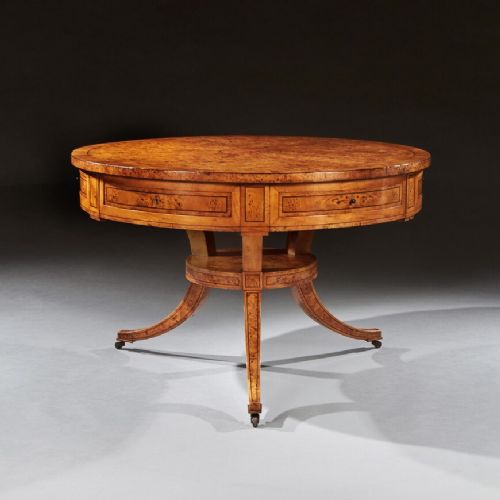
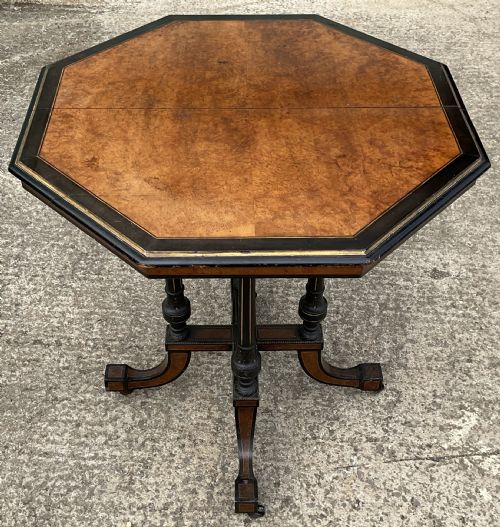
When you search for an antique pedestal parlour table, you encounter a variety of nineteenth-century forms designed for sitting rooms, drawing rooms and libraries. These pieces commonly appear as circular, oval or octagonal centre tables, often supported by a central pillar above a robust platform or carved foot. The selection ranges from modest occasional tables to grand loo tables and tilt-top designs.
Victorian examples dominate the selection, built largely from burr walnut, mahogany and rosewood. You also find earlier Georgian and Regency specimens alongside Edwardian and French iterations. Many incorporate specific functions such as card playing, sewing or library work, reflecting the domestic habits of their original owners.
How they were made
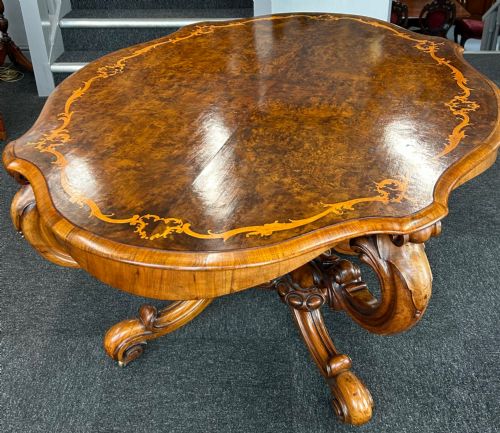
Cabinet makers constructed these tables using solid timber frames faced with figured veneers such as burr walnut, rosewood and coromandel. These choice veneers provide dramatic grain patterns across the table tops, whilst secondary timbers give internal stability. Central pedestals often combine turned wooden columns with heavy, carved supports.
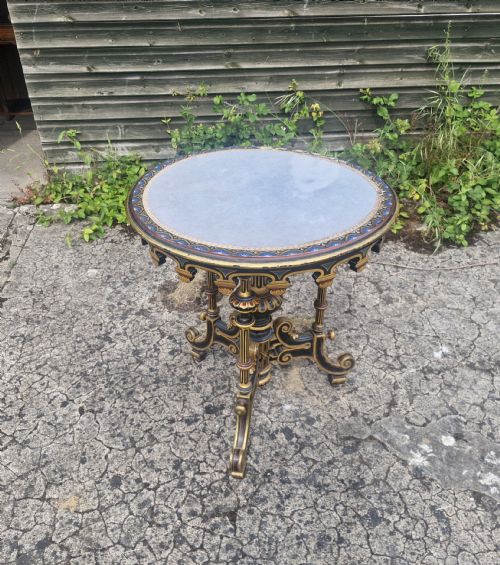
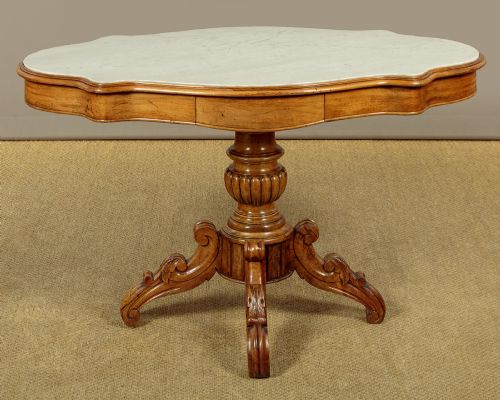
Decoration relies on precision woodwork rather than applied metal, featuring boxwood inlay, marquetry patterns and ebonised highlights. Certain pieces utilise specialised stone or marble insets on the top surface. Tilt-top mechanisms and drop leaves demand precise joinery to ensure stability when the table is in use.
What varies in quality
The choice of timber veneer dictates the visual impact of the top, with dense burr walnut and figured rosewood commanding greater attention than plain mahogany or standard wood. Marquetry and boxwood inlay executed with sharp detail separate standard production from finer cabinet work. The rigidity of the central pedestal and its junction with the base determine the physical stability of the piece.
Proportion and scale play a crucial role in how well a table sits within a modern room. A well-balanced base supporting an evenly shaped circular or oval top displays the maker's confidence in design. Finer examples maintain crisp carving on the column and feet without softening of the profiles.
The Antique Pedestal Parlour Table Glossary
- Centre table
- A freestanding table designed to be viewed from all sides rather than pushed against a wall. These form the focal point of a Victorian parlour.
- Loo table
- A large Victorian tilt-top table originally used for the popular card game of loo. The top pivots vertically to save space when not in use.
- Burr walnut
- A prized timber taken from the warted growths of the walnut tree. It yields highly figured, swirling grain patterns used on tabletops.
- Marquetry
- Decorative veneer work arranged in pictorial or geometric patterns. Craftsmen piece together different tinted woods to create surface imagery.
- Drum table
- A circular library table with a deep frieze containing drawers, resembling the shape of a drum. It sits upon a central pedestal base.
Antique Pedestal Parlour Table: Frequently Asked Questions
How do I date a pedestal table?
Dating relies on combining the timber species, decorative motifs and structural form. Victorian examples frequently utilise burr walnut and elaborate marquetry, whereas Regency and Georgian pieces often feature rosewood or mahogany with cleaner classical lines.
Hardware, joinery methods and the style of the central column provide further clues. Comparing these elements with documented pieces helps narrow down the decade of manufacture.
Can I use a tilt top table daily?
Tilt-top tables offer practical flexibility for modern living spaces. The mechanism allows the top to lock flat for use or tilt vertically for storage against a wall.
Regular use requires care with the locking catch and hinge mechanism. Ensuring the top remains balanced prevents undue strain on the central pedestal joint.
Are these tables solid wood?
Most high-quality nineteenth-century tables combine a stable structural carcass with decorative timber veneers. Woods like mahogany or oak form the internal framing, whilst burr walnut or rosewood veneers provide the decorative surface.
Solid timbers appear more commonly in legs, columns and edge mouldings. This composite method prevents warping across wide table tops while displaying striking grain patterns.