



Antique Pearl Wristlet
An antique pearl wristlet is a delicate wrist ornament that brings quiet historic charm to the hand.
Antique Pearl Wristlet
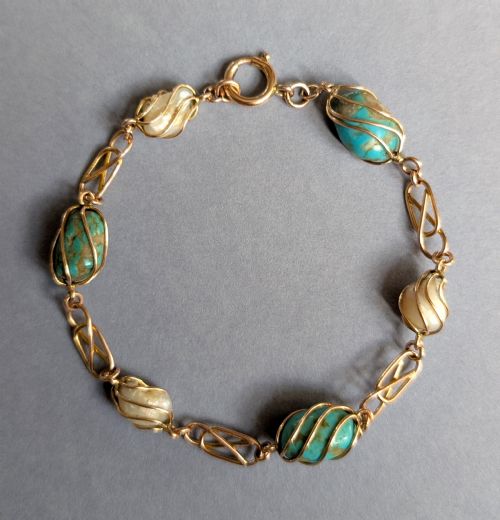
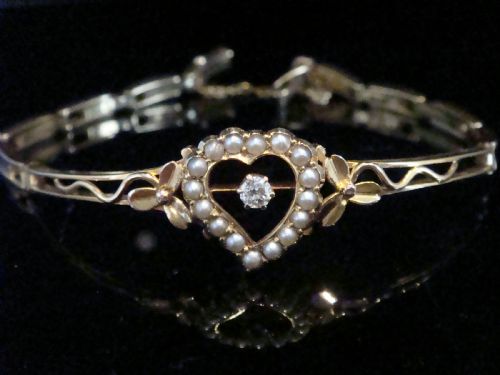
The version you are most likely to meet on this page is a gold or silver band incorporating pearls alongside contrasting gemstones such as peridot or turquoise. Formats vary from delicate chains to flexible snake designs and rigid bangles.
Originating across the nineteenth and early twentieth centuries, these bracelets capture the sentimental and decorative tastes of past eras. Each piece reflects the specific design vocabulary of its decade, from Victorian symbolic motifs to clean Art Deco lines.
How they were made
Goldsmiths and silversmiths constructed these wristlets using solid metals including sterling silver and various carats of gold such as nine, fifteen, and eighteen carat yellow and rose gold. Metalwork techniques involved casting, wire-forming, and hinged bangle construction to support the delicate settings.
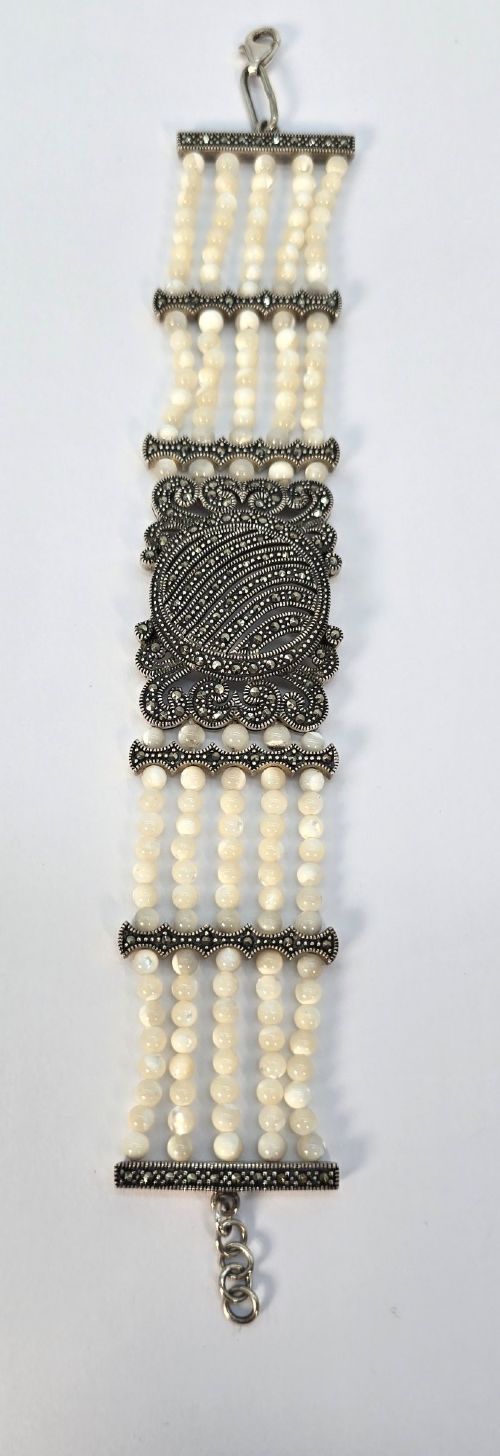
Gemstones and pearls were meticulously mounted using bezel or prong settings alongside pearl stringing or seed pearl clustering. Mother of pearl was also utilised in silver Art Deco pieces, shaped into smooth inlays or plaques.
Antique Pearl Wristlet Retail Price Guide 2026
Typical asking prices for pearl wristlet among the pieces listed under this phrase on Sellingantiques today, from the lower quarter to the upper quarter. They describe what is for sale here now, not the wider market.
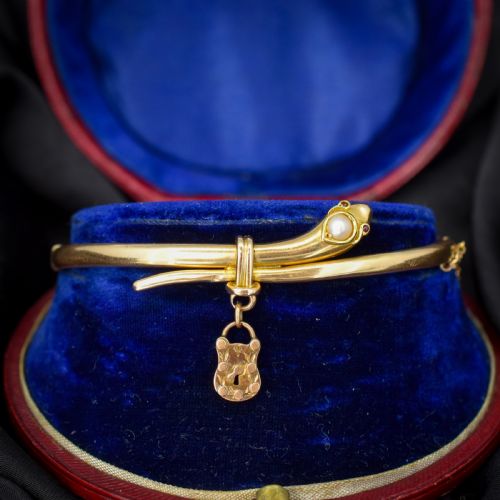
Several bracelets adopt the form of a serpent, curling around the wrist with pearls embedded as decorative scales.
What varies in quality
The standard of materials dictates much of the distinction in these bracelets, separating pieces set with natural pearls and fine diamonds from those utilising smaller seed pearls and simpler stones like turquoise. The weight and carat of the gold mounting also establish the baseline quality of the piece.
Execution and design complexity elevate certain wristlets above others, particularly where intricate motifs like lovers knots or serpent forms are shaped with precision. The preservation of the original box and the structural integrity of the clasp or hinge further mark superior examples.
The Antique Pearl Wristlet Glossary
- Seed pearl
- Very small natural pearls, often pierced and threaded or clustered together to form delicate floral or geometric patterns in antique jewellery.
- Snake bracelet
- A flexible or rigid bracelet designed to wrap around the wrist in the form of a serpent, frequently associated with Victorian symbolism.
- Turquoise
- An opaque, blue-to-green mineral commonly used as an accent stone in nineteenth and early twentieth century gold and silver settings.
- Lovers knot
- A decorative knot motif symbolising affection and fidelity, frequently rendered in gold alongside pearls or gemstones in Victorian pieces.
- Art Deco
- A design style emerging around nineteen twenty characterised by sleek geometric lines and contrasting materials like silver and mother of pearl.
Antique Pearl Wristlet: Frequently Asked Questions
How do I care for antique pearl jewellery?
Pearls are organic gems that require gentle handling, away from harsh chemicals, perfumes, and ultrasonic cleaning methods. Wipe them softly with a damp cloth after wearing.
Store your bracelet separately in a lined box to prevent scratching from harder diamonds or gold mounts.
Are these bracelets suitable for daily wear?
While many of these historic pieces were robustly made, their age means they benefit from occasional rather than constant wear. Delicate seed pearl settings require particular mindfulness during active tasks.
Checking the security of the clasp before each wear helps prevent accidental loss of the bracelet.
How can I tell a Victorian bracelet from an Edwardian one?
Victorian pieces often feature heavier gold work, symbolic motifs like snakes or lovers knots, and richer rose gold tones. They lean towards romantic or sentimental designs.
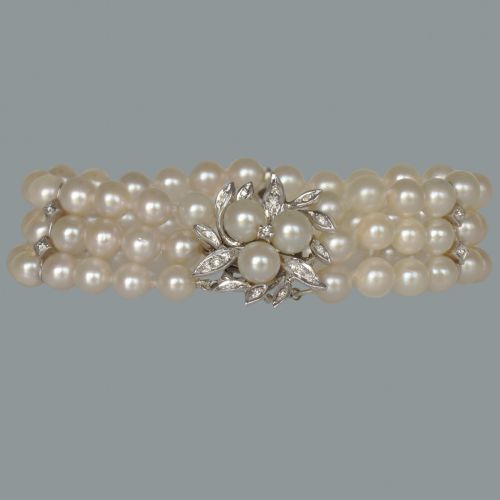
Edwardian pieces typically present a lighter, more delicate aesthetic, frequently pairing pearls with diamonds in yellow gold or platinum-topped settings.
What metal carats are common in these bracelets?
Gold pieces from the nineteenth and early twentieth centuries frequently utilise nine carat or fifteen carat gold, alongside eighteen carat examples. Rose gold is particularly prevalent in Victorian and Edwardian items.
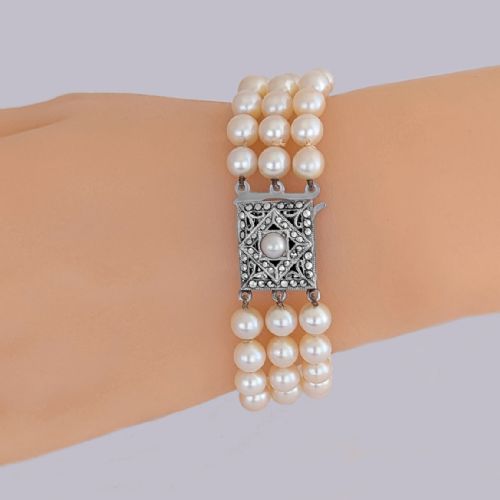
Sterling silver is also found, especially in later Art Deco designs paired with mother of pearl and marcasite.