



Antique Pearl Pendant Earrings
These antique pearl pendant earrings combine lustrous pearls with gold, silver, and diamonds across Victorian, Edwardian, and Art Deco designs.
Antique Pearl Pendant Earrings
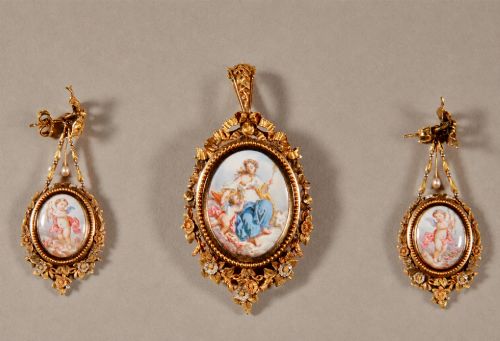
Antique pearl pendant earrings encompass drop earrings, teardrop earrings, and matching parure sets featuring pearls suspended from hook or post fittings. When searching for antique pearl pendant earrings, buyers encounter pieces spanning the Victorian, Edwardian, and Art Deco periods, alongside mid-century interpretations.
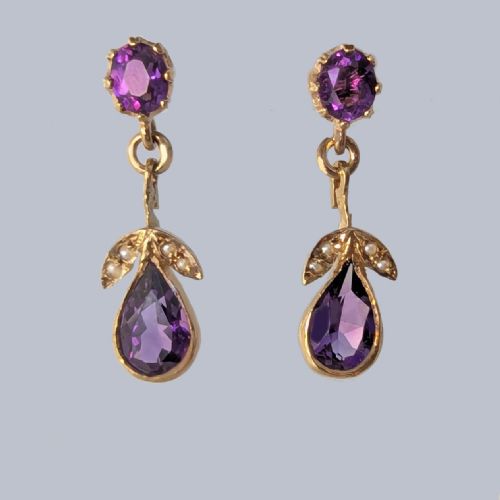
The selections on this page showcase varied forms, from delicate seed pearl clusters and infinity motifs to substantial gemstone-accented drops. These earrings bring together pearls with materials such as gold, silver, diamonds, amethysts, and turquoises in distinct historical styles.
How they were made
Craftsmen utilised gold, ranging from nine-carat and fifteen-carat to eighteen-carat, alongside silver and platinum to form the structural mounts and settings for these earrings. Foliate mounts, heart motifs, and intricate drop settings demonstrate period-specific metalwork techniques.
Pearls and seed pearls are paired with diamonds, amethysts, and turquoises, secured within detailed precious metal designs. Setting methods include silver-topped gold and fine bezel or prong arrangements that highlight the central gemstones and hanging pearls.
Antique Pearl Pendant Earrings Retail Price Guide 2026
Typical asking prices for pearl pendant earrings among the pieces listed under this phrase on Sellingantiques today, from the lower quarter to the upper quarter. They describe what is for sale here now, not the wider market.
Some Victorian earrings double as grape clusters, proving that historical jewellers took serious inspiration from the local vineyard.
What varies in quality
Quality in these pendant earrings rests on the harmony of the design and the integrity of the materials, from matched natural pearls to finely cut diamonds and coloured gemstones. Superior examples exhibit refined metalwork, such as detailed foliate mounts and secure, well-balanced drops.
The distinction between standard production and exceptional pieces lies in the precision of the stone setting and the overall preservation of the gold, silver, or platinum components. Cohesion within larger sets, such as a matching earrings and pendant parure, further elevates a piece.
The Antique Pearl Pendant Earrings Glossary
- Seed pearl
- Very small, naturally formed pearls often used in clustered configurations or intricate Victorian jewellery designs.
- Parure
- A matching set of jewellery, typically comprising earrings, a pendant or necklace, and sometimes a brooch or ring, designed to be worn together.
- Drop earrings
- Earrings that hang below the earlobe, featuring a dangling element that moves independently from the main fastening.
- Rose cut
- An antique diamond cut featuring a flat base and a domed crown with triangular facets arranged in a symmetrical pattern.
Antique Pearl Pendant Earrings: Frequently Asked Questions
How do I care for antique pearl earrings?
Store antique pearl pendant earrings separately in a soft pouch to prevent the pearls and softer gemstones from scratching against other items. Avoid exposing them to harsh chemicals, perfumes, or ultrasonic cleaners which can damage the organic surface of the pearls.
Wipe the pearls gently with a clean, damp cloth after wearing to remove natural oils and cosmetics. Regular inspection of the settings by a professional jeweller ensures the drops and mounts remain secure.
Can I wear antique pearl pendant earrings daily?
While these earrings are durable enough for occasional wear, pearls require a gentle approach due to their organic composition. Limiting daily exposure to moisture and friction helps preserve their lustre over time.
For regular rotation, reserve them for special occasions or evening wear where the risk of impact is reduced. Proper handling ensures the antique gold or silver mounts and delicate drops remain intact for generations.
How can I tell if the pearls are natural?
Distinguishing pearl origins often requires microscopic examination to identify growth patterns and nacre structure within the drill holes. Historical context and accompanying hallmarks provide initial clues regarding the period of manufacture.
Expert appraisal remains the most reliable method to confirm whether pearls are natural or cultured. Most pieces from the nineteenth and early twentieth centuries reflect the standards and materials available during their specific era.