



Antique Parisian Artwork
Antique Parisian artwork brings the capital's streets, rivers and salons onto your walls through oil paintings, watercolours and prints.
Antique Parisian Artwork
When you search for antique Parisian artwork, you are looking at visual records of the French capital spanning the mid-nineteenth century through the mid-twentieth century. The pieces you are most likely to meet on this page include oil paintings on canvas or board, watercolours, etchings and prints capturing Parisian scenes.
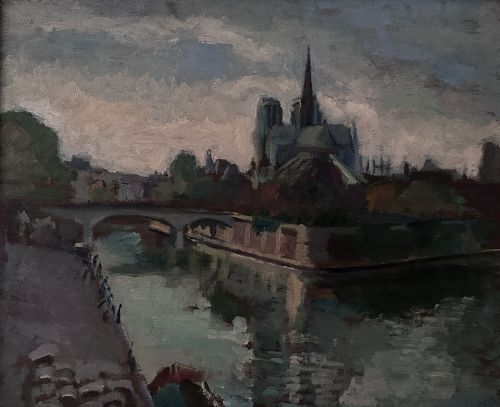
The subjects range from tranquil views of the Seine, including the Île Saint Louis and L'Île aux Cygnes, to bustling city streets, Montmartre in winter, and landmarks such as Notre Dame and the Arc de Triomphe. Artists worked within movements like Post-Impressionism, Belle Epoque, Impressionism, French Realism and Neoclassical styles.
Dating across the evidence runs from the mid-nineteenth century Salon works up to mid-twentieth century oil on board depictions of the city. These works capture the changing moods of Paris across different decades through distinct artistic lenses.
How they were made
The works rely upon traditional mediums including oil paint applied to canvas, board or paper, alongside watercolour, ink, pastel and printmaking techniques like etching. Many oil paintings and watercolours are housed in gilded wood frames that complement the period aesthetic of the artwork.
Artists utilised canvas stretched over wooden supports or firm board substrates for their oil compositions, while works on paper include delicate watercolours, pastels and signed prints. The combination of oil paint, canvas and gilded wood constitutes the primary physical makeup of the framed paintings.
Antique Parisian Artwork Retail Price Guide 2026
Typical asking prices for parisian artwork among the pieces listed under this phrase on Sellingantiques today, from the lower quarter to the upper quarter. They describe what is for sale here now, not the wider market.
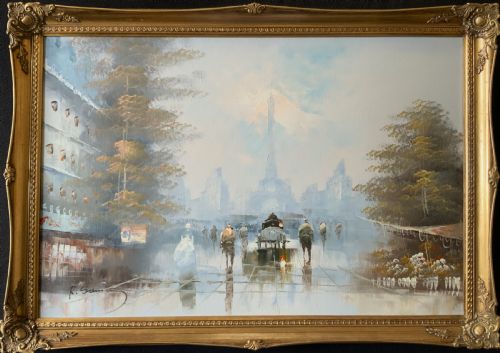
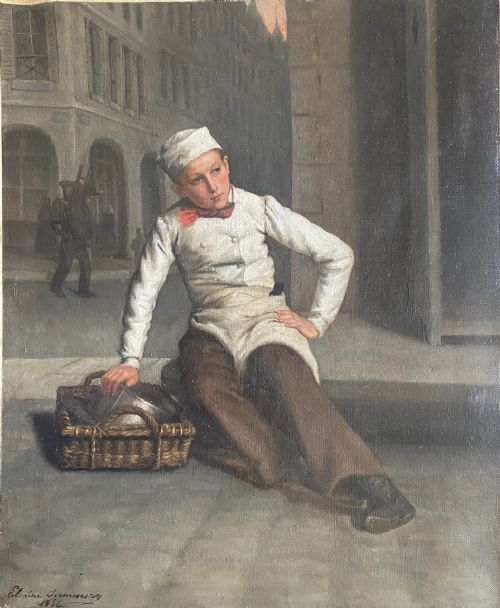
An apprentice cook rests in Paris circa 1850 while another canvas captures a bustling city street on a cold day.
What varies in quality
The strength of the composition and the fidelity of the Parisian atmosphere separate works across the range. A piece by a known hand or Salon-exhibiting artist demonstrates superior handling of light, particularly in capturing the specific quality of Parisian light during the Belle Epoque or post-impressionist periods.
Material preservation also marks the distinction between examples, from the integrity of the oil on canvas to the preservation of paper, ink and pastel. The framing, often in period gilded wood, contributes to the overall presentation and integrity of the artwork.
Albert Ludovici Jnr·Eduard Leon Cortes·Albert Guillaume·Louis Icart·Pierre Peltier
The Antique Parisian Artwork Glossary
- Oil on Canvas
- Pigments bound in a drying oil applied to a woven fabric stretched across a wooden frame. This medium allows for rich texture and depth, frequently seen in nineteenth and twentieth century Parisian scenes.
- Post-Impressionism
- An art movement that extended Impressionism while rejecting its limitations, focusing on more symbolic content and heavier brushwork. Works in this style often depict Parisian streets and the Seine with expressive colour.
- Etching
- A printmaking process where lines are incised into a metal plate with acid before ink is applied and transferred to paper. Signed etchings capture fine linear detail in urban subjects.
- Salon
- An official art exhibition held in Paris, which served as the greatest annual art event in the Western world during the nineteenth century. Exhibiting at the Salon marked a significant milestone for artists of the period.
- Belle Epoque
- A period of French history characterised by optimism, peace, economic prosperity and cultural innovation. Artwork from this era often portrays the vibrant social life and architecture of Paris.
Antique Parisian Artwork: Frequently Asked Questions
What periods do these Parisian artworks cover?
The listings span from the mid-nineteenth century through the 1950s, capturing shifts in technique and subject matter across several decades.
You will find pieces reflecting mid-nineteenth century Salon realism alongside early twentieth century Impressionism, Post-Impressionism and Belle Epoque styles.
How should I frame and hang an oil painting?
Many works arrive in their period gilded wood frames, which complement the traditional presentation of nineteenth and early twentieth century art.
Keep oil paintings away from direct sunlight and excessive humidity to protect the canvas, paint layers and original wooden frames.
What is the difference between an etching and an oil painting?
An etching is a print created from an inked metal plate on paper, often pencil signed by the artist, offering fine linear detail.
An oil painting uses pigmented oil on canvas or board, providing textured brushwork and rich colour depth unique to each individual piece.
Are these works signed by the artists?
Some pieces feature visible artist signatures or inscriptions, such as signed etchings and documented works by listed painters.
Attribution often relies on Salon exhibition history, stylistic markers of the French School, and period documentation accompanying the artwork.