

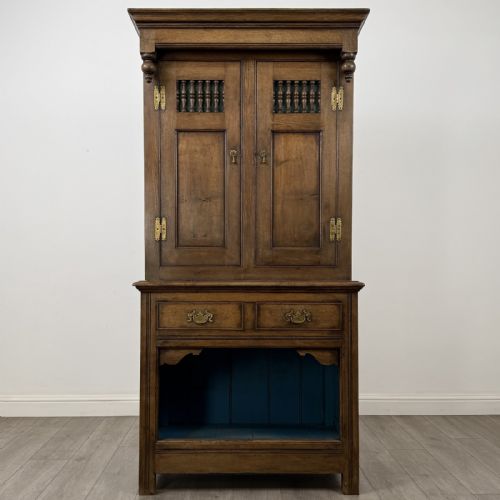
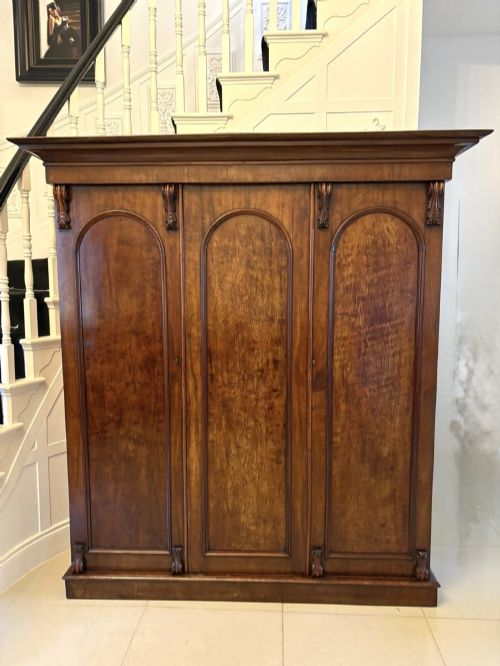
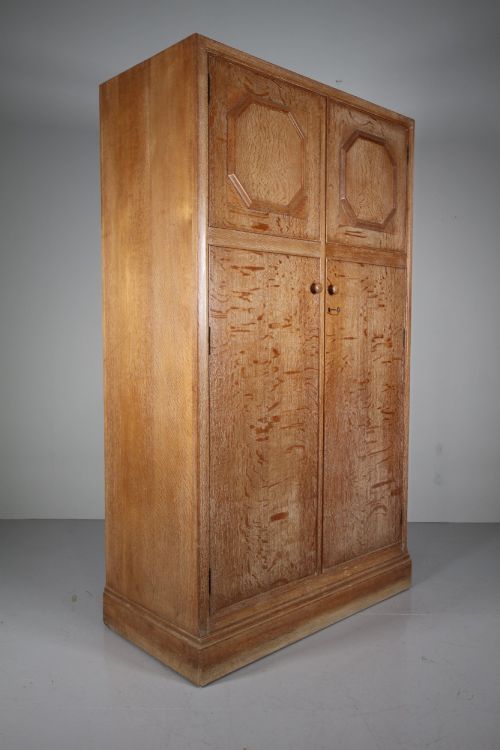
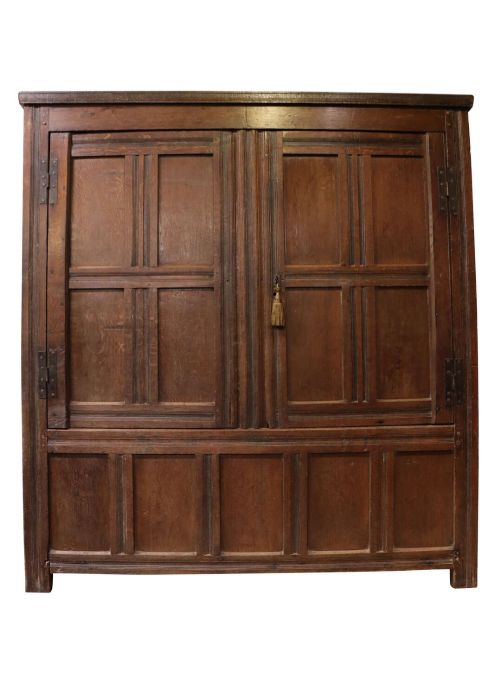
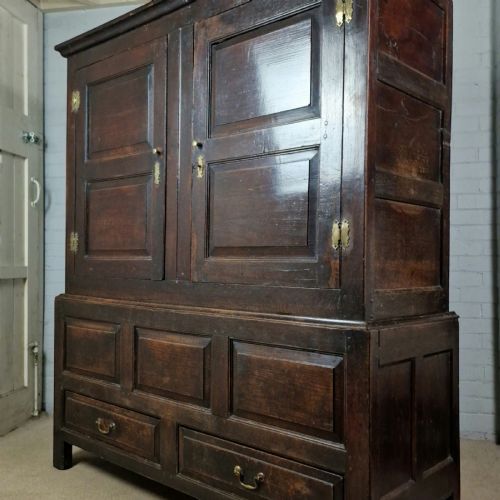

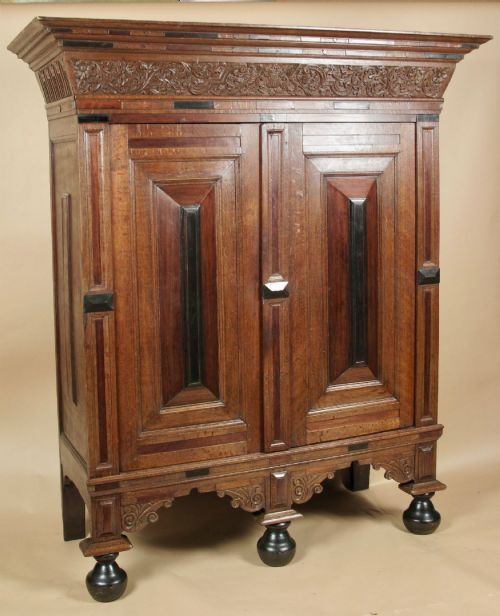
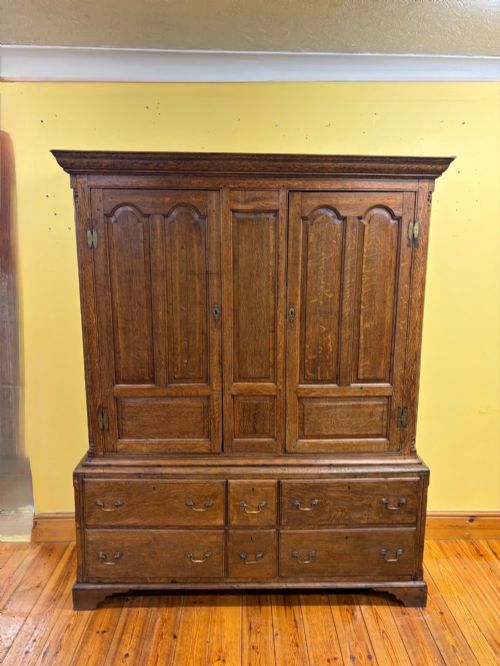
Antique Panelled Linen Press
An antique panelled linen press provides deep architectural storage, bringing sturdy timber construction and disciplined proportion to a bedroom or hall.
Antique Panelled Linen Press
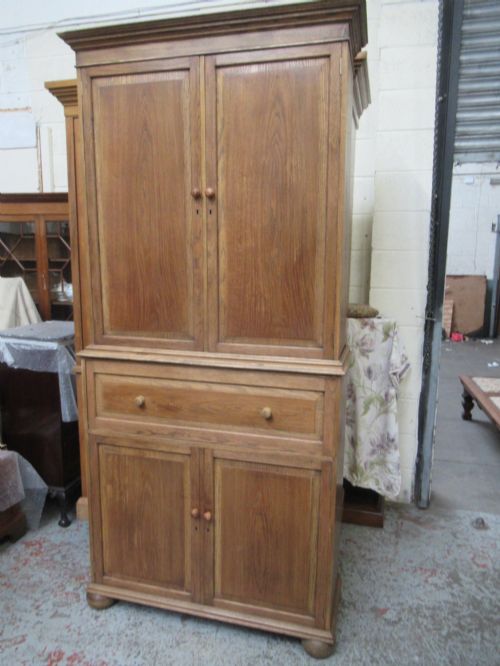
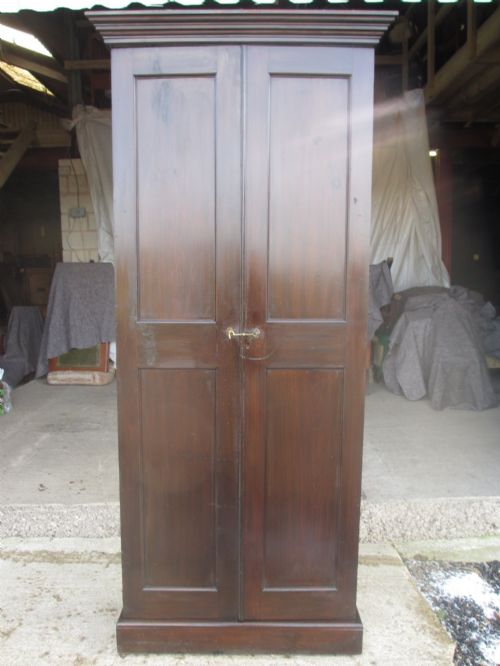
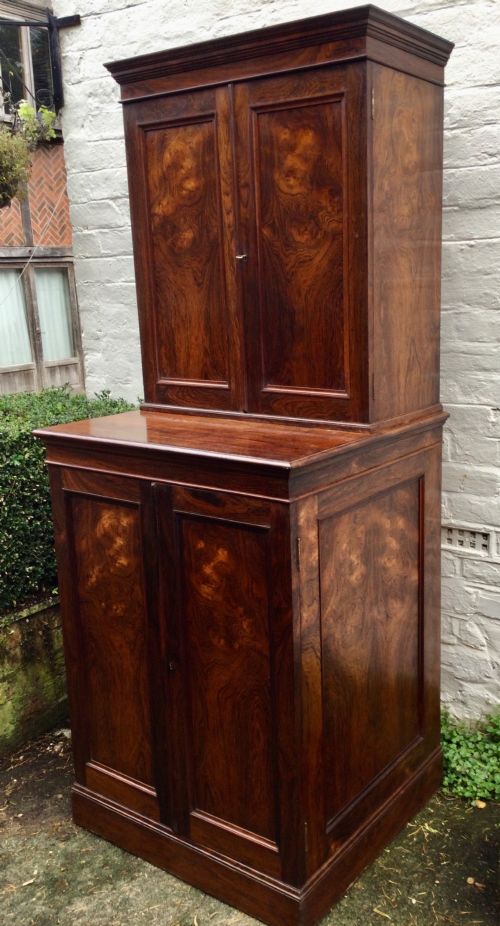
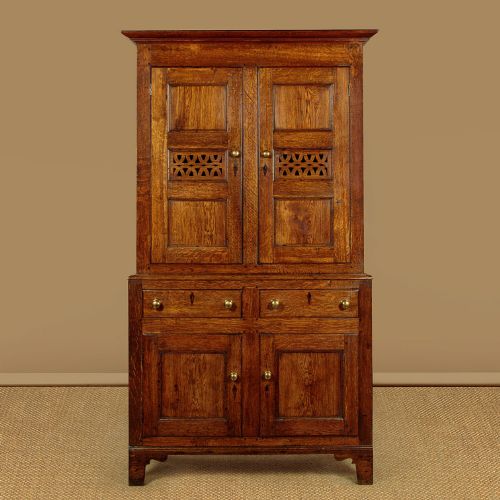
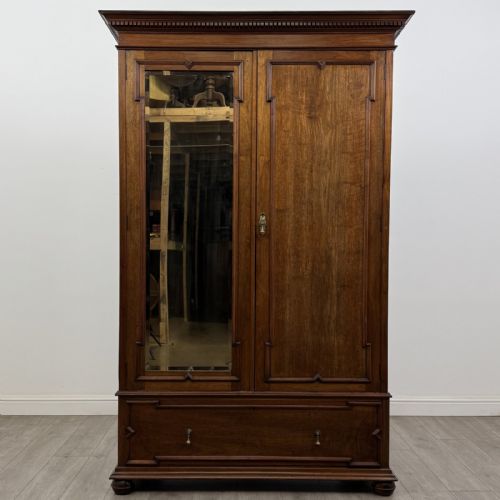
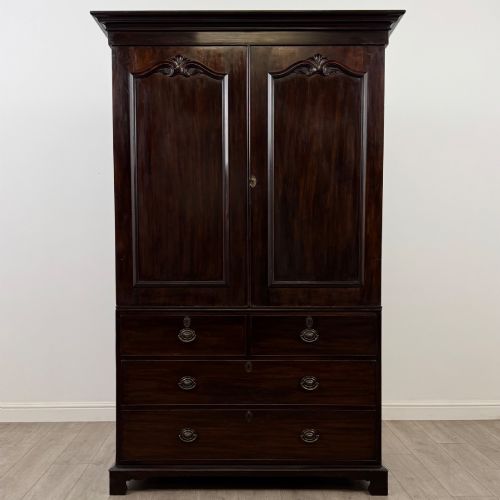
An antique panelled linen press combines a functional storage carcase with panelled timber construction, fulfilling the traditional role of sorting and housing household textiles. When exploring this group, buyers frequently encounter large wardrobe forms and dual-section cupboard arrangements designed for domestic utility.
The selections span distinct historical eras, with substantial oak and mahogany examples originating from the Georgian and eighteenth-century periods. Later nineteenth-century Victorian pieces and early twentieth-century Edwardian designs also appear, alongside regional country interpretations in pine and walnut.
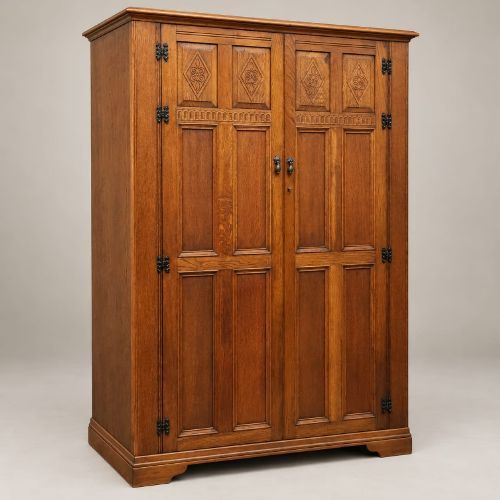
Makers utilised architectural forms ranging from dwarf cupboards to breakfront wardrobes and compactum units. These storage pieces often feature fielded panels, double doors, and fitted interior shelving or hanging space suited to contemporary homes.
What varies in quality
Proportion and timber selection dictate the standing of a piece, distinguishing utilitarian country furniture from formal urban cabinet work. Fine grain matching, careful crossbanding, and well-executed mouldings reveal the skill invested in the construction.
The integrity of original surfaces, brass hardware, and interior fittings determines how closely a piece retains its period character. Alterations to internal configurations or replacement panels shift a piece from original condition to a heavily restored state.
Antique Panelled Linen Press Retail Price Guide 2026
Typical asking prices for panelled linen press among the pieces listed under this phrase on Sellingantiques today, from the lower quarter to the upper quarter. They describe what is for sale here now, not the wider market.
Regional variations range from formal George III mahogany breakfront presses to Welsh and Dutch country oak cupboards.
The Antique Panelled Linen Press Glossary
- Linen press
- A tall cupboard traditionally used for storing pressed garments and household linen on sliding trays or shelves. This form evolved into dual-purpose wardrobe combinations.
- Fielded panel
- A wooden panel with bevelled or recessed edges set within a heavier frame. This construction technique accommodates natural timber movement while creating shadow lines on the door front.
- Crossbanding
- A narrow strip of veneer applied across the grain around the border of a drawer front or door. Cabinet makers employed this technique to create decorative framing effects on mahogany surfaces.
- Compactum
- A multi-compartment wardrobe designed to maximise storage efficiency within a single footprint. These units combine hanging space with linen trays and smaller drawers.
- Scumble
- A translucent glaze applied over a base coat to simulate wood grain or texture. Painters used this decorative technique on pine furniture to imitate more costly hardwoods.
Antique Panelled Linen Press: Frequently Asked Questions
What is an antique panelled linen press?
An antique panelled linen press is a substantial wooden storage cabinet designed with framed and panelled doors. It typically combines internal sliding trays or shelves with hanging space for garments.
These pieces served generations of households for storing heavy woven textiles, bedding, and clothing before fitted wardrobes became standard in domestic architecture.
How do I date a linen press?
Dating relies on observing timber choices, construction methods, and stylistic details across the carcase. Eighteenth-century pieces frequently feature solid oak or mahogany with hand-cut joinery and pegged frames.
Later Victorian and Edwardian examples introduce machine-sawn elements, different brass hardware styles, and softer pine carcases finished with paint or wax.
How were these cupboards used historically?
Households utilised these large cupboards in bedrooms, landings, and housekeeper's rooms for storing household linens flat. Storing fabrics horizontally prevented stretching and kept dust away from valuable textiles.
Over time, many interiors were adapted by removing internal trays to accommodate modern clothes hangers for full-length garments.
Where do these cupboards fit in a home?
These tall storage units suit bedrooms, dressing rooms, and wide hallways where their architectural presence grounds the space. Their disciplined timber proportions bring warmth and practical organisation to modern interiors.
Ensuring adequate clearance for opening large panelled doors is essential when placing them in smaller rooms.
Are painted finishes period-correct?
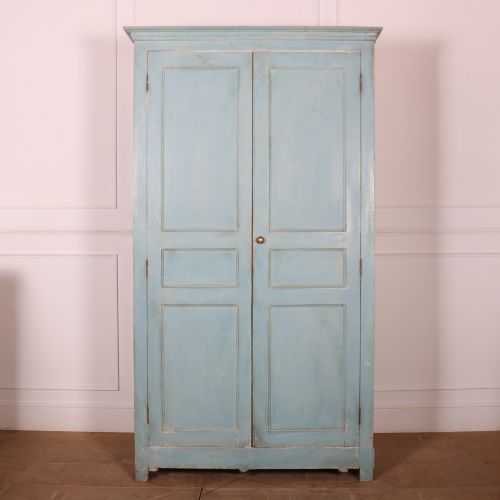
Original painted and scumbled finishes appear frequently on pine and regional country pieces from the nineteenth century. Many domestic cupboards were painted to match room decoration or protect the softwood timber.
Stripping paint became common later, but surviving original surfaces retain distinct historical character.