
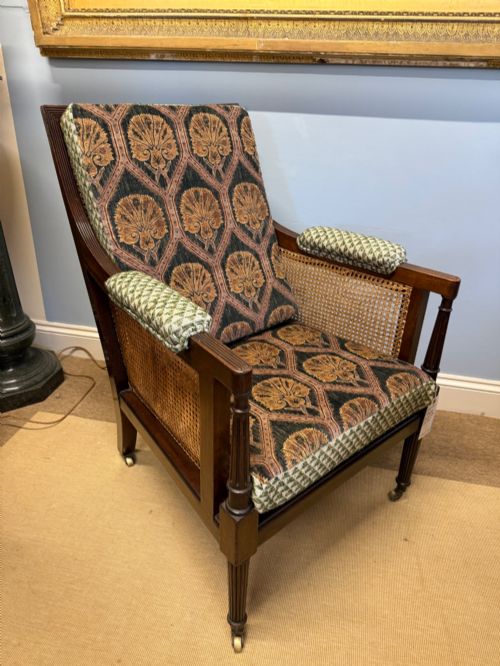
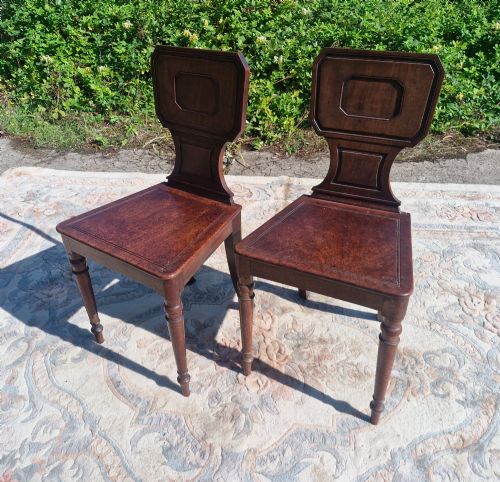
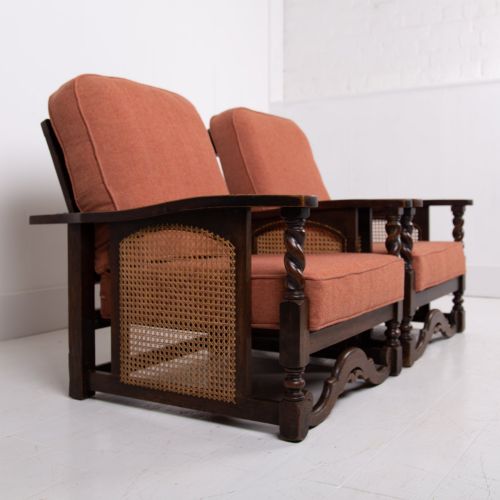
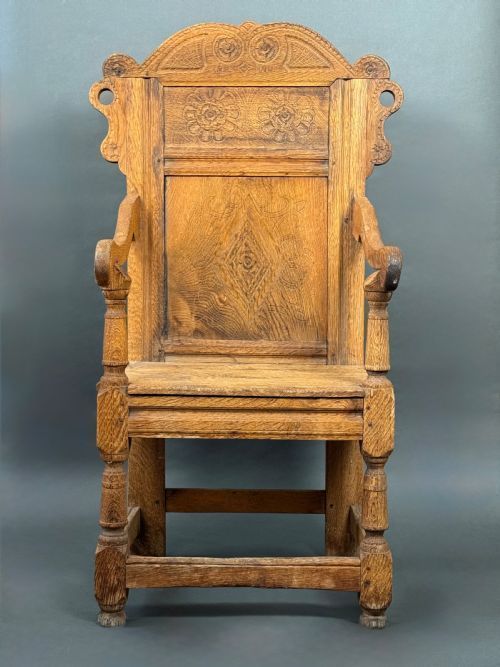
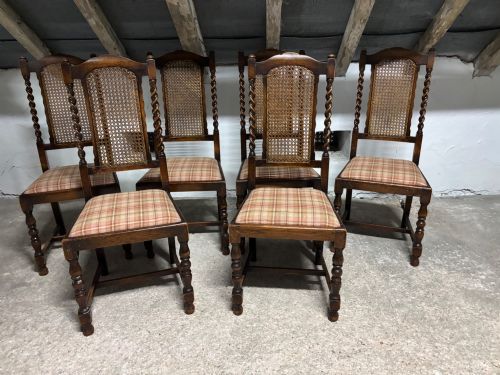
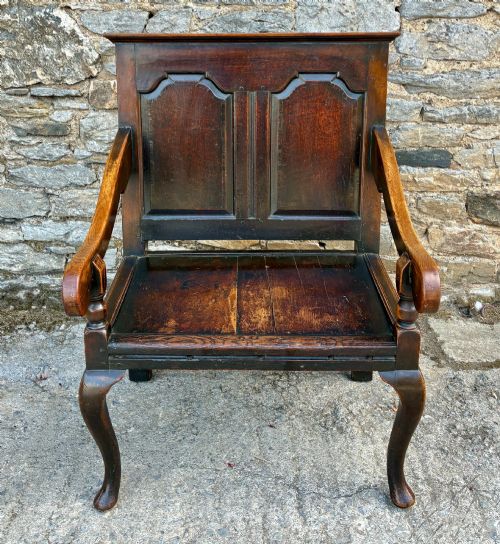
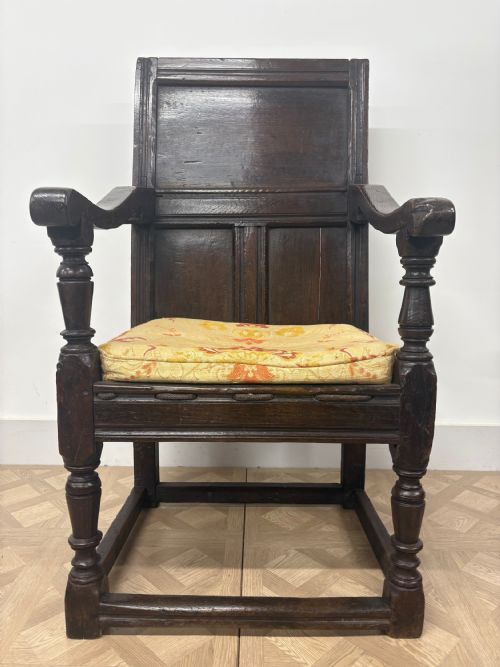
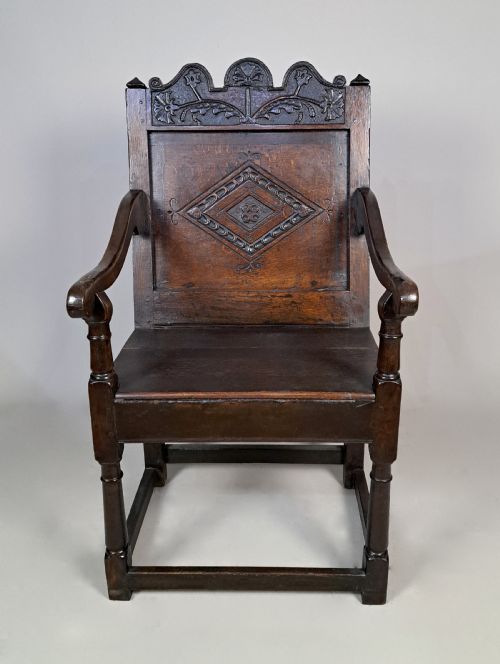
Antique Panelled Chair
When you search for an antique panelled chair, you enter a tradition of rigid joinery and solid timber designed to command a room.
Antique Panelled Chair
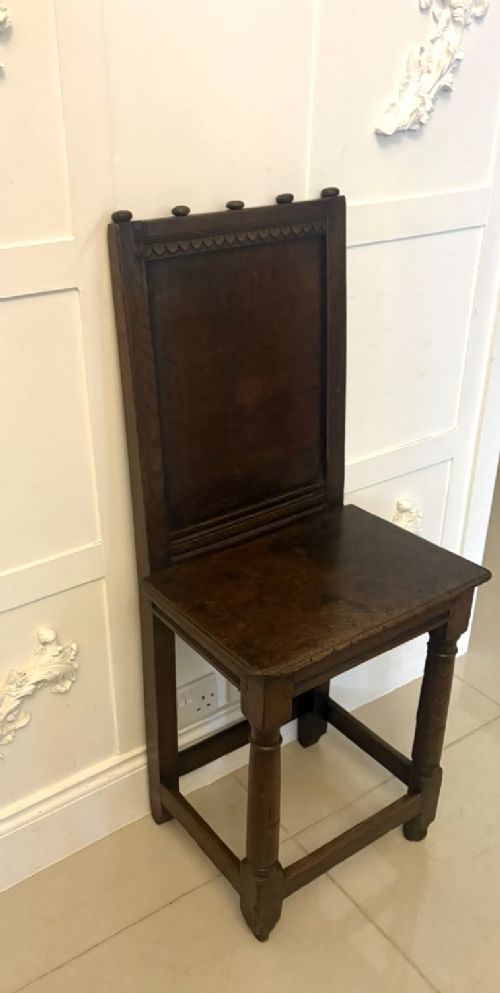
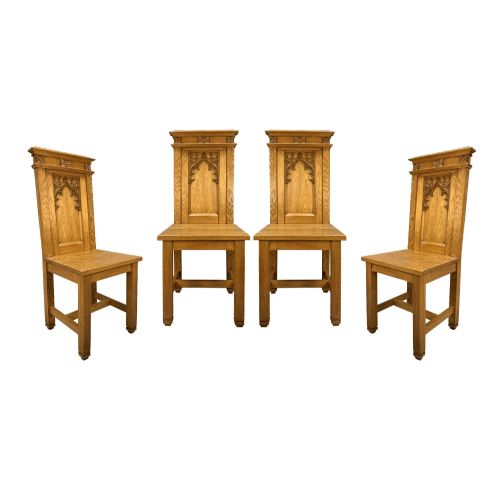
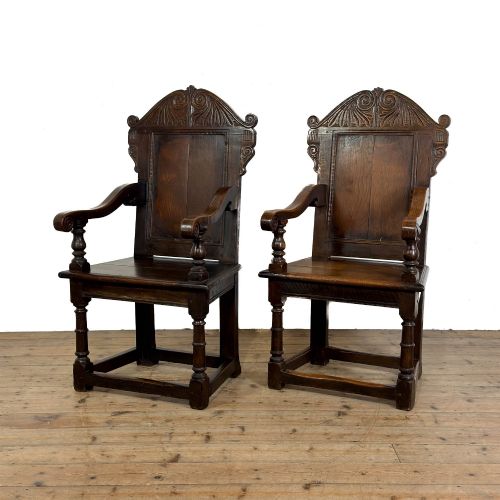
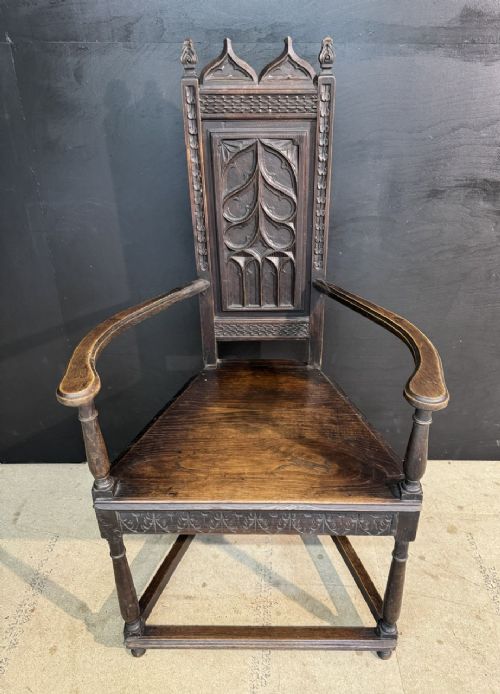
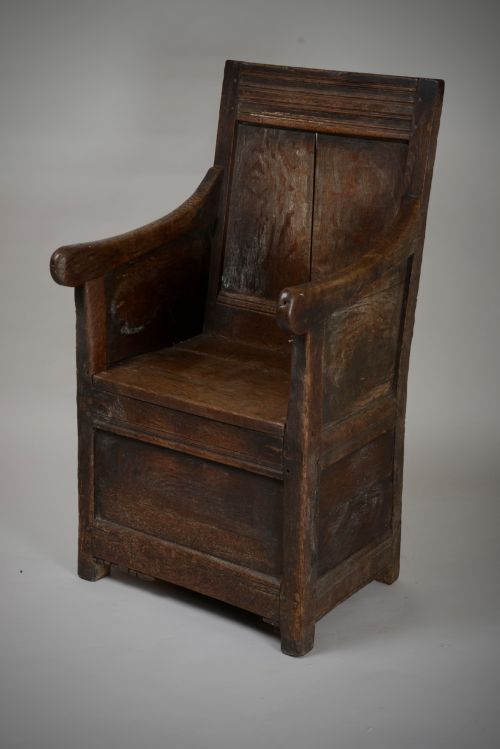
An antique panelled chair relies on framed construction where a solid wooden panel sits inset within a grooved stile and rail framework, providing sturdy support without upholstered padding. The forms on this page stretch from early wainscot armchairs of the seventeenth century to later revival pieces and regional country variations.
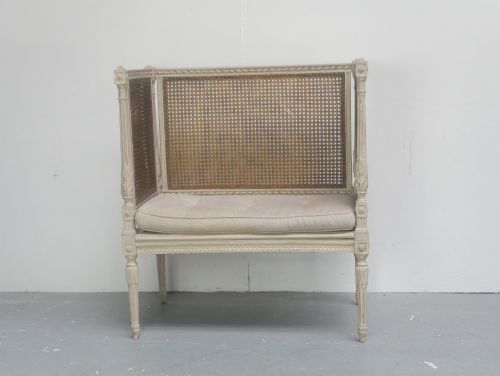
Makers shaped these items primarily for domestic halls, parlours and dining spaces, utilising native hardwoods to withstand heavy daily use. Alongside standard armchairs, the selection includes hall chairs, benches, settles and dining sets built around the same rigid architectural logic.
Materials and Construction
Carpenters constructed these seats using thick planks of oak supplemented occasionally by walnut or mahogany, joined together with mortise and tenon joints locked by wooden pegs. Panels were allowed to float within their frames, accommodating the natural expansion and contraction of timber through seasonal changes.
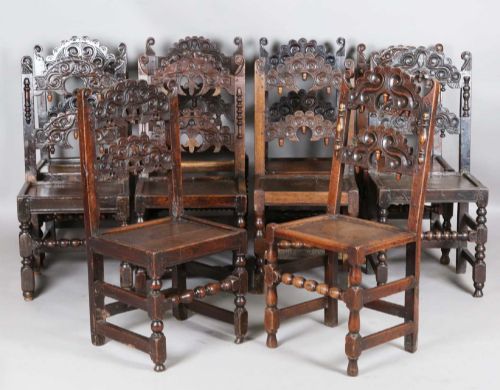
Surface decoration frequently involved hand-carved relief work, geometric patterns or inset panels, finished with natural waxes and oils rather than modern synthetic varnishes.
Early country makers occasionally incorporated hidden storage boxes beneath the seat, anticipating the modern urge to stash household clutter.
Distinctions in Craft and Condition
Quality rests in the crispness of the original timber carving, the tightness of the pegged joints, and the retention of an honest surface patina acquired through centuries of handling. Pieces that maintain their original structural timbers without extensive modern timber replacement command greater respect among collectors.
Proportion and regional character also dictate distinction, as provincial pieces from northern England, Wales or Scotland display idiosyncratic local joinery details that set them apart from standard workshop production.
The Antique Panelled Chair Glossary
- Wainscot
- A heavy wooden armchair constructed with panelled backrests and solid wooden seats, typical of the seventeenth century and earlier. These seats were costly status objects before lighter furniture became common.
- Stile
- The upright vertical member in a panelled frame. It forms the primary structural support alongside the horizontal rails.
- Rail
- A horizontal framing member fitted into the vertical stiles to hold a central wooden panel securely. Rails give rigidity to the backrest.
- Mortise and tenon
- A traditional joint where a projecting tongue fits snugly into a corresponding cavity and gets secured with a wooden peg. This method provides immense structural strength without metal hardware.
- Settle
- A high-backed wooden bench with solid panel arms and a storage box or enclosed base underneath the seat. Settles protected occupants from draughts in large, cold rooms.
Antique Panelled Chair: Frequently Asked Questions
What is an antique panelled chair?
An antique panelled chair is a rigid wooden seat featuring a flat or carved wooden panel inset into a framed backrest using mortise and tenon joinery. These pieces date predominantly from the seventeenth century onward.
Unlike upholstered modern seating, they rely entirely on solid timber construction, often utilising native oak with pegged joints designed to last for generations.
How do I care for antique oak furniture?
Care for these wooden seats involves keeping them away from direct heat sources and sudden humidity fluctuations, which can cause timber to split. Apply a microcrystalline wax occasionally to nourish the surface.
Avoid silicone-based polishes, as they build up over time and dull the natural patina developed through decades of use.
How can I tell a seventeenth-century chair from a later revival piece?
Distinguishing period pieces from nineteenth-century Jacobean revival examples requires examining the tool marks, timber shrinkage, and construction wear. Early items show hand- cleft and pit-sawn surfaces with irregular peg placements.
Revival versions from the Victorian era often display machine-sawn uniformity and tighter, more predictable symmetry in their decorative carving.
Where were panelled chairs originally placed in a home?
These seats originally held positions of authority at the head of a dining table or beside the hearth in the main hall of a house. Their solid panel backs served to block cold draughts.
Because timber was expensive and joinery required skilled labour, only the head of the household or honoured guests used them.