




Antique Pan Scales
These antique pan scales combine utilitarian precision with enduring domestic and commercial character.
Antique Pan Scales
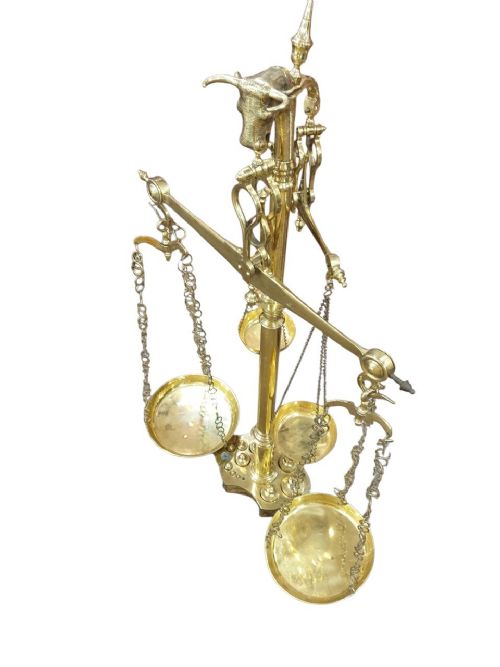
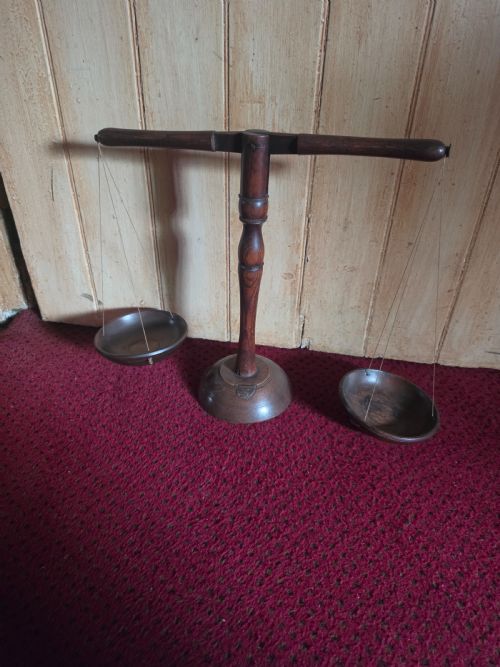
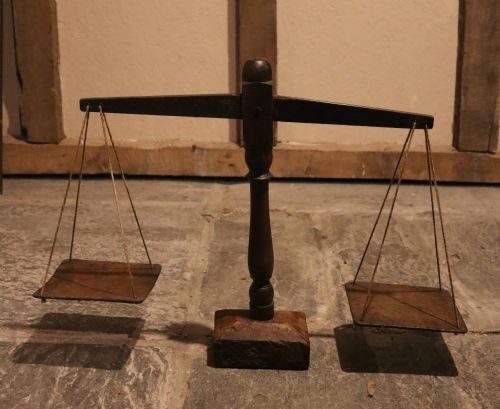
When you search for antique pan scales, you encounter domestic and commercial weighing devices designed for precise measurement across the nineteenth and early twentieth centuries. The selection spans utilitarian kitchen equipment, shopkeeper balances, and robust grocer iterations originating from British, French, and wider European workshops.
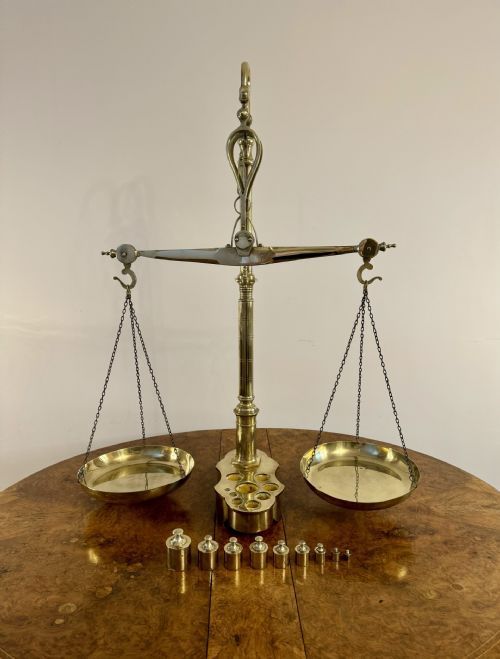
You are most likely to meet Victorian brass beam scales and Edwardian iron and copper combinations on this page. These pieces frequently incorporate hardwood bases, ceramic scale pans, and original weights that reflect their origins in commercial trade and farmhouse kitchens.
How they were made
Makers utilised durable metals including brass, cast iron, copper, and wrought iron to form the structural beams, pillars, and balancing pans. These metallic elements were frequently paired with hardwood components and ironstone or ceramic plates.
Construction relied upon precise mechanical balance, joining metal components with threaded fixtures, suspension rings, and fitted wooden boxes. Surviving examples often retain original painted finishes, stamped maker details, and associated iron weights.
The listings span the nineteenth century into the early twentieth century, featuring brass, iron, copper, and ceramic elements.
What varies in quality
The distinction between standard utility items and finer examples rests upon the finish of the metalwork and the integrity of the balancing mechanism. Superior pieces display crisp maker inscriptions, finely cast brass beams, and unwarped wooden or ceramic pans that move smoothly on their pivots.
Condition and completeness also determine standing, particularly the presence of matched original weights and intact ceramic plates free from extensive restoration. Simpler utilitarian designs from rural contexts contrast with refined commercial shop scales intended for public display.
Day and Millward·Fairbanks·Bartlett and Sons·De Grave and Co
The Antique Pan Scales Glossary
- Beam scale
- A weighing device consisting of a horizontal pivoting lever with suspended pans at either end. This design relies on gravitational equilibrium to measure mass.
- Ironstone
- A heavy, durable type of ceramic developed in the nineteenth century. It frequently appears as white scale plates featuring printed maker inscriptions.
- Balance scales
- Instruments that determine weight by comparing an unknown load against known standard weights. They represent the primary mechanical principle behind most antique pan scales.
Antique Pan Scales: Frequently Asked Questions
How do antique pan scales work?
These devices operate on the principle of moment equilibrium, where an object placed in one pan is balanced by standard weights placed in the other until the central pointer aligns vertically.
The metal beam pivots on a knife-edge fulcrum, translating gravitational force into a visual indication of mass for trade or domestic measurement.
Were these used in shops or homes?
Antique pan scales served both commercial and domestic environments, ranging from grocers' shops and butcher counters to farmhouse dairies and household kitchens.
Commercial examples often featured robust iron bases and advertising ceramic plates, whereas domestic versions favoured compact brass beams and wooden mounts.
How do I clean brass scale pans?
Maintenance of brass components generally involves gentle dusting and the occasional application of a mild cleaner if the metal surface requires attention.
Many collectors prefer to leave historic patination untouched, preserving the dark oxidation acquired through decades of handling and use.
How can I tell Victorian scales apart from Edwardian ones?
Victorian scales frequently exhibit ornate casting, polished brass pillars, and heavy hardwood bases suited for prominent placement on Victorian shop counters.
Edwardian iterations often lean towards cleaner industrial lines, combining iron and copper with standardised components reflecting mass production methods.