

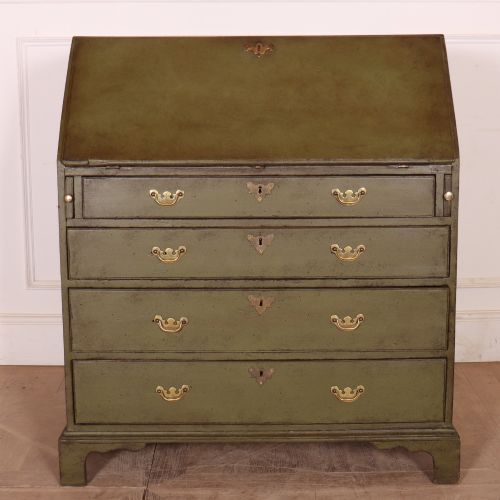
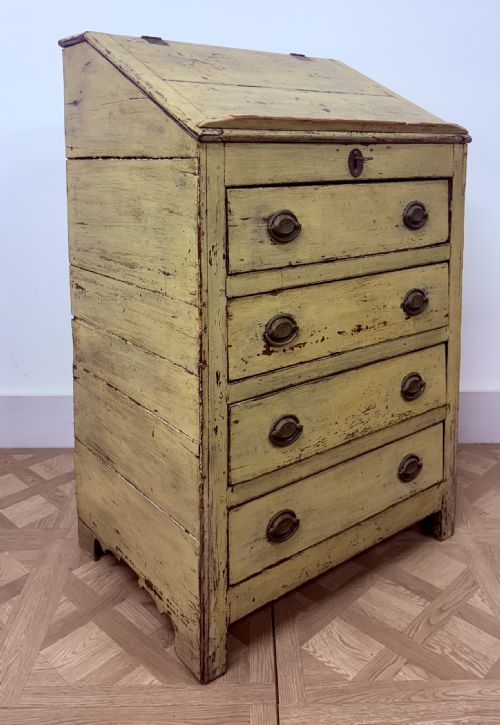
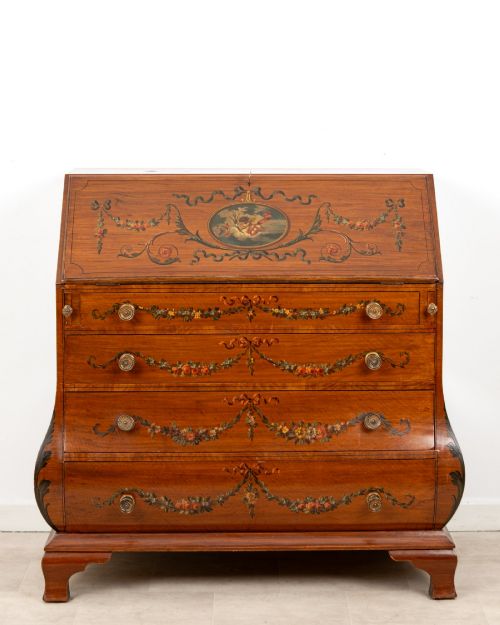


Antique Painted Slant Desk
These antique painted slant desk examples are practical writing pieces offering surface and storage finished with decorative painted surfaces.
Antique Painted Slant Desk
An antique painted slant desk combines a sloping writing flap with drawers or compartments beneath, offering both a functional writing surface and concealed storage for correspondence and papers. These pieces appear in forms ranging from compact table top writing desks to full bureau cabinets and tall bureau bookcases.
The pieces on this page span the eighteenth century through the Edwardian period, incorporating Georgian, Victorian, and Edwardian eras alongside specific regional styles like Scandinavian country and English country. Bureaux and writing slopes form the core of the selection, often featuring painted finishes rather than plain timber.
Buyers are most likely to encounter eighteenth-century English examples alongside nineteenth-century Scandinavian country pieces and Edwardian satinwood items. The overarching style brings together traditional cabinet forms with decorative paintwork, lacquer, or faux finishes.
What varies in quality
Quality rests on the crispness of the cabinetmaking and the preservation of the original painted or lacquered surface. Pieces with intact, period-correct paint decoration stand apart from later painted updates.
The refinement of the internal writing compartment, including the configuration of small drawers and pigeonholes beneath the slant lid, indicates the care taken in the workshop. Higher quality examples balance robust structural timber with delicate decorative execution.
Antique Painted Slant Desk Retail Price Guide 2026
Typical asking prices for painted slant desk among the pieces listed under this phrase on Sellingantiques today, from the lower quarter to the upper quarter. They describe what is for sale here now, not the wider market.
Listings feature eighteenth-century and nineteenth-century periods, alongside Georgian, Victorian, and Edwardian eras, constructed in pine, satinwood, walnut, and glass.
The Antique Painted Slant Desk Glossary
- Bureau
- A writing desk with a sloping flap that covers internal pigeonholes and small drawers. This form provides a concealed workspace that can be closed up when not in use.
- Chinoiserie
- European imitation and interpretation of Chinese and East Asian artistic traditions, often featuring raised motifs and gilt decoration on a lacquered ground. This style appears frequently on eighteenth-century and later desks.
- Satinwood
- A durable, yellowish wood with a lustrous sheen, highly favored for fine Edwardian writing furniture. It provides a pale, smooth canvas for delicate hand-painted decoration.
- Escutcheon
- A protective plate surrounding a keyhole, usually made of brass on these desks. It prevents the wood around the lock from sustaining damage through repeated use.
- Writing Slope
- A portable or table top box with an angled lid designed for writing letters. These compact pieces offer the sloping surface of a full bureau without the supporting chest of drawers.
Antique Painted Slant Desk: Frequently Asked Questions
How do I date a painted bureau?
Dating relies on structural characteristics, timber choice, and the style of the painted decoration. Eighteenth-century pieces often show heavier carcase construction in pine or hardwood beneath the paint, while Edwardian examples commonly use satinwood.
Paint analysis and the style of brass hardware further help narrow down the period, distinguishing Georgian origin from later Victorian or Edwardian revivals.
What is the difference between a bureau and a writing slope?
A bureau is a full piece of furniture combining a slant writing flap with a chest of drawers or cabinet base. It stands independently on the floor as a permanent study or bedroom piece.
A writing slope is a smaller, portable box with an angled lid that rests on a table. It provides the same sloping writing surface but lacks floor-standing drawers.
Are painted desks delicate to use daily?
Most painted desks are robust enough for everyday writing if treated with reasonable care. The durability depends largely on whether the painted surface is original period lacquer, oil paint, or a later decorative finish.
Placing blotting paper on the writing surface prevents ink stains and protects the decorative flap from excessive wear during daily correspondence.
Where should I place a bureau cabinet?
These pieces suit living rooms, studies, or bedrooms where their dual function of storage and workspace remains useful. Their vertical height makes bureau bookcases ideal for corners or wall spaces where floor area is limited.
Keeping them away from direct sunlight and strong heat sources protects the painted finishes, lacquer, and internal wood construction from fading or splitting.